
Hudson: FCC Should ‘Be Very Careful’ About Disrupting CBRS
Republican lawmakers in both chambers of Congress have called for protecting the band.

Jake Neenan
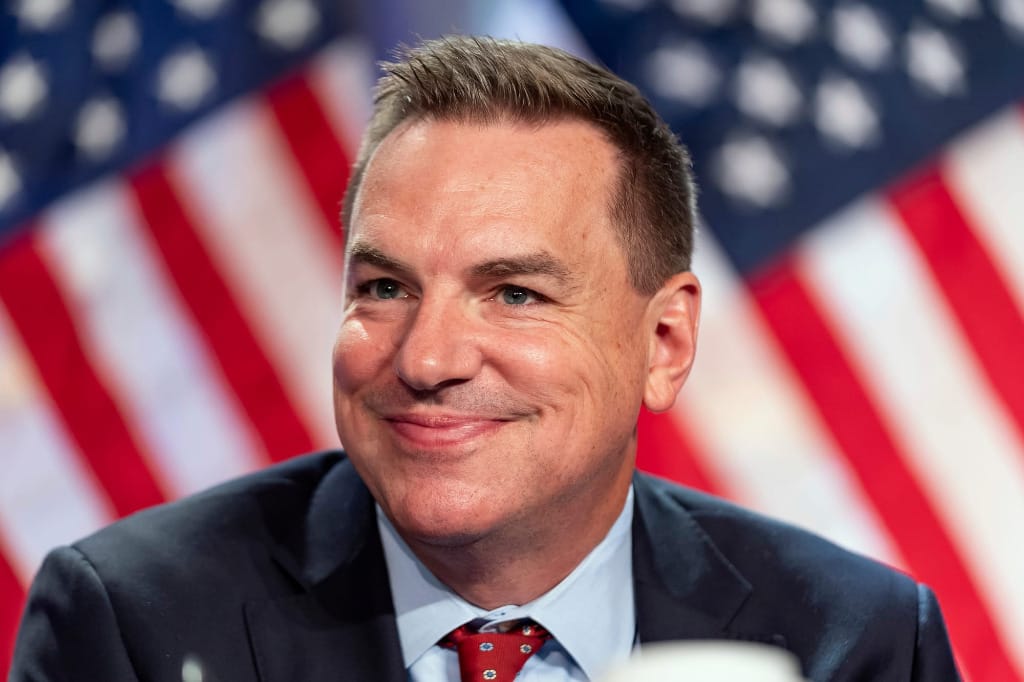
WASHINGTON, Oct. 10, 2025 – The head of the House Communications and Technology Subcommittee urged the Federal Communications Commission not to disrupt a shared spectrum band as the agency looks to meet Congressional auction targets.
Rep. Richard Hudson, R-N.C., said at a Punchbowl News event Thursday that the Citizens Broadband Radio Service was the site of “a lot of innovation,” and that the FCC should “be very careful” about modifying it.
Republicans’ One Big Beautiful Bill Act, passed in July, came with a mandate for the agency to sell off 800 megahertz of spectrum, with 500 megahertz coming from government spectrum. At least 100 megahertz of the remaining 300 will come from the upper C-band, but it’s not clear where the remaining 200 megahertz will be found.
The House draft of the OBBBA had initially protected CBRS and the unlicensed 6 GHz band from auction, but the provisions were stripped from the language that became law. That led some users and proponents of the bands to worry the FCC could consider selling parts of them to the wireless carriers in a bid to meet Congress’s benchmarks.
“CBRS is a band where a lot of innovation is happening right now. A lot of folks are pushing the envelope and coming up with new ways to do this,” Hudson said. “And so it’s important that we take that into account when you look at that band and how we might reorganize or how we might make some of it available for auction.”
Hudson said he was in talks with FCC Chairman Brendan Carr on the issue.
“We definitely want to make sure Chairman Carr is taking into account what’s happening in that band, and that he’s very careful as he makes decisions about what to make available for auction and not,” he said. “I just want to put on the record some of those private conversations we’ve been having and make sure that the importance of what’s happening in that band is considered.”
Hudson and a dozen other House Republicans had written Carr a letter making the case for protecting CBRS and 6 GHz in August, and ten Senate Republicans made the same request last month. Democratic lawmakers have also opposed auctions in the bands.
WISPA, which represents wireless ISPs that use CBRS to provide broadband service, again asked the agency to protect the band on Sept. 30. CBRS uses a tiered licensing system, with the lowest tier being users on free general access licenses that anyone can get.
WISPA said that while it might seem easy to cleave off the general access spectrum and leave in place users that bought priority licenses, the move would be disruptive to current users that have invested in equipment.
Trump administration officials, including Arielle Roth, the White House’s top telecom advisor, have said the administration is interested in protecting the 6 GHz band, which was opened for unlicensed use during the first Trump administration and is largely used for Wi-Fi.
“A number of us in this administration were very intimately involved in designating that band,” Robin Colwell, deputy director at the White House National Economic Council, said of 6 Ghz at the 2025 SCTE TechExpo. “We fought to get it, and I don't understand why anybody would think we're trying to go back on that now."




Member discussion