
Iberian Blackout Highlights Gaps in Telecom Network Resiliency
Power backups, route diversity, and planning critical to ISPs who fared better than rivals in April’s outage.


August 21, 2025 – When the Iberian Peninsula plunged into darkness on April 28, 2025, the consequences rippled far beyond the power grid.
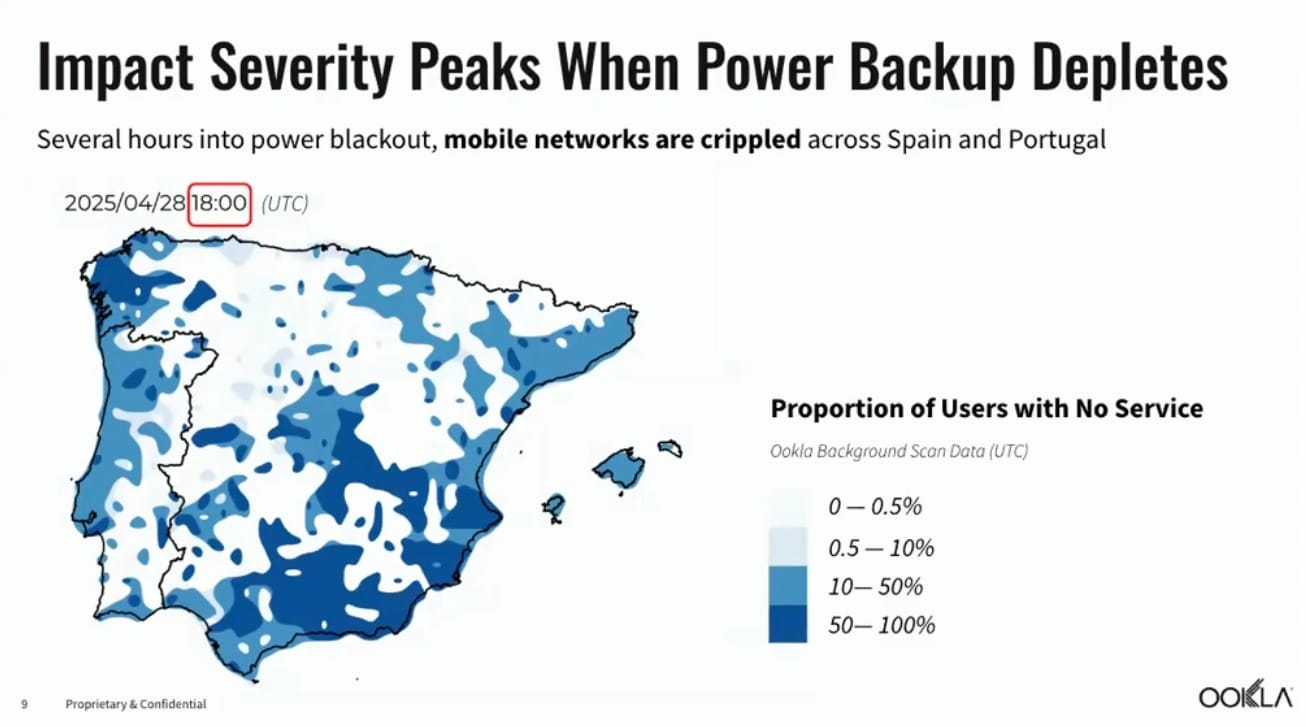
The blackout, which cut electricity for about ten hours across Portugal and Spain, knocked out large swaths of mobile and fixed networks almost instantly.
Yet outcomes varied sharply: Portuguese operator MEO, which had invested heavily in backup batteries and redundancy, managed to keep large parts of its network running, while another operator saw more than 90 percent of its subscribers lose service for over 24 hours.
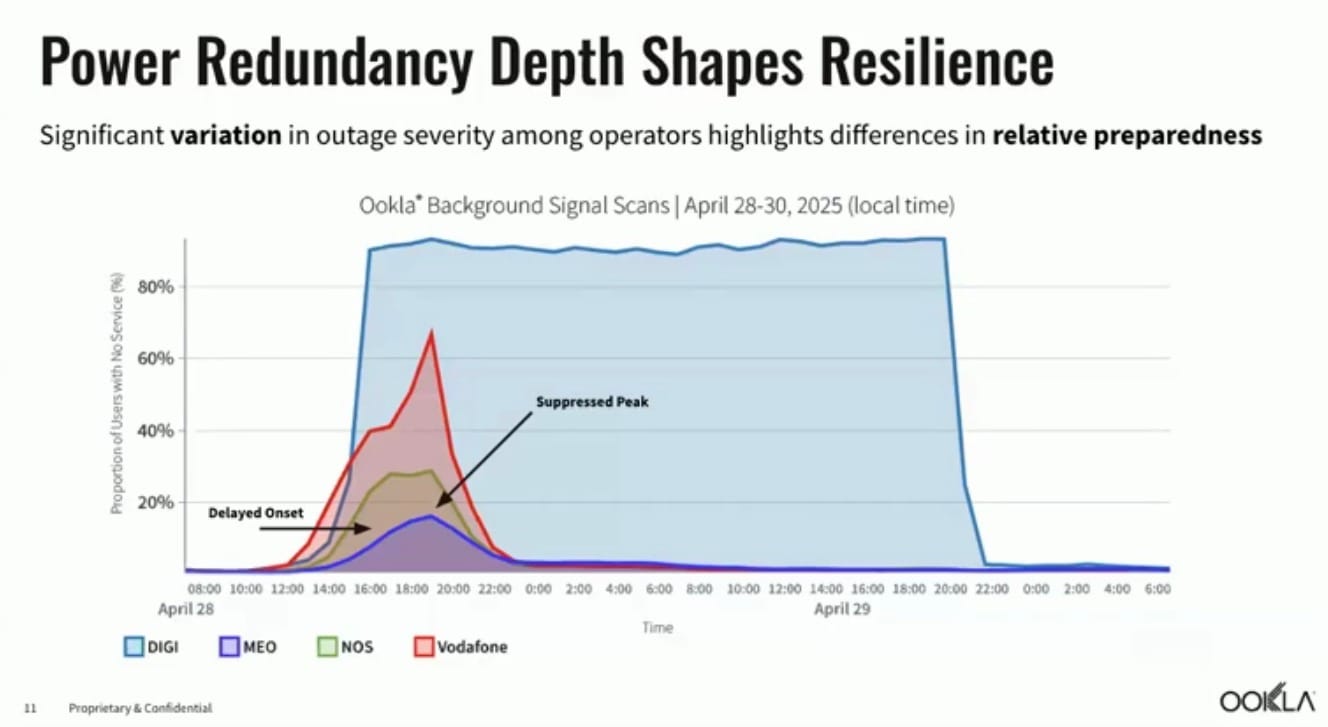
That contrast anchored a webinar Wednesday hosted by Ookla offering global perspectives in network resilience. Policy officials, cybersecurity leaders, and operators from across Europe pointed to the Iberian outage as a case study in how power autonomy, route diversity, and clear crisis planning can buy time and protect connectivity when everything else fails.

“Within 23 minutes we declared a crisis,” said Manuela Coutinho, head of global operations centre at MEO. “Even though we had never tested this specific scenario of blackouts, we were better prepared to deal with these incidents.”
“For fixed networks, we have hundreds of power generators and batteries supporting the sites,” Coutinho said. “Thanks to the huge investment that we made in our network in recent years, we had an autonomy of at least six hours for the majority of our site.” The core network never went down, sparing customers from a total blackout.
Still, she admitted weak points. Refueling generators proved a bottleneck, forcing the company to lean on Portugal’s civil protection authorities. “That is not practical at all,” she said. “More people use our services during crises, roaming traffic tripled that day, which makes it even more important to keep the network up.”
Imelda Casey, cyber security specialist at Ireland’s National Cyber Security Centre widened the lens, stressing that resilience starts before disaster strikes.
“Preparedness is crucial, and for any organization, they should have business continuity plans that are clearly documenting the processes that they need to follow in the case of a crisis response,” Casey said.
Casey described how Ireland coordinates preparedness through cross-sector “response groups” that bring together energy, telecom, education, and other critical operators. The groups run tabletop simulations of cascading failures, ensuring clear communication channels before crises erupt.
Casey said the 2024 CrowdStrike software update debacle offered a reminder: canceled flights, closed hospitals, and broadcast interruptions stemmed from a single IT issue. “It became very clear very quickly that it wasn’t a cyberattack,” Casey said, “we could use our services to share the information or coordinate groups.”
Lauren Crean, economist and policy analyst at OECD, framed resilience as “the network’s ability to cope with shocks or incidents and maintain an acceptable level of service.” The organization’s latest report on network resiliency breaks that down into three components: redundancy, diversity, and innovation.
Examples shared during the webinar highlighted the diversity of policy tools at lawmakers have at their disposal:
- Australia has used government funding both to harden infrastructure and to spur research into resilient technologies, through initiatives like the Mobile Network Hardening Program.
- Nordic countries are experimenting with hydrogen fuel cells for network backup, as well as, “battery-to-grid” programs, which let operators resell stored power for grid stability and reclaim it during outages.
- Finland requires operators to maintain independent power sources for essential network components.
- Japan, vulnerable to earthquakes, has made extensive use of satellites as emergency backup, with newer low-Earth orbit systems offering additional redundancy.
“It’s about ensuring networks can bend rather than break,” Luke Kehoe, analyst for Europe at Ookla said, “and that requires power autonomy, route diversity, and above all, preparation.”





Member discussion