
It’s How Owners Run Their Stations, Not How Many Owners, That Matters
Do ownership groups train and expect their staff to report both sides of stories fairly?

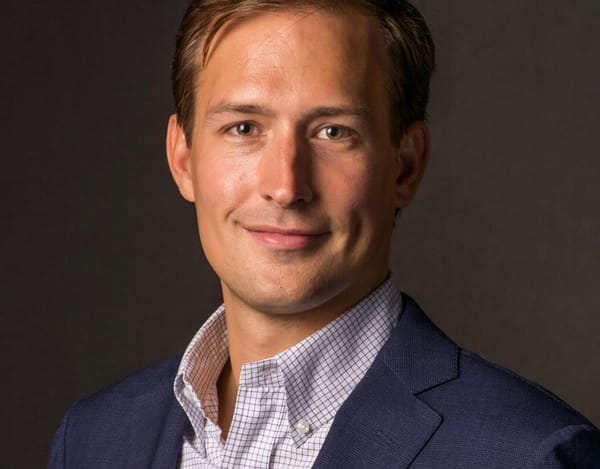
Daniel Suhr
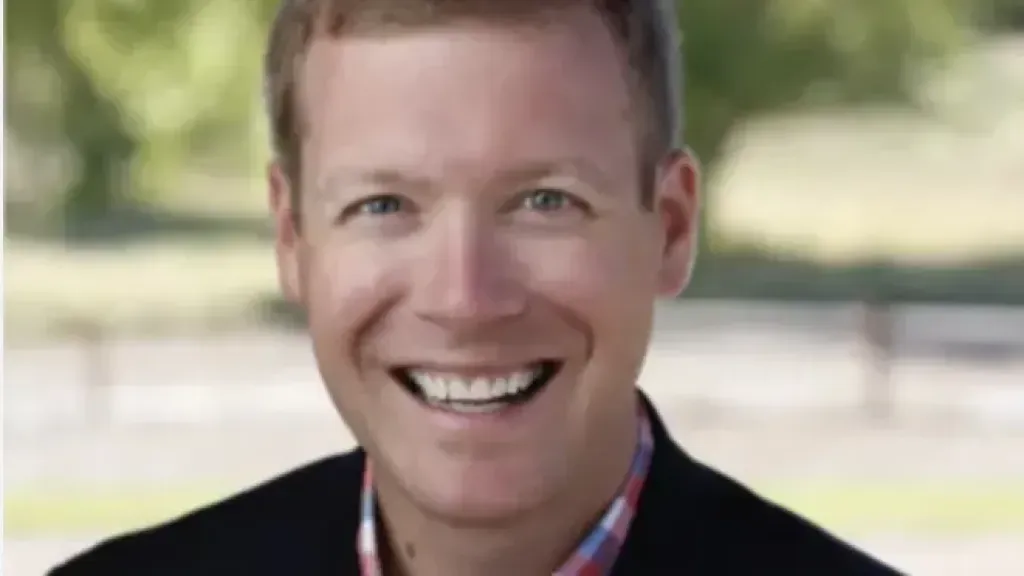
As the Federal Communications Commission moves forward with its 2022 Quadrennial Review and reviews the refreshed record from its 2017 national cap notice, and as Nexstar and Tegna file their forthcoming petition to merge, media consolidation is a topic much in the news.
As a conservative Republican, I share the baseline policy concern raised by Commissioner Anna Gomez and separately by Gigi Sohn in her recent Broadband Breakfast Expert Opinion (“It’s the Media Consolidation, Stupid,” Sept. 30): viewpoint diversity is a core value under the public interest standard. As Commissioner Gomez said in a recent press release, the FCC should “promote a healthy media ecosystem with viewpoint diversity.”
Commissioner Gomez and Ms. Sohn are worried that lifting the national or local ownership caps will reduce the amount of viewpoint diversity among broadcast licensees. That puts the focus on the exact wrong problem.
Fundamentally, on the question of viewpoint diversity, what matters is not how many station owners there are, but how those owners run their stations. Do the ownership groups train and expect their journalists to report both sides of stories in a fair, even-handed way that includes conservative and liberal voices?
Do the ownership groups consistently hire local journalists, hosts, and producers who come from a variety of backgrounds and bring different interests and views to deciding what stories to run? As these examples illustrate, the public interest is not dependent on the number of station owners, but on whether those licensees operate their stations in the public interest.
That can be seen most clearly by contrasting the national television networks and the local radio broadcast stations. There are four national television newscasts—ABC, NBC, CBS, and PBS. They all air the same liberal slant on the news every day regardless of which channel you pick. The same is true of late-night: you’ll hear the same jokes targeting President Trump and giving a pass to President Biden regardless of which host you like best. That is not viewpoint diversity.
There may be four different owners, but there is only one viewpoint available because of how the networks are run. The changes underway at Paramount/CBS are proof that what matters is an ownership commitment to running the news and entertainment departments in a way that embraces viewpoint diversity.
Contrast the tv networks with radio. There are basically two major radio station ownership groups—iHeartMedia and Audacy, with Cumulus a distant third. Yet the radio is a vibrant forum for diverse viewpoints, with talk radio stations and shows targeting conservatives, liberals (NPR), evangelical Christians, Catholic Christians, urban audiences, and Spanish-language audiences. There may be two dominant station ownership groups, but there is a thriving diversity of voices and viewpoints available.
Thought of another way, consider that Americans have deep trust in local broadcast news media and a deep distrust of national news media. The difference is not because there are four national networks but six or eight big station ownership groups. The difference is how those networks are run and how local stations are run.
The key moving forward is for the Commission to “ensur[e] that broadcasters advance the public interest as Congress required in the Communications Act,” as Commissioner Olivia Trusty said in her separate statement on the 2022 Quadrennial Review. If the Commission does its part to protect the public interest by asking whether broadcasters run “fair, un-biased, and fact-based reporting” and “news and entertainment programming [that] embodies a diversity of viewpoints,” then there is no need for an artificial limit on licenses.
Daniel Suhr is one of the nation’s leading constitutional litigators. As president of the Center for American Rights, he combines legal excellence with politically savvy communications and coalitions strategies to best serve the firm’s clients and causes. As former managing attorney of a nonprofit law firm firm, Daniel litigated cases of critical national importance to block nationwide public health mandates, halt the growth and abuse of administrative powers, and protect and expand school choice for students across the country. This Expert Opinion is exclusive to Broadband Breakfast.
Broadband Breakfast accepts commentary from informed observers of the broadband scene. Please send pieces to commentary@breakfast.media. The views expressed in Expert Opinion pieces do not necessarily reflect the views of Broadband Breakfast and Breakfast Media LLC.


Member discussion