Justice Department Advises FCC to Strengthen Lifeline Verification
Opinion arrives as FCC reviews changes to enrollment procedures, including federal database checks.

WASHINGTON, June 1, 2026 – The Federal Communications Commission was advised Thursday to impose additional safeguards when verifying eligibility for Lifeline subsidies.
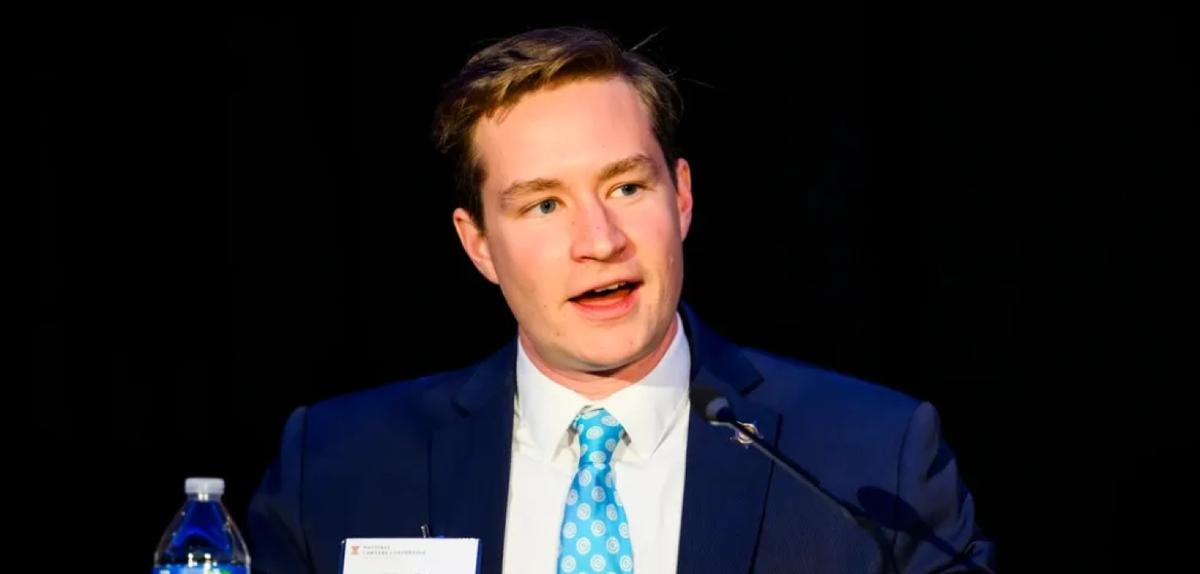
In a legal opinion, Assistant Attorney General T. Elliot Gaiser concluded the program’s current enrollment process does not adequately verify immigration status and that compliance with a 1996 federal welfare law requires additional safeguards beyond collecting a subscriber's Social Security number.

The opinion, which is not binding on the FCC or the courts, responds to questions posed by FCC Chairman Brendan Carr. It arrives as the agency considers changes to Lifeline enrollment in a proceeding opened in February.
Under the opinion, Gaiser agreed with the FCC's tentative conclusion that Lifeline qualifies as both a “Federal public benefit” and a “Federal means-tested public benefit” under the Personal Responsibility and Work Opportunity Reconciliation Act of 1996, or PRWORA.
PRWORA limits federal public benefits to U.S. citizens and certain categories of qualified noncitizens. Federal means-tested public benefits are subject to additional restrictions, including a general five-year bar for most qualified noncitizens.
The FCC is currently considering changes to Lifeline enrollment procedures, including proposals to collect full Social Security numbers and use federal immigration-status verification systems such as the Department of Homeland Security’s Systematic Alien Verification for Entitlements, or SAVE, database.
The Commission is still collecting public comments on its proposals. Comments filed in response, so far, have warned that the proposal risks cutting off eligible Lifeline users and making enrollment more complex, cumbersome, invasive, and punitive.
“At the FCC, our position has been clear. To receive federal subsidies like Lifeline, you must be a lawful beneficiary. The government should not be spending the money of hard working Americans to provide phone and Internet [service] for ineligible recipients,” FCC Chairman Brendan Carr said in response to the DOJ opinion.
Carr said the FCC would continue working with the Justice Department to strengthen eligibility safeguards and restore public confidence in the Lifeline program.
Will proposal withstand judicial review?
Legal experts, however, have questioned whether the proposal will withstand judicial review.
Andrew Schwartzman, senior counsel for the Benton Institute for Broadband and Society, said the commission’s proposal attempts to reverse decades-long interpretations of the statute.
“Thus far, attempts to enforce the Office of Legal Counsel’s revised reading of PRWORA have previously been enjoined in court. If the Commission nonetheless goes forward with this dubious reinterpretation of the statute, we would expect it to fail when subjected to judicial review,” Schwartzman told Broadband Breakfast.
The proposed changes also raise questions about how they would affect states such as Oregon and Texas, which currently verify federal Lifeline eligibility using their own databases.
California previously administered its own system but had that authority revoked in November after it was found to rely only on the last four digits of applicants’ Social Security numbers. Oregon has argued that it should be allowed to retain its authority, noting that it collects full Social Security numbers.
The FCC did not respond to a request for comment on how the DOJ opinion could impact its oversight of state eligibility systems in time for publication.
Stakeholders reply comments in the proceeding are due Wednesday, June 3.
Lifeline, created by the FCC in 1985 to promote universal service for low-income consumers, initially offered a discount for telephone service and was expanded in 2015 to subsidize broadband internet service.