
Lawmakers Warned of Risks in Chilling State AI Regulation
House hearing pit consumer protection concerns against fears of stifled innovation.

Jericho Casper
WASHINGTON, Sept. 17, 2025 – It could be one of the hardest technology assignments Congress has had in recent decades: What regulations, if any, should apply to the fast-moving and highly complex world of artificial intelligence.
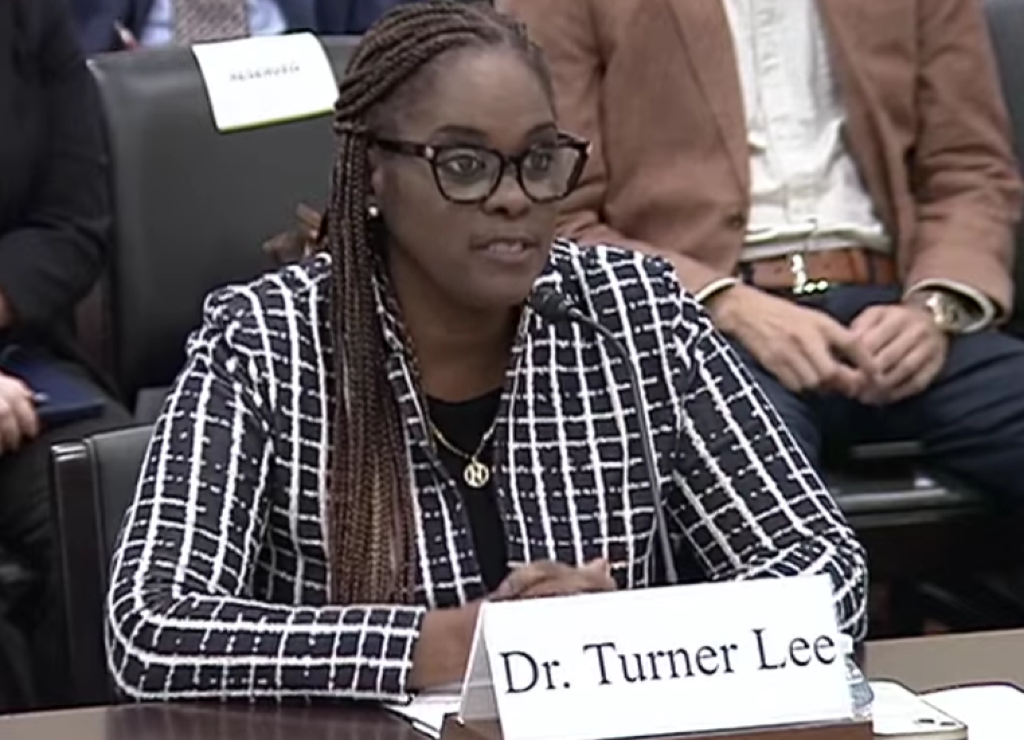
Brookings senior fellow Nicol Turner Lee urged House lawmakers Wednesday not to chill state-level consumer protections against artificial intelligence.
“Everyday Americans will be exploited by malicious uses of AI systems,” Lee warned, if “clear measures that ensure human oversight, disclosures and independent audits over automated or autonomous decisions” were not maintained.
Her testimony contrasted with Consumer Technology Association President Kinsey Fabrizio, who called for a 10-year pause on state and local AI laws to avoid a “crippling” patchwork of regulations. The exchange came at a House Committee on Oversight hearing of the Cybersecurity, Information Technology, and Government Innovation Subcommittee.
Lee pointed to the more than 100 AI-related measures enacted in 38 states since January as evidence that states were already filling gaps in federal oversight.
“Both red and blue states have been successful in their efforts to protect consumers,” Lee said.
“Texas Attorney General Ken Paxton recently reached a settlement holding hospitals accountable for using AI that made deceptive claims, which had adverse impacts on patient health,” Lee detailed.
“Just this summer, the Massachusetts attorney general announced a $2.5 million settlement with a student loan company for allegedly failing to mitigate the risks of the adverse impacts of their automated underwriting models on Black, Hispanic, and noncitizen students,” she added.
Fabrizio, whose organization represents more than 1,200 technology companies, from global brands to startups and small firms, testified that fragmented state laws threaten innovation.
“Our companies cannot compete when there are a thousand different potential laws they must comply with,” Fabrizio said. “It just stifles innovation completely.”
Fabrizio also pressed for passage of “a comprehensive federal privacy law to power innovation with more clarity, protect consumers, and lower compliance costs.”
Samuel Hammond, chief economist of the Foundation for American Innovation, added that America’s lead in the global AI race now depends on compute and energy capacity.
“China added over 400 gigawatts to their grid last year while the U.S. added approximately zero,” Hammond told lawmakers, calling America’s advantage “tenuous at best.”
He also urged stricter export controls on semiconductors, warning that allowing sales of Nvidia’s H20 chips to Beijing would “roughly double [China’s] data center capacity to run advanced AI models.”
Turner Lee, for her part, pressed lawmakers not to overlook the domestic costs of that same infrastructure buildout.
“We need to be careful in thinking that data centers will generate post-construction jobs,” she said, adding that lawmakers should weigh long-term workforce and equity impacts alongside infrastructure demands




Member discussion