Legal Hurdles Await Trump's AI Executive Order
If states file suit, Trump’s attempt to force states to abandon 'onerous' laws regulating AI will likely fall short in court, argues expert.

Eric Urbach
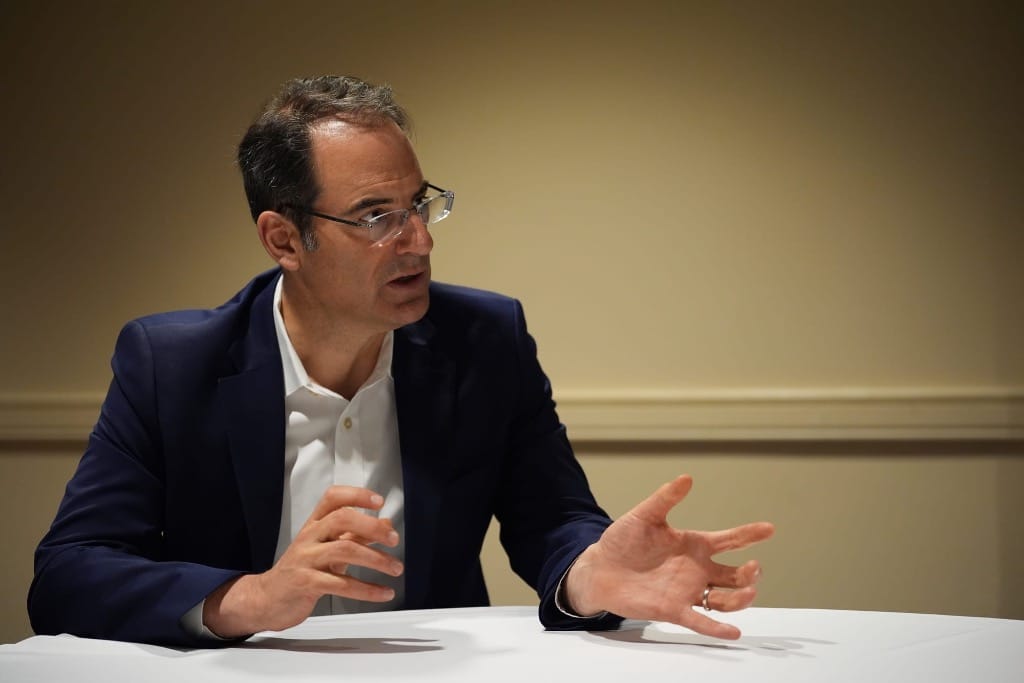
WASHINGTON, Jan. 27, 2026 — Colorado Attorney General Phil Weiser (D) hasn’t been shy about challenging Trump administration orders on a range of issues, including artificial intelligence.

Broadband BreakfastJake Neenan
Soon after the news broke on Nov. 19 that the White House was preparing an executive order linking funding remaining under the Broadband Equity, Access and Deployment to states with “onerous” laws on AI – including those of California and Colorado – Weiser threatened to sue.
On Dec. 11, the White House did in fact release such an order. Although the reference to California’s AI law was dropped, Colorado’s law continued to be specifically targeted.

In tandem, The Federal Communications Commission has also proposed a rule under the Telecommunications Act of 1996 to preempt states from passing laws to regulate AI. In response, a bipartisan coalition of 22 states and the District of Columbia – led by Weiser – penned a comment letter on December 17, 2025, to the FCC arguing that regulation of this kind extends far beyond their legal authority.
If Colorado or other states decide to proceed with a lawsuit, the executive order may face steep legal hurdles, according to a Wednesday op-ed by Brian McGrail.
Former senior Commerce Department advisor says claim falls short
McGrail was a senior advisor to former Deputy Secretary of Commerce Don Graves, during the Biden administration. He said the Trump administration’s regulatory claim rests on the idea that state laws that could burden AI development would reduce demand for BEAD-funded infrastructure because AI applications rely heavily on high-speed connectivity.
“The administration’s theory—though not yet fully articulated in court —appears to rest on BEAD’s broad approval language,” McGrail said. “The executive order’s framing suggests the argument that BEAD’s “purposes” include supporting applications running on federally funded networks.”
If this argument was upheld, it would give the National Telecommunications and Information Administration, which approves BEAD proposals and distributes funds to states, the power over downstream applications that fit the administration’s priorities. That would grant the administration control over the digital economy, McGrail said.
The administration is moving forward on the framework of the Dec. 11 Executive Order. A Justice Department taskforce announced Jan. 9 by Attorney General Pam Bondi has the “sole responsibility shall be to challenge state AI laws inconsistent with the policy” according to the Jan. 9 announcement.
Also, Federal Communications Commission Chairman Brenden Carr also noted at the Consumer Electronics Show 2026 that the order creates a regulatory framework that doesn’t deter innovation, noting that a state-by-state approach may disincentivize startups and smaller firms.
If states were to challenge this order in court, they would be on solid ground, argues McGrail. The BEAD legislation is about “deploying service and connecting locations” to broadband, and never mentions AI, he said.
Further, regulating AI in this manner falls subject to the major questions doctrine, said McGrain. That's a legal principle that requires federal agencies to show clear, explicit authorization from Congress before regulating issues of vast economic and political significance.
“AI is a topic of rapidly increasing economic and political significance,” McGrail said. “That combination—a novel assertion of authority over a major emerging policy area—should trigger the major questions doctrine.”
Member discussion