
Ligado Can Pause $100 Million Payment to Inmarsat, Judge Rules
A bankruptcy judge said there was a ‘colorable argument’ Inmarsat breached its contract by asking the FCC to deny a Ligado spectrum deal.

WASHINGTON, March 31, 2026 – Ligado can hold off on a $100 million payment to Inmarsat, a U.S. bankruptcy court held Monday.
Using funds from AST SpaceMobile, which is looking to provide direct-to-cell satellite service on Ligadio’s L-band spectrum, Ligado agreed to pay Inmarsat a total of $535 million in exchange for Inmarsat’s public support of the companies’ plan.
Ligado had already paid $420 million of that when AST submitted to the Federal Communications Commission a petition to deny the AST-Ligado application, alleging Ligado had not done required coordination work with Inmarsat, which also uses the spectrum at issue.

Inmarsat made the filing Feb. 27., the same day the U.S. District Court for the District of Delaware stayed a bankruptcy court order reaffirming the support agreement. The U.S. Court of Appeals for the Third Circuit reversed the district court on March 2, and AST retracted its filing and submitted a letter supporting the deal.
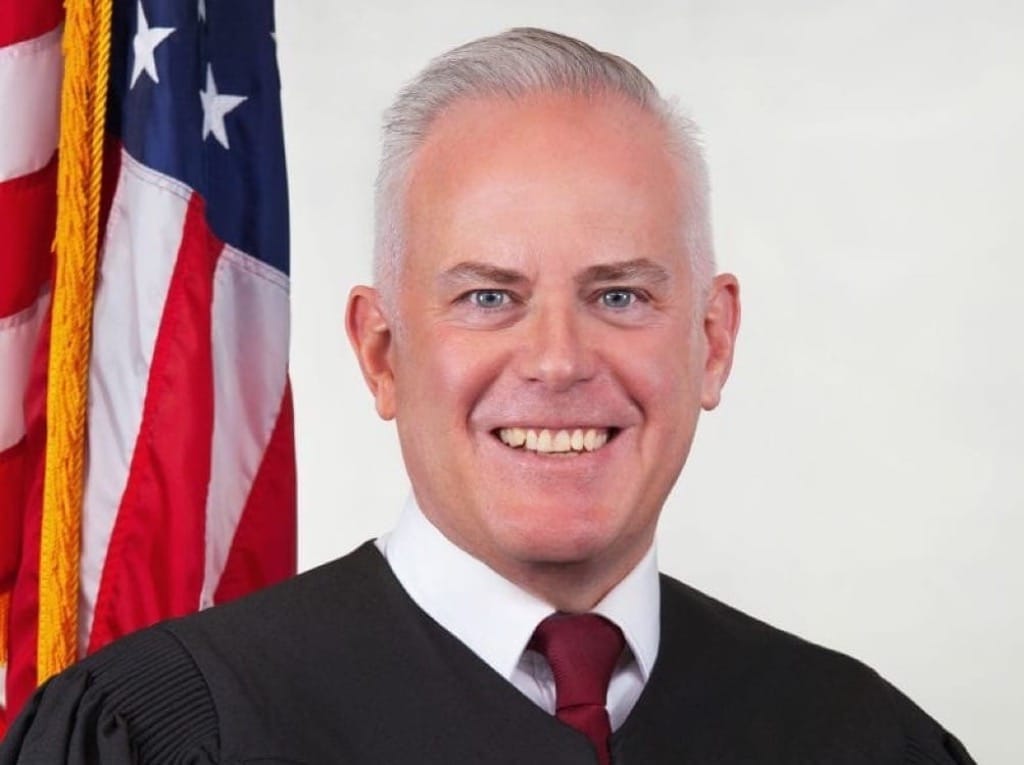
“That timing is not lost on me,” said Judge Thomas Horan. “It is clear that the intention was to ring the bell, knowing that it can’t be unrung.”
Horan, a judge for the U.S. Bankruptcy Court for the District of Delaware, ruled Ligado could put the remaining $100 million it would have owed Inmarsat by the end of March into an escrow account for now.
He said there was a “colorable argument” that Inmarsat breached its contract with Ligado.
“I’m not passing on whether such a breach claim would be successful” if Ligado sued, he said, “just that it appears on the undisputed facts here that there may be such a claim.”
Horan said an escrow account would protect Inmarsat’s right to be paid the money while preserving Ligado’s ability to seek damages if it did bring a breach of contract claim.
“The quantum of damages here could really be large, to say the least,” Horan said. “That’s where I’m going to leave it.”
Inmarsat’s petition to deny, filed by its parent company Viasat, was attached to a separate petition to deny from Iridium, another L-band user that feared interference.
“The petition is still out there on the FCC website available for the public to see,” said Madlyn Gleich Primoff, a partner at Freshfields representing AST. “We cannot know what the ramifications and consequences of that are. What we do know is it’s not what we bargained for.”
Benjamin Finestone, a Quinn Emanuel partner representing Inmarsat, said the company’s letter of approval had effectively compensated for its petition to deny, which was submitted in compliance with the Third Circuit’s order, and thus there was no breach of contract. He said Ligado could only sue if the company doesn’t get FCC approval for its partnership with AST.
“If they believe that we’ve breached, then they can do what article 5 [of the contract] says – in the future if they don’t get FCC approval – and sue us, your honor, and we’ll find out whether or not we’ve caused damage,” he said.
Andrew Leblanc, a Milbank partner representing Ligado, told Horan that “this is not the end, I think, of what you’re going to hear from us with respect to this.”
He said he was likely to seek discovery related to the dispute and whether Inmarsat communicated with other parties that commented to the FCC.






Member discussion