
Mahesh Krishnaswamy: The Future of BEAD: Unlocking Reach & Resilience with High Capacity Wireless
As states revisit their broadband plans, scalable middle-mile solutions and built-in resilience take center stage.

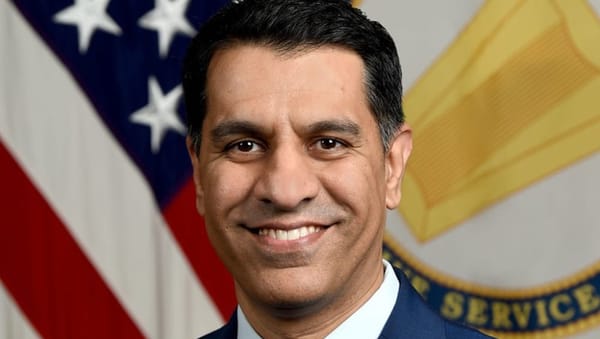
Mahesh Krishnaswamy

Connectivity is the backbone of our society. It powers everything from education and finance to healthcare and emergency response, not to mention our increasing conversations with AI agents recently. The question around connectivity therefore needs to evolve: it’s no longer just about speed or bandwidth, it’s about access and resilience. Laying more networks is one thing, but how well will they hold up under pressure?
The $42.5 billion allocated through the Broadband Equity, Access, and Deployment (BEAD) program represents the largest broadband investment in American history. The United States is on a mission to extend high-speed internet to every corner of the country.
Recent revisions on BEAD program guidance are encouraging states to look at every tool available to get high-speed connectivity to unserved and underserved communities. States are reexamining proposals for building broadband infrastructure, with a new focus on technology neutrality, cost efficiency, speed of deployment, and scalable performance, opening the door for a broader set of solutions to be considered.
In this conversation, two critical, often overlooked aspects of infrastructure are the middle mile, and the resilience of the networks we’re building. Both determine whether new broadband deployments can actually deliver on their promise – not just on day one, but in the years and decades ahead.
The opportunity with the missing 'middle mile'
According to the International Telecommunication Union, roughly half of the world’s population live within just 25 km of fiber. This represents a tremendous opportunity for operators to close these gaps, also known as the middle mile, with long range, high capacity wireless systems.
The middle mile is a critical link in the broadband chain. It’s the bridge that connects core networks to cell towers and local distribution hubs, and that bridge often has to cross wildly challenging terrain like rivers, canyons, railway lines, mountains, and dense forests – where trenching can be often cost prohibitive or dependent on securing right-of-way permits which can take months or even years. In rural America, this challenging geography can span hundreds or even thousands of miles. If there’s no scalable, high-throughput path extending high capacity connectivity from the core internet to the communities that need it, then last mile deployment projects, including fiber, can quickly fall into limbo.
BEAD’s Benefit of the Bargain Round is aimed squarely at lowering costs and accelerating buildouts, urging states to revisit previously selected infrastructure proposals and re-run their scoring processes using a more flexible framework that puts cost, performance, and speed of deployment first. Technologies that meet BEAD’s technical benchmarks – a minimum of 100 Mbps down and 20 Mbps up per location, sub 100ms roundtrip low latency, and long-term scalability – must now be considered on equal footing, expanding the toolkit available for operators, especially in areas where time or cost constraints make all-fiber deployments harder to deliver.
Beyond backups: Shedding light on redundancy vs. resilience
How do you build a highly available network? How do you protect it when things go wrong? Do you need redundancy or resiliency?
Redundancy plays a critical role in digital infrastructure, with backup paths in place so that even if one connection fails, the traffic fails seamlessly to another link. It often involves manual intervention or delays.
However, resiliency is the ability to anticipate a failure, proactively adapt and ensure the disruption is mitigated or handled gracefully. True resilience comes from networks that are diverse and dynamic in nature, where different technologies complement the capabilities of one another to adapt to changing conditions.
So building a single link with high availability isn’t enough – we need to prepare for the unexpected to happen and ensure the network stays up and running when it happens.
Natural disasters, cyberattacks, aging infrastructure, even permitting delays can bring a network to a standstill. In many parts of the world, the power grid itself is the point of failure. When communications go down, critical services often follow. That’s why resilience – defined not just as uptime, but as a network’s ability to anticipate, absorb, and recover from disruption – needs to be designed into any network by default. It is a mindset shift.
Communities located where extreme weather has repeatedly tested the limits of terrestrial infrastructure, like in Texas, California, and many more, have learned the value of having enough resiliency in the network. In places like Puerto Rico, communities have learned the value of systems that can be deployed quickly and operate independently of the grid. In Florida, a long-haul fiber outage wasn’t a concern for end users thanks to a multi-path failover strategy. This is what can be achieved when infrastructure is designed with disruption in mind. Technologies that draw low power, that can be quick to deploy in disruptive circumstances, that offer alternate paths when others fail, are becoming more essential at a time when climate change, volatile weather events, and security attacks are threatening our connectivity backbone.
Resilience isn’t what happens after the network suffers an outage; it’s what you build into the network so that it doesn’t go dark in the first place.
Lightspeed connectivity delivered through the air
Wireless optical communication, also known as next-generation Free Space Optics (FSO), is emerging as a powerful tool for states looking to deliver high-speed broadband across challenging terrain. It uses focused beams of light to transmit data through the air, delivering fiber-like capacity with symmetrical speeds of 20 Gbps over distances up to 20 kilometers.
Because it operates in the near-infrared spectrum, wireless optical communication leapfrogs the limitations of traditional radio frequency bands. There’s no need for spectrum licensing, coordination, permitting, or digging. For regions where time, cost, or terrain make traditional builds difficult, wireless optical communication represents a path forward.
What makes this technology particularly suited to BEAD-era deployments is its combination of performance, flexibility, and resilience. Installations can be completed in hours, and the compact, lightweight terminals can be mounted on rooftops, towers, or existing poles with minimal disruption. In areas where fiber has been delayed, or where backhaul infrastructure is missing altogether, wireless optical communication can serve as a scalable middle-mile bridge, enabling last-mile builds to proceed without compromise. In a funding landscape that now values cost efficiency, speed to deploy, technical performance, and welcomes all technologies equally, wireless optical communication is becoming a compelling piece of the connectivity puzzle.
As BEAD enters its next phase, states have an opportunity to design infrastructure rollouts that are not only fast and affordable, but resilient by default. And under National Telecommunications and Information Administration’s new guidelines, they can now consider all qualified technologies in pursuit of that goal. The field is open. It’s time to deploy a network that can reach everywhere in a resilient way.
Mahesh Krishnaswamy leads the Taara team in their mission to deliver fast, affordable connectivity to people everywhere using beams of light. Before founding Taara, Mahesh led the Manufacturing and Supply Chain efforts for Project Loon, which used a network of stratospheric balloons to deliver connectivity to rural and remote areas. Prior to joining Alphabet, Mahesh led product teams at Apple and Motorola. This Expert Opinion is exclusive to Broadband Breakfast.
Broadband Breakfast accepts commentary from informed observers of the broadband scene. Please send pieces to commentary@breakfast.media. The views expressed in Expert Opinion pieces do not necessarily reflect the views of Broadband Breakfast and Breakfast Media LLC.







Member discussion