
New Bipartisan House Bills Take Aim at Strengthening Rural Broadband Access
The four introduced bills look to expand broadband access, modernize utilities, and improve USDA programs.

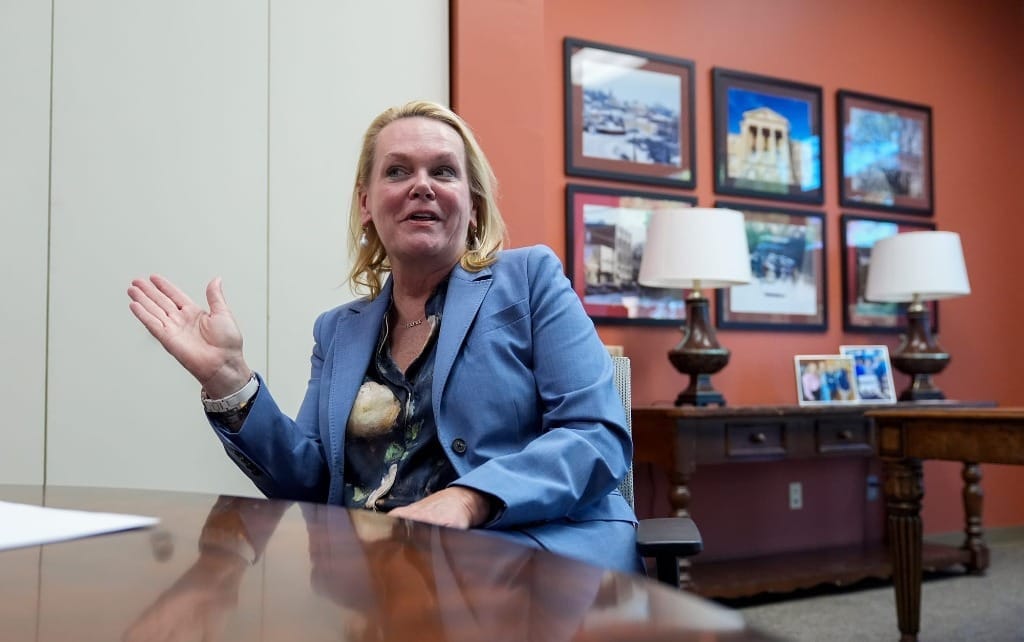
WASHINGTON, March 30, 2026 – Rep. April McClain Delaney, D-Md., introduced four bipartisan bills aimed at bridging the rural broadband and access gaps.
Cosponsored by Rep. Robert P. Bresnahan, R-Pa., McClain Delaney said the bills were aimed at addressing the “dire need to lower costs and remove barriers to access” in rural America. The lawmakers said the bills would strengthen programs within the U.S. Department of Agriculture (USDA) by amending, modernizing, or streamlining processes for utility access.
“The affordability crisis is hitting rural America hard. Across the country, broadband, electricity, and clean water remain out of reach for far too many families, including those in Maryland’s Sixth District,” McClain Delaney said. “All communities–regardless of ZIP code–must have the tools, access, and connectivity they need to prosper, innovate, and thrive in our 21st-Century global economy.”

First elected in 2024, McClain Delaney has made a point of focusing on bridging the digital divide, holding Big Tech accountable, and championing innovation. She serves on the House Agriculture Committee, which oversees USDA programs, and the Science, Space and Technology Committee. Before her time in Congress, McClain Delaney was the Deputy Assistant Secretary of Communications at the Department of Commerce’s National Telecommunications and Information Administration (NTIA) and the Director of Washington, D.C.’s Common Sense Media.
McClain Delaney introduced the Rural Utilities Service Modernization Act, which would overhaul and modernize USDA’s Rural Utilities Service (RUS) by streamlining permits and applications for broadband, water, and electricity services. The bill also would require the USDA to develop and manage a digital platform that would allow RUS recipients to track projects in real time.
The lawmakers also looked to amend USDA’s Community Connect Program, which has provided broadband grants to rural and underserved communities. Through the Quality Broadband for Connected Communities Act, the program would be required to update speed requirements from 10/1 Mbps to 25/3 Mbps, which would better align with federal investments.
The Expanding Access to Distance Learning and Telemedicine Act would broaden another USDA grant program to fund more than basic telehealth and education services. Rural areas would have expanded eligibility within USDA’s Distance Learning and Telemedicine Grants Program for cybersecurity programs, digital literacy, and workforce training. The agency’s program would expand beyond telemedicine and distance learning services to also support rural construction tied to these services.
McClain Delaney also introduced the Prioritizing Rural Broadband Affordability Act, which would require the Secretary of Agriculture to account for broadband affordability when defining underserved or unserved households. The USDA would have to consider whether broadband is affordable, not just available, when making decisions about rural areas that qualify for grants.
“Rural communities aren’t an afterthought, they’re the backbone of this country, powering our economy and feeding our families. But for too long, they’ve been asked to do more with less,” Bresnahan said. “Supporting rural areas means investing in broadband, modernizing water and electricity services, and expanding access to telemedicine and workforce development.”

Member discussion