Non-Deployment Funds Unlikely to be Clawed Back, Experts Say
NTIA Administrator Arielle Roth has said she would support permitting reform as one potential use for the funds.

Jake Neenan
WASHINGTON, Jan. 7, 2026 – Nearly half of the $42.45 billion Broadband Equity, Access, and Deployment program’s funding won’t be used for broadband deployment projects, partly a result of new Trump administration rules aimed at cost cutting.
When those new rules were instituted in June, the National telecommunication and Information Administration rescinded approval for any non-deployment activities, something state broadband offices had been planning on pursuing.
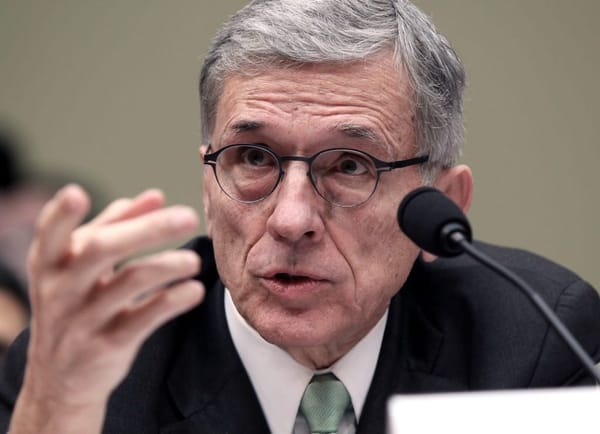
Fiber Broadband Association CEO Gary Bolton and Pew Charitable Trusts' Broadband Access Initiative Director Kathryn de Wit said they’re optimistic that states will ultimately see their non-deployment money, even if it’s not yet clear exactly how they’ll be able to use it.
When those new rules were instituted in June, the National telecommunication and Information Administration rescinded approval for any non-deployment activities, something state broadband offices had been planning on pursuing.
Fiber Broadband Association CEO Gary Bolton and Pew Charitable Trusts' Broadband Access Initiative Director Kathryn de Wit said they’re optimistic that states will ultimately see their non-deployment money, even if it’s not yet clear exactly how they’ll be able to use it.
They spoke at an FBA webinar Wednesday.
“I think a lot of people were panicking about some kind of clawback,” Bolton said. “But my view, and I don’t know if you share this, is that non-deployment funds are going to happen. Commerce is committed to deploying that other $21 billion for non-deployment.”
Asked if she agreed, de Wit said “I do. As with everything, the devil’s in the details.”
She said many would have preferred to have already had a clearly defined use for the money, but that ultimately she thought “Commerce sees the value in non-deployment, particularly as it related to priorities like AI, digital skills trainings, workforce – hopefully, fingers crossed – and all those things are just going to extend the impact of this investment.”
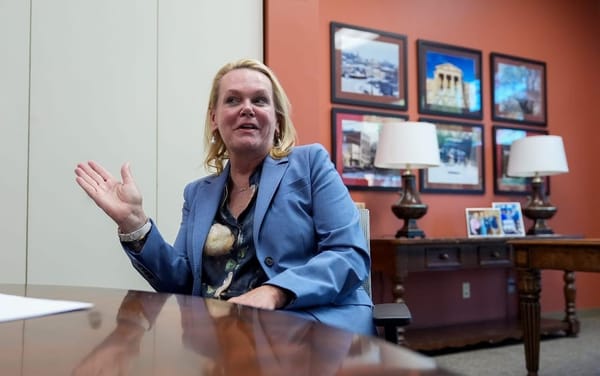
NTIA Administrator Arielle Roth has suggested she would support using some of the money to streamline permitting processes to avoid BEAD projects being held up. Last month she said the agency was “operating under the assumption that the states will get to use their BEAD savings. But again, nothing has been finalized.”
De Wit said she hoped to see more specificity on how states could actually use their non-deployment money in the near future.
Lawmakers in both chambers of Congress introduced a bill last month that would allow states to spend the money on workforce development, mobile wireless infrastructure, and other infrastructure tied to the AI industry like wholesale fiber and submarine cables and landing stations. The legislation is supported by FBA and other broadband trade groups.
Broadband adoption efforts, something previously allowed and that many states were planning on pursuing before the new BEAD rules, wasn’t on the bill’s list of allowed uses, but NTIA would be able to greenlight activities other than those specified in the bill.
Roth had also said the agency would have “much more to share” on non-deployment guidance in early 2026. Soon after she said that, President Donald Trump signed an executive order on Dec. 11 that directs NTIA to produce a memo within 90 days telling states they’re ineligible for non-deployment funding if they have “onerous” laws on AI companies.
The memo must “describe how a fragmented State regulatory landscape for AI threatens to undermine BEAD-funded deployments, the growth of AI applications reliant on high-speed networks, and BEAD’s mission of delivering universal, high-speed connectivity,” according to the order.
Some Democratic senators are trying to block the order via an amendment to appropriations legislation that Congress will need to pass to avoid another government shutdown at the end of the month.
Fiber shortage?
Asked whether he thought demand from AI companies would impact the availability of fiber for BEAD projects, Bolton said he was optimistic it wouldn’t be an issue.
“We have a supply chain working group. We meet with all the fiber manufacturers and make things stay on track,” he said. “I think we’re in pretty good shape.”
He said AI companies were buying up supply and creating long lead times for ribbon cable, a kind of fiber that’s sheathed differently than the loose tube cables typically used in the rural, low-density areas targeted by BEAD. But having states start at largely the same time, as opposed to more staggered timelines, will be a bit more of a shock to the supply chain according to Bolton.
“We had this huge surplus where everybody was hoarding fiber coming out of Covid, then service providers stopped buying and worked that inventory down. Now we’re at an equilibrium, so we’re at a good spot to start,” he said.
Member discussion