NTIA Approves 9 BEAD Plans, Promises Early 2026 Guidance on Non-Deployment Funds

NTIA Administrator Arielle Roth said the agency was ‘operating under the assumption’ states could retain and use non-deployment dollars.


NTIA Approves 9 BEAD Plans, Promises Early 2026 Guidance on Non-Deployment Funds
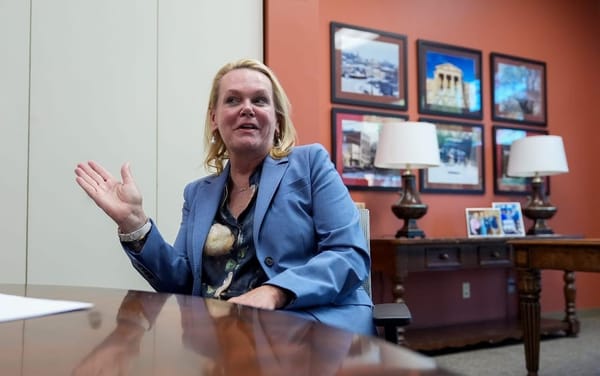
Photo of National Telecommunications and Information Administrator Arielle Roth on Tuesday

WASHINGTON, Dec. 2, 2025 – The National Telecommunications and Information Administration on Tuesday approved nine more state spending plans under its $42.45 billion Broadband Equity, Access, and Deployment program, bringing the total to 26 states.

NTIA Administrator Arielle Roth said the agency was “operating under the assumption that the states will get to use their BEAD savings. But again, nothing has been finalized.”

Roth made the remarks at a Free State Foundation event here, and said that the agency expects states and territories to collectively come in $21 billion under budget. The agency would have “much more to share” on how they could use that money in early 2026.

The states whose approvals were announced Tuesday were Arizona, Colorado, Indiana, Michigan, Nebraska, New Jersey, Ohio, South Dakota and Wisconsin. Roth also announced Tuesday NTIA had posted state-level data on the approved versions of their final proposals.

Those summaries don’t show significant changes from the draft results of the nine states approved Tuesday. The proportion of eligible locations in each state getting each broadband technology was roughly the same.

Ohio’s approved location count increased by 13 percent from its draft results, and Indiana’s decreased by 7 percent. A spokesperson said the agency’s location counts include community anchor institutions, which are in line for BEAD-funded service after eligible homes and businesses are all accounted for.

The other states didn’t see major changes to their total locations in line for funding.

Based on draft state plans, about 66 percent of BEAD-eligible locations are in line for fiber, with another 21 percent getting low-earth orbit satellite and 11 percent getting fixed wireless. The Trump administration reversed a Biden-era preference for fiber, making it easier for cheaper-to-deploy technologies to compete and drive some of the cost savings.

How will states be able to use BEAD savings?

What will become of the savings, commonly called non-deployment funds, has been unclear since the Trump administration rescinded approval for any non-deployment activities in June.

There’s been some fear, including among states, that Commerce Secretary Howard Lutnick would prefer returning the money to the Treasury.

While Roth emphasized Tuesday no final decisions had been made, she suggested in September that using non-deployment dollars for permitting reform would be a good idea.

Under the Biden administration, states had planned to use any leftover BEAD cash on efforts promoting broadband adoption, workforce development, and other things.

“First and foremost, these dollars belong to the American people,” Roth said. “Any spending must produce real, measurable value, not duplicate investment the private sector is already making.”

Non-deployment spending should also, Roth argued, “avoid actions that distort investment or stifle innovation.”

Separately Tuesday, Sens. Deb Fischer, R-Neb., and Shelley Moore Capito, R- W. Va., said at a heading that they want their states to hang onto their non-deployment dollars. 

Fischer and Capito floated cybersecurity measures as a potential use for the funds.

A draft executive order circulated last month, but not signed, would have directed NTIA to produce a memo detailing plans for withholding non-deployment funds from states with “onerous” laws on artificial intelligence companies. 

Member discussion

Popular Tags