
Nuclear Power Resurges, Absent a Strong Environmentalist Response
Is the sound of silence replacing the roar of the crowds against ‘no more nukes’?

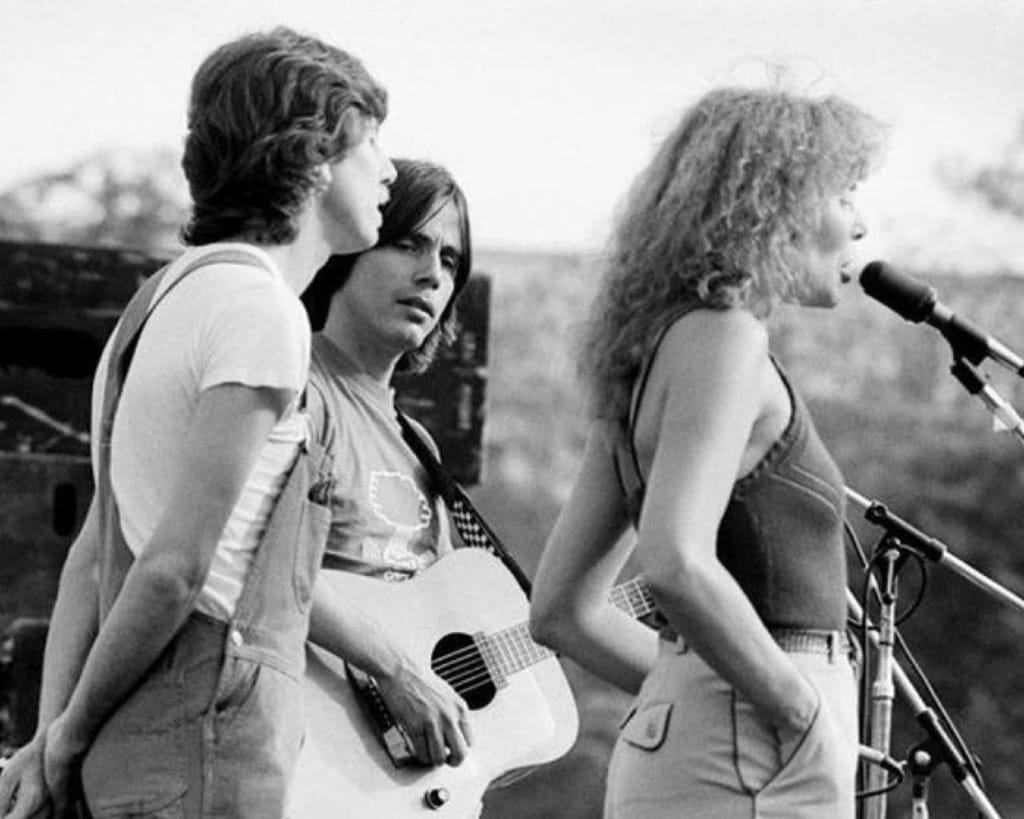
WASHINGTON, August 11, 2025 – It was a sunny day in Washington. Music by Joni Mitchell, Graham Nash, and Jackson Browne hummed through the streets–but it was nearly drowned out by the roar of the crowd: “No more nukes! No more nukes! No more nukes! No more nukes! No more nukes!”
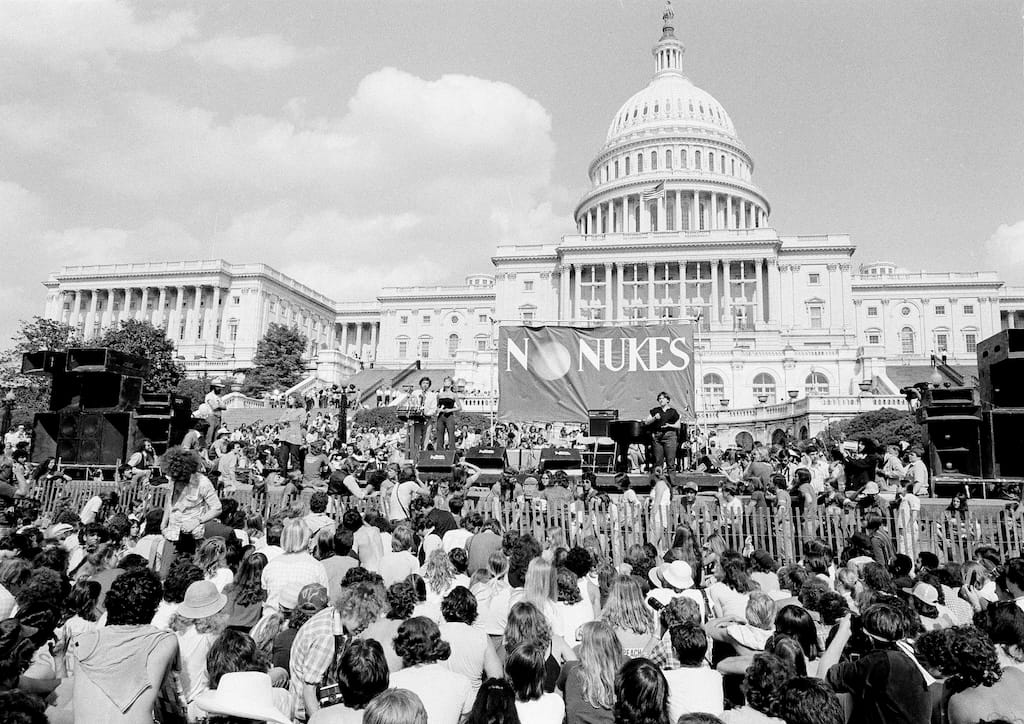
The chant echoed across the National Mall in May 1979, just weeks after the nuclear meltdown at Three Mile Island. The protest became one of the largest anti-nuclear demonstrations in American history – a day when environmental activists marched together as a unified voice of opposition.
Widespread anti-nuclear protests left a lasting impression, transforming nuclear energy into a source of fear.

And with the memory of Three Mile Island still fresh, the Chernobyl disaster in Ukraine in 1986 soon reinforced the worst of those fears. Even in Western democracies, that same hesitancy was reignited when an earthquake and tsunami caused a cooling malfunction at the Fukushima Daiichi Nuclear Power Plant in Ōkuma, Fukushima, Japan, in 2011. Continuing public fear surrounding nuclear plants has contributed to the shutdown of many facilities across the country.
Yet history proves public memory fades quickly.
In the rising age of artificial intelligence, where energy demand is higher than ever, the nation– including environmental-focused voters–appears willing to accept the risks posed by nuclear energy.
Is there still vocal opposition by environmentalists?
But unlike the last nuclear surge, opposition from environmentalists is noticeably quieter this time around. The politics around clean energy appear to have changed, both in perceptions about what is environmentally friendly, and in the reaction from environmental groups themselves.
Has environmentalism made its peace with big technology companies? The narrative from Silicon Valley increasingly seems to view growing energy demands as inevitable. In this worldview, nuclear power appears to be the lesser evil to oil, natural gas and other fossil fuels.
There's no doubt Americans are relying on AI more than ever. A Gallup report from January 2025 found that eight in ten Americans had used five AI-enabled products within the past seven days.
But few realize the significant energy these AI functions consume.
A Washington Post study, conducted with researchers at the University of California, Riverside, found that running a single AI task–like asking OpenAI’s ChatGPT-4 model to write a quick email–uses 17.54 fluid ounces of water, roughly the amount of a Desani water bottle.
Given this reality, many federal and state government initiatives appear to be turning back to nuclear energy to meet this growing demand.
A second nuclear age?
In July, the U.S. The Nuclear Regulatory Commission announced it opened the door for Holtec International, a nuclear and solar energy company, to revive Michigan’s 800-megawatt Palisades Nuclear Plant, which shut down in 2022. If successful, it would be the first decommissioned nuclear plant to be revived in the U.S.
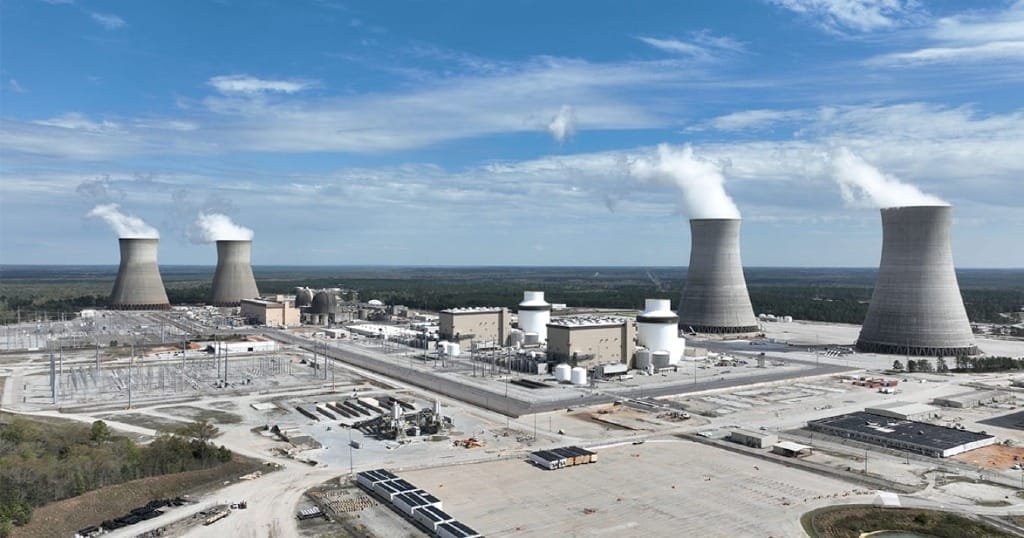
“This is a proud and historic moment for our team, for Michigan, and for the United States,” said Holtec International President Kelly Trice. “The NRC’s approval to transition Palisades back to an operating license represents an unprecedented milestone in U.S. nuclear energy. Our mission remains clear: to restart Palisades safely, securely, reliably, and in support of America’s energy future – while supporting local jobs and economic growth for decades to come.”
Other states are following suit.
In Pennsylvania, the infamous Three Mile Island, which sparked such controversy in the past, may also be revived under a new name, the Crane Clean Energy Center. Its original Reactor 2 was destroyed during the 1979 meltdown after a cooling malfunction caused part of the reactor's core to melt. The new project, supported by a 20-year power purchase agreement signed in September 2024 between Constellation Energy and Microsoft, plans to restart an adjacent reactor.
In Iowa, NextEra Energy Resources is evaluating nuclear construction at the former Duane Arnold Energy Center, which shut down in August 2020.
And in Idaho, Sawtooth Energy and Development is eyeing 320 acres of public rangeland in northwest Jerome County – an area nearly 40 percent the size of Central Park in Manhattan – for a commercial nuclear facility.
Cleaner than fossil fuels, but scarier than wind or solar?
Nuclear power in the U.S. remains substantial, providing about 20 percent of the nation's power supply. As of 2024, the United States is home to 54 commercial nuclear power plants housing 94 operating nuclear power reactors. But deployment and plants closing still make it a high-profile worry.
Some experts argue nuclear is a cleaner alternative to fossil fuels and more practical than wind or solar.
Dan Adamson, the Project Manager of the proposed Idaho Plant, promoted nuclear for both its minimal footprint and efficiency. He pointed out that nuclear’s footprint is significantly smaller than other methods, and that nuclear reactors run 90 percent more of the time than wind.
Justin Hayes, the Idaho Conservation League Executive Director, hesitantly echoed Adamson’s endorsement, including the Small Modular Reactors (SMRs) that many are touting as less risky than full-scale nuclear power plants.
“We’re open to exploring all technologies that can help Idaho reduce emissions, strengthen grid reliability, and provide affordable electricity,” Hayes said. “Nuclear energy — particularly SMRs — could play a role. But before moving forward, we must ask the right questions.”
Those questions aren’t new.
The U.S. Department of Energy outlined several dangers associated with nuclear energy in 2022.According to the department, spent nuclear fuel remains highly radioactive and continues generating heat long after use. Initially stored in steel-lined pools filled with water, the fuel is eventually transferred to dry storage casks made of steel and concrete for long-term containment. However, if this material is not properly cooled or shielded, it presents significant radiation risks.
Other dangers include core meltdowns from cooling system failures—like those at Three Mile Island, Chernobyl, and Fukushima Daiichi.
Have the risks of nuclear power changed?
Despite lessons learned and technological advances, critics argue that the risks haven’t disappeared.
“The zombie reactor restart scheme is unneeded, insanely expensive for the public, and extremely high risk for health, safety, security, and the environment,” Kevin Kamps of Beyond Nuclear, a small non-profit, wrote in a response to the Palisades revival.
The global environmental organization Greenpeace USA, also voiced opposition.
“Nuclear energy has no place in a safe, clean, sustainable future. Nuclear energy is both expensive and dangerous, and just because nuclear pollution is invisible doesn’t mean it’s clean,” the organization said. “Renewable energy is better for the environment, the economy, and doesn’t come with the risk of a nuclear meltdown.”
The Sierra Club, a national non-profit environmental organization, also opposes “the licensing, construction and operation of new nuclear reactors utilizing the fission process.”
Yet what is most notable today is the sound of silence: The lack of protests filling the National Mall with chants of “No more nukes!” For example, Advanced Energy United, Greenpeace USA and the Sierra Club all did not respond to Broadband Breakfast’s request for comment about their attitude towards the new push for nuclear power.


Member discussion