Oklahoma Broadband Office Celebrates First Completed Broadband Expansion Projects
State office brings first of many Rescue Plan Act-funded broadband projects online.

Kelcie Lee
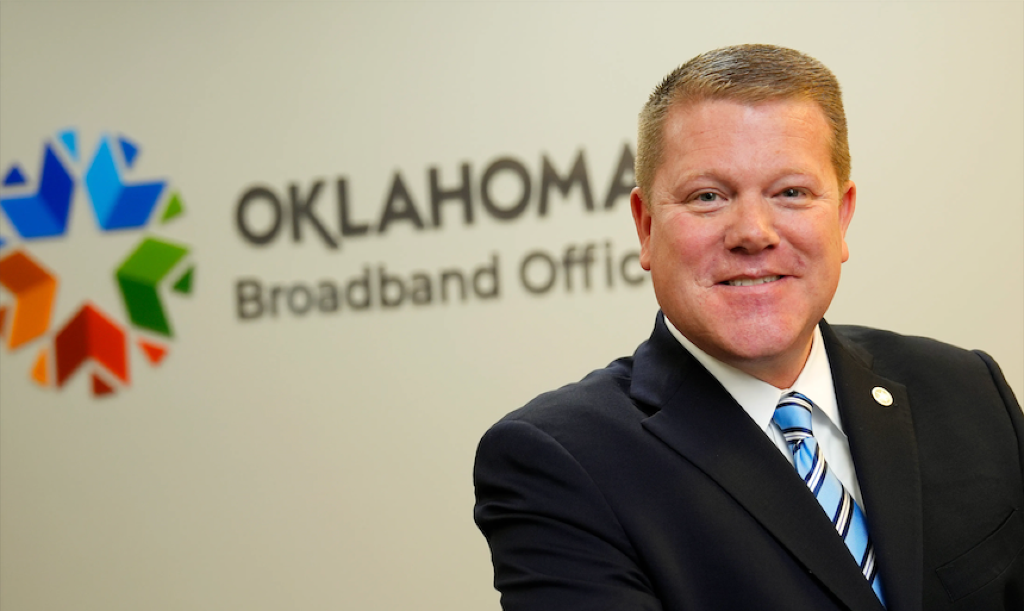
WASHINGTON, Jan. 16, 2026 – The Oklahoma Broadband Office celebrated the completion of two fiber-optic technology projects this week, which will serve 366 locations in Washita and Greer counties.
These projects, completed by Dobson Fiber, will improve reliability and internet-speed in Oklahoma’s rural communities, which are largely agricultural and have a lower population density.
The office said the builds were among the first it has completed since it was established in 2022, mirroring a similar development in New Mexico.
“These projects represent a major milestone for broadband expansion in Oklahoma,” said OBO Executive Director Mike Sanders.
“As more projects come online, we will continue to hold ourselves accountable for delivering reliable, high-speed internet to every corner of the state,” he said.
In 2022, the Oklahoma Legislature allocated $374 million in the State and Local Fiscal Recovery Fund (SLFRF) for the OBO with the goal of providing at least 95 percent of Oklahomans with high-speed internet access.
In November 2025, OBO pushed to open a Capital Projects Fund 2.0, a round of federal grant applications to provide internet access to more than 700 unserved homes and businesses in Oklahoma.
The completion of the two fiber-optic technology projects this week points to progress from the American Rescue Plan Act in 2021.
ARPA led to the SLFRF’s distribution for broadband expansion projects and infrastructure for rural and underserved areas. The deadline for states to distribute ARPA funds is December 31, 2026.
The OBO attended a groundbreaking event for Dobson Fiber in November 2024 to celebrate the start of all their projects. Dobson officials said they expect the rest of their projects to be finalized within the second quarter of 2026.
The state’s Broadband Governing Board has awarded 159 high-speed internet projects of which more than 75 percent are currently under construction or closing out.
Member discussion