
Ookla: U.S. Digital Divide Narrows in 43 States
Aggressive broadband expansion in late 2025 extended fiber access to 60 percent of U.S. homes.

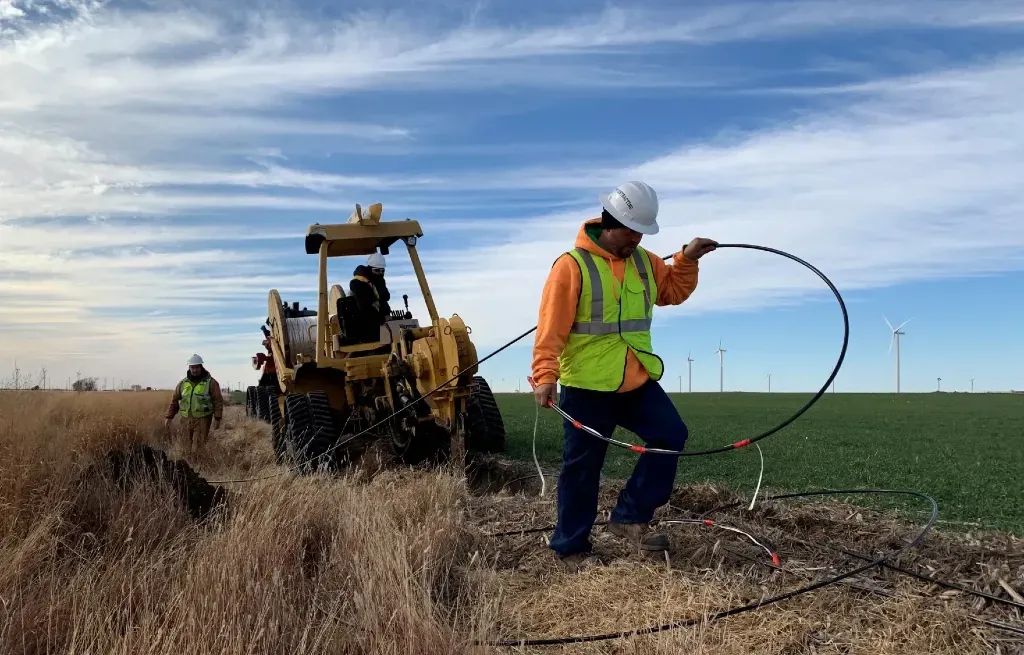
WASHINGTON, April 9, 2026 – Forty-three states reduced the gap between urban and rural broadband performance in the second half of 2025, according to a broadband speed report released by Ookla Wednesday.
The number of states where at least 60 percent of users achieve speeds of 100 Megabits per second (Mbps) download and 20 Mbps upload rose from 38 to 45 in six months, according millions of user-submitted Speedtests by Ookla.
The number of states where at least 70 percent of users meet that benchmark increased from five to 13, Ookla found.

Montana recorded the largest improvement, as the share of users receiving 100 * 20 Mbps speeds rose from 41 percent to 54.5 percent. Despite that gain, the state still ranks near the bottom nationally, with only Wyoming and Alaska ranking below, underscoring the challenges of deploying broadband in large, sparsely populated states.
Fiber deployments surged in late 2025, while Starlink expanded its satellite network and wireless carriers scaled fixed wireless access. Increased competition also pushed cable providers to upgrade their networks, improving speeds and overall capacity.
Fiber played a central role, extending coverage to more than 84.6 million homes, or more than 60 percent of U.S. households.
The FCC’s Rural Digital Opportunity Fund played a key role in fiber expansion, as the end of 2025 was a key milestone for awardees of the multi-billion dollar FCC initiative designed to bring high-speed broadband to underserved rural areas across the United States.
By the end of 2025, AT&T was the largest U.S. fiber provider, outfitting 32 million locations with fiber. Verizon ended 2025 with about 18 million fiber locations. The company’s acquisition of Frontier Communications, which closed in January 2026, will give it another 9.1 million fiber locations, Ookla reports.
According to Ookla, the five states with the highest percentages of fixed broadband users receiving the federal standard of broadband were Connecticut, New Jersey, Delaware, North Dakota, and Rhode Island, ranging between 73.3 to 71.45 percent served.
Satellite performance improved alongside fixed networks. In the second half of 2025, at least half of Starlink users in five states reached the Federal Communications Commission’s baseline standard of 100 * 20 Mbps, a level no state had achieved earlier in the year.
Nebraska ranked first in Starlink performance, with 58.31 percent of users reaching 100 * 20 Mbps speeds, up from 32 percent earlier in 2025. By contrast, Alaska continues to lag due to more limited satellite coverage.
In 29 states, Ookla found rural Starlink users outperformed urban users. At the same time, urban adoption of the technology is increasing, with states such as Florida and New Jersey now reporting more users in cities than in rural areas.
Broadband expansion is expected to accelerate in 2026 as federal funding moves into the construction phase.
The Broadband Equity, Access, and Deployment program has approved plans in 53 of 56 states and territories, setting the stage for large-scale infrastructure projects that are likely to further expand access nationwide.



Member discussion