Panel: Data Centers Won’t Drive Up Energy Rates
Companies are legally required to ensure rates will not increase, but Google promised to pay for transmission upgrades and develop on-site power generation.

Eric Urbach
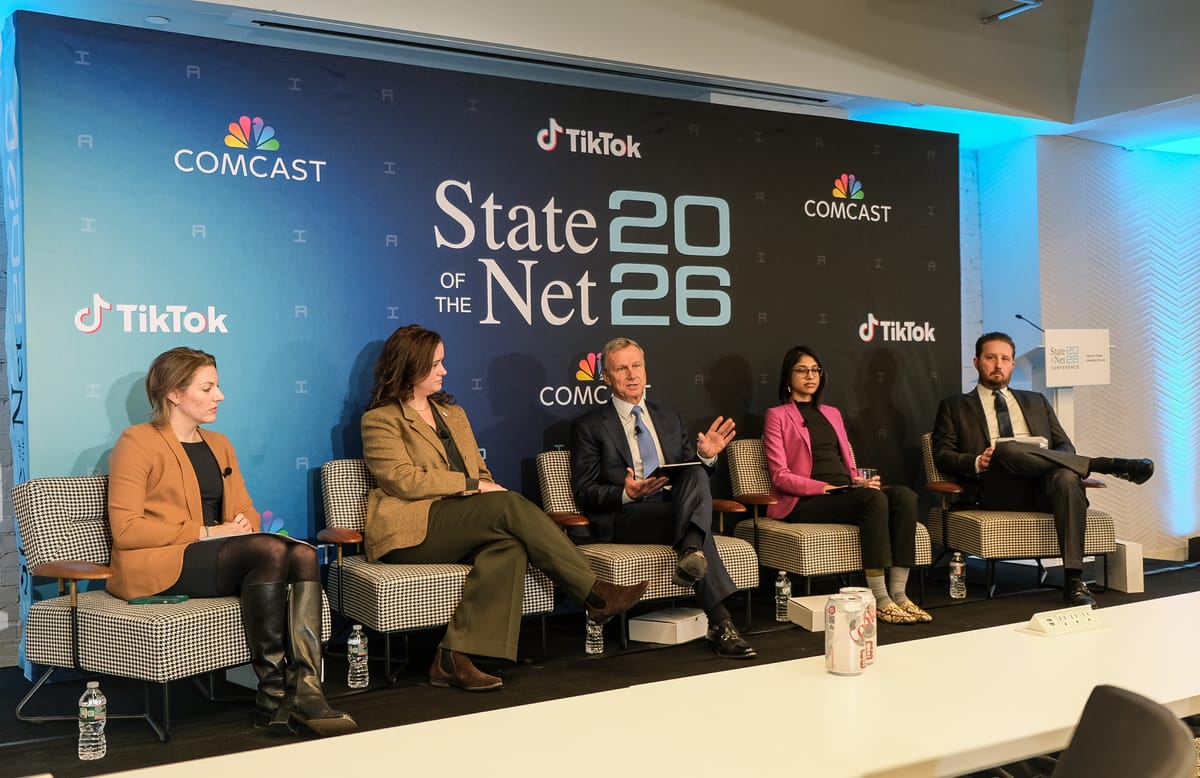
WASHINGTON, Feb 10, 2026 – Data centers will not drive up consumer energy prices according to a panel of tech industry representatives and think tank leaders at the State of the Net Conference on Monday.
While there are important steps to ensure data centers are a net benefit to their communities, companies like Google have committed to paying for grid improvements and power generation, according to Marsden Hanna, the head of energy and sustainability policy for Google.
“We don't get the upside of AI without the energy to power it,” Hanna said. “Its incredibly important that data centers pay for the incremental costs that is needed to build out the grid to serve their capacity and that’s something we’re committed to doing at Google. ”
Lindsey Griffith, CEO of Clean Tomorrow, a climate policy think tank that follows the grid space on the state level noted that transmission remains the largest bottleneck in cost reduction and that making improvements to transmission corridors will lead to decreased energy costs overall.
Griffith and her organization also supports the SPEED Act, a permitting reform bill in the U.S. Congress that would make changes to National Environmental Policy Act in an effort to shorten and limit the environmental review process. The act passed the House on December 18.
Steve DelBianco, CEO of NetChoice, a lobbying group for the technology industry, said that having data centers in communities actually brings prices down. DelBianco noted that data center companies have committed to grid improvements and power generation to compensate for their usage and there are laws on the books in some states that prevent data centers from driving up rates for consumers.
Several states including Pennsylvania and Georgia have introduced legislation to prevent ratepayers from paying higher prices due to data centers. In Congress, the SHIELD Act, introduced in the House by Reps. Mike Levin D-Calif. and. Kathy Castor D-Florida, would update “federal utility policy to ensure that massive electricity users, rather than everyday ratepayers, bear the costs of the grid infrastructure they require” according to the release.
The White House is also working on a compact with tech companies to prevent data centers from raising rates on consumers, which was first reported by Politico. Tanya Das, vice president of strategy at Dataerai, a start up that is working to utilize AI models for scientific research, noted that overtime models will get more specialized and therefore more efficient.
While Das believes that it’s difficult to predict the change in energy usage, overtime she believes that its possible that models will be run on smartphones instead of data centers, leading to lower costs.
A focus on communities
Griffith noted that conversations with communities are necessary and there are many ways to engage. She noted that community benefit agreements, communication of accurate time lines, and business opportunities are approaches states have tried so far.
Hanna agreed, noting that Google wants to be a robust partner for communities, noting that they have agreed to provide funds for weatherization of homes, training for the next generation of electricians, and funds that support energy affordability.
DelBianco added that due to the hyperpartisanship at this moment, both sides of the aisle have made it almost impossible to have a rational conversation about this issue, so they have attempted to bypass communities altogether and work with localities who are willing to listen.
“We end up turning to commissioners when we talk about commitments to support STEM education, to upgrade the municipal water system, to handle all our costs. They take those commitments on board and vote for the zoning changes, ” DelBianco said.

Member discussion