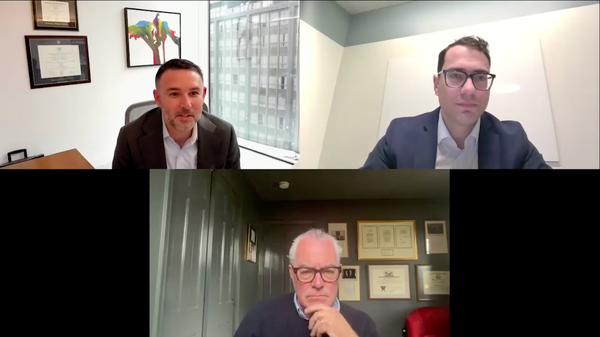
Panel Ties Broadband Affordability to Workforce and AI Readiness
New York’s internet policy illustrates state-driven affordability reform.

Akul Saxena
ARLINGTON, Va., Oct. 31, 2025 — Broadband and education advocates said the lapse of federal affordability programs left state and local governments with the burden of keeping students connected, warning that disconnections could derail digital learning and workforce readiness.
In the session on broadband affordability and connectivity, panelists said the expiration of the Affordable Connectivity Program and American Rescue Plan funds created an affordability vacuum for millions of households.
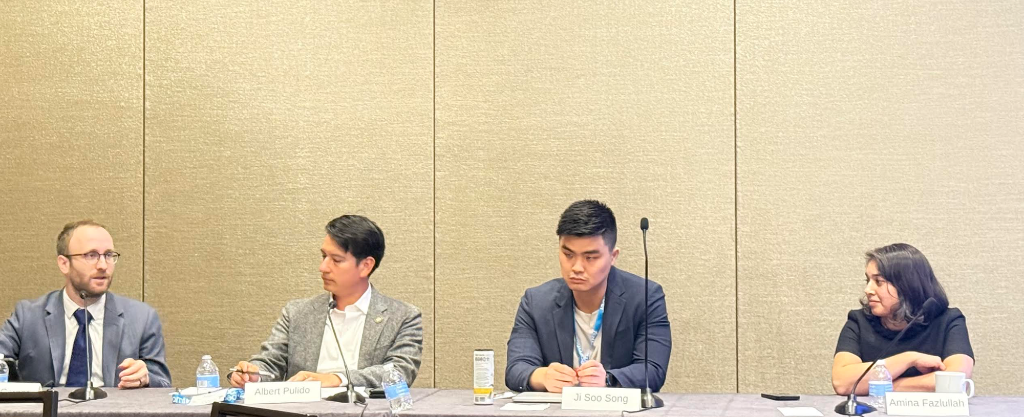
Amina Fazlullah, senior director of equity policy at Common Sense Media, a nonprofit focused on child-safety and privacy in technology, said the nation had entered a “lean federal period” for broadband funding and must now rely on state leadership to preserve affordability.
“We can’t be a global leader in AI if our students are disconnected from the foundation that learning requires,” she said, linking broadband access to national competitiveness.
Ji Soo Song, director of innovation at the State Educational Technology Directors Association, a national membership organization representing K-12 technology leaders in all 50 states, said pandemic-era relief briefly expanded student access but left no lasting structure once funding expired. He cited a 2025 SETDA survey showing only 26 percent of states plan to sustain broadband initiatives started with COVID-19 aid, noting that shrinking K-12 budgets and staffing losses were already limiting progress.
Albert Pulido, deputy secretary for high technology in the New York State Executive Chamber, described how New York’s Affordable Broadband Act became the only state law mandating low-cost service tiers. The measure, which took effect in January, requires providers to offer 25 Mbps service for $15 per month or 200 Mbps for $20, with oversight from the state’s Public Service Commission. Pulido said the state launched extensive outreach through 311 and 211 hotlines, multilingual enrollment materials, and text alerts to more than 600,000 Supplemental Nutritional Assistance Program recipients.
Drew Garner, state and local policy director at the Benton Institute for Broadband & Society, a nonprofit focused on media and technology policy, said affordability “remains the defining challenge of broadband adoption.”
He warned that “the affordability crisis didn’t end with ACP, it just became invisible,” and noted that states like Oregon and Connecticut have begun layering broadband subsidies into housing and utility programs to reach residents excluded from federal aid.
SETDA’s Song called for multi-sector coalitions - linking education, workforce, and broadband offices - to raise awareness and sustain policy momentum.
Panelists agreed that states must treat connectivity as core educational infrastructure, saying that lasting broadband affordability will determine whether students and the future workforce can fully participate in the digital economy.
Member discussion