
Pole Attachment Disputes Over Costs, Timelines and Safety at Broadband Breakfast Event
Industry officials clashed over pole replacement costs, make-ready timelines, and federal regulatory authority.

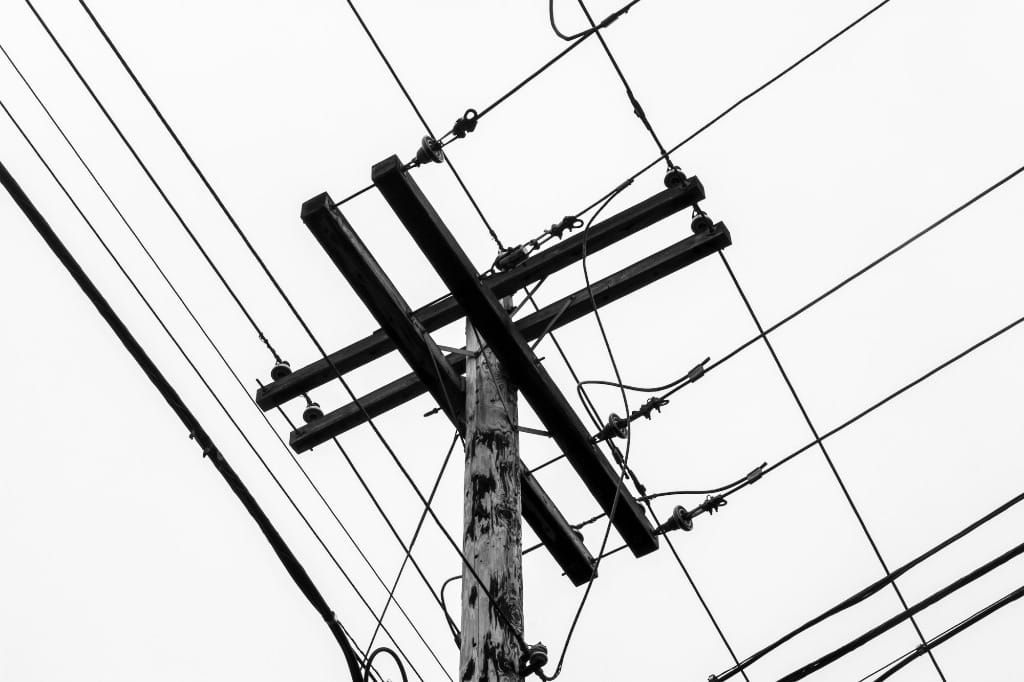
WASHINGTON, April 8, 2026 — Broadband providers and a representative of an electric utility disagreed Wednesday over who should pay for pole replacements, how fast make-ready work should happen, and whether federal regulators are helping or overstepping.
At a Broadband Breakfast Live Online event, industry officials and academics weighed in on a fight that could determine whether the nation's largest-ever broadband subsidy program meets its deadlines.
And an official representing the National Rural Electric Cooperative Association, which controls many poles, warned that its members’ infrastructure is not a public utility for the broadband industry to commandeer.
 Broadband Breakfast
Scale of the challenge
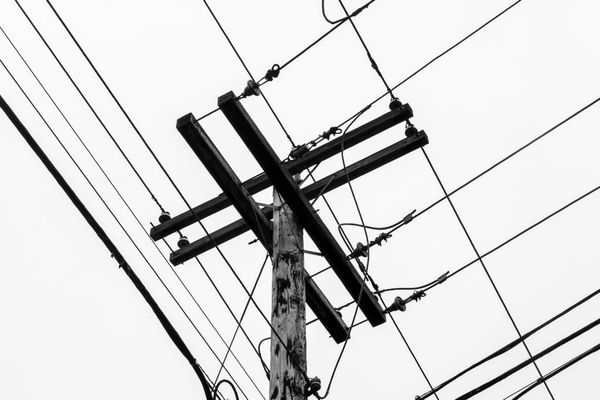
Aerial construction will account for about 41.8 percent of all BEAD fiber projects, potentially implicating roughly 5.7 million poles nationwide, according to forthcoming estimates from the Advanced Communications Law and Policy Institute at New York Law School.
Of those, approximately 3.9 million are utility-owned, split between investor-owned utilities at 44.6 percent and cooperatives at 40 percent.
The fragmented patchwork of federal, state and unregulated jurisdictions governing those poles creates "any number of possibilities for these types of disputes to arise," said the institute's director, Michael Santorelli, on the webcast. A detailed analysis is expected next week.
Costs: Who should pay?
Attachment fees may not be the barrier many assume, but that does not mean cost disputes are settled. Brian O'Hara, senior director of regulatory affairs at the National Rural Electric Cooperative Association, pointed to a Georgia program in which cooperatives offered a dollar-per-attachment annual rate in unserved areas.
Only 1.5 percent of eligible poles were used, and even those projects relied on federal funding. "That tells me that the attachment fee is not the problem," O'Hara said.
The deeper dispute is over pole replacements. O'Hara was blunt: "There is not a single reason electrically to have a taller pole. It is only to accommodate communications attachers," he said, arguing that electric ratepayers should not subsidize broadband deployment.
Nirali Patel, senior vice president of regulatory and legal affairs and general counsel at USTelecom, drew a different conclusion. She called replacement costs "a basic cost of doing business" that carriers should account for in their BEAD bids.
She praised the Federal Communications Commission’s 2023 clarification of its “cost causer” approach. Steve Morris, vice president and deputy general counsel at NCTA – The Internet & Television Association, went further, noting the commission's rate formula has been repeatedly upheld in court as compensatory to pole owners. "There's nothing wrong with that regime from a cost recovery perspective," he said.
Safety: Red herring?
The Maui wildfires, linked to overloaded poles, played a role in the discussion. O'Hara cited the disaster as proof that one-touch make-ready should not be expanded into the power space, noting that the electric utility, cable company and telephone company all faced major penalties. "Nobody wants that kind of outcome," he said.
Morris called the safety argument "a red herring." "No one wants an unsafe plant. No one wants to jeopardize the workers," he said, adding that the real question is whether safety concerns are being invoked to justify delay.
NTIA role in pole attachments?
Whether federal rules should override state and cooperative autonomy drew perhaps the deepest divide. NTIA's BEAD terms and conditions require subgrantees whose poles are not already regulated to adhere to FCC pole attachment rules, a provision O'Hara said could drive his members out of the program entirely.
Santorelli called the NTIA provision "a worthwhile attempt" to level the playing field but acknowledged the tension. "If his members drop out, then those will be rebid. I think it is a worthwhile attempt to try to get this process going," he said.
Patel agreed that consistency matters: "All subgrantees who are participating in a broadband funding program have to be playing by the same rules."
O'Hara was unconvinced, noting that under the NTIA terms, a cooperative that wins a BEAD subgrant would have to apply FCC rules to its own poles on its own project. "Doesn't make a lot of sense to me," he said.
Timelines
Additionally, timing, not price, emerged as a key point of conflict. Morris said some pole owners quote make-ready timelines of 18 months against a four-year BEAD grant window, and then refuse to let attachers hire outside contractors to speed the work.
"It can't be the case that the pole owner says, ‘I can't do the work myself in a timely way, and you can't hire anyone else to do it’," he said.
O'Hara fired back. "One thing I love from my attacher friends is they always want it faster, but they also want it cheaper. That's not reality," he said, adding that cooperatives are small businesses with limited crews and that the FCC’s "one size fits all" timelines do not account for the realities of serving five customers per mile.
But Patel cautioned against piling on additional mandates, arguing that recent FCC reforms, including bulk-order make-ready timelines and a rapid response task force, deserve time to take effect. "Simply piling on more deadlines, more mandates, more prescriptive pole rules are not necessarily going to make these real world obstacles just disappear," she said.
Ryan Kudera, manager of client services at broadband engineering firm Finley USA, described a third-party model in New Mexico that cut through the impasse: An independent contractor handles all pole analysis and make-ready coordination, with costs agreed upon by both sides before work begins.
"By taking that viewpoint and working together, then now they were actually able to increase the broadband deployment," Kudera said.




Member discussion