President Trump Issues ‘Rate Payer Protection Pledge’ Proclamation
Experts have said data centers are being added significantly faster than capacity is likely to catch up

Eric Urbach
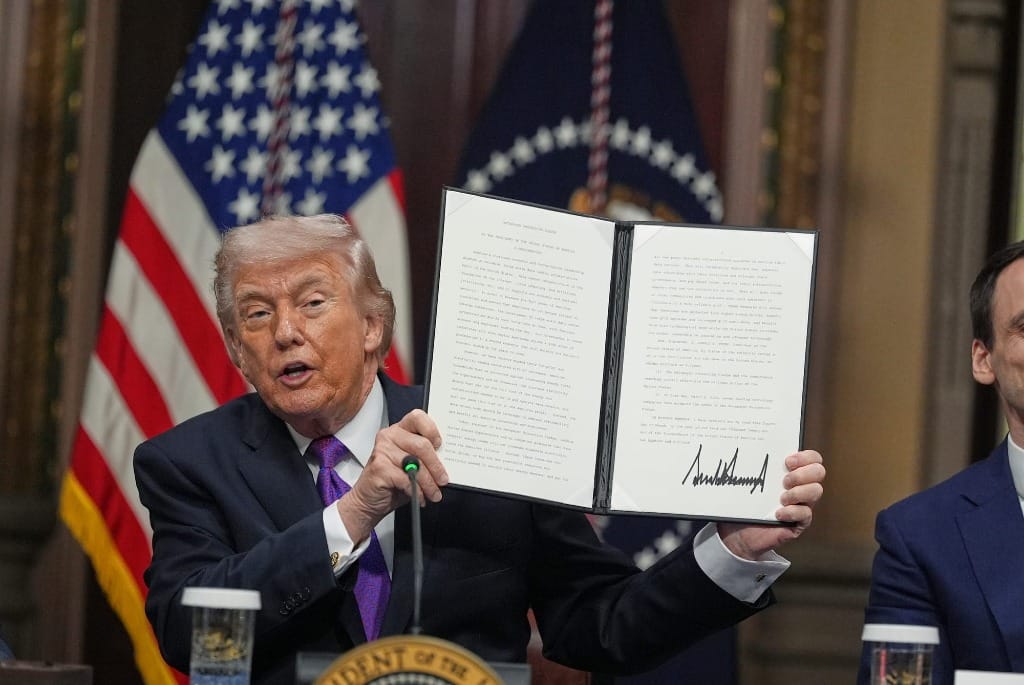
WASHINGTON, March 6, 2026 – Flanked by executives of some of the largest tech companies in the United States, President Trump signed the “Rate Payer Protection Pledge” proclamation on Wednesday, signaling an attempt at addressing affordability concerns for rate payers.
First announced at his State of the Union speech, the pledge aims to prevent electricity rate hikes for ratepayers as data centers come onto the grid by requiring hyperscalers and tech companies to provide their own on site energy and pay for necessary infrastructure upgrades to the grid.
“It’s going to have a tremendous impact on electricity costs, we’re going to bring down all of the costs,” Trump said. “Under this new agreement big tech companies are committing to fully cover the costs of increased electricity production at AI data centers.”
Representatives from Amazon, Google, Meta, Microsoft, OpenAI, Oracle, and xAI were in attendance and signed onto the pledge. Many of these companies already made public statements promising to pay for grid upgrades, supply power to cover data center usage, along with community investments and job training programs.
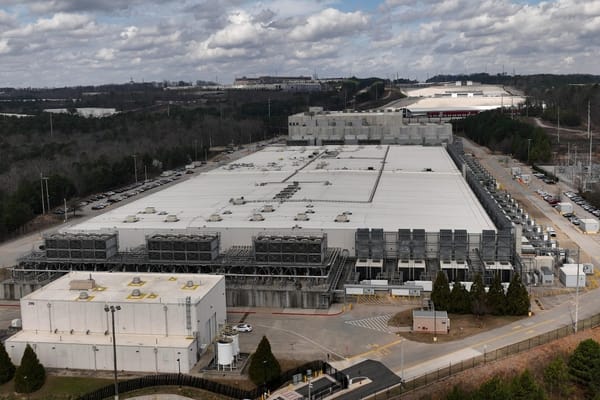
Experts have raised the alarm about the speed at which available capacity is being snatched by data centers, noting that the speed of added capacity is not being met by construction of new energy infrastructure.
At an appearance at The Brookings Institution on March 3, panelist Dr. Joseph Bowring, president of Monitoring Analytics, a PJM market monitoring service, noted that energy price increases around the Mid-Atlantic region are being driven up entirely by data centers.
In addition, Brandon Piepont, director of electricity at Energy Innovation, a climate policy think tank in San Francisco, added that power plants are not being added to the grid as fast as data centers are built, and likely will not be able to catch up.
“If we have to wait for 5 years for a project to get through the interconnection queue, and another several years for it to get through permitting, there's really no hope in supplying new data center demand by 2027 or 2028, because those timelines are so radically different,” Piepont said.
Abe Silverman, assistant research scholar at Johns Hopkins University added that the regional grid plans to add the equivalent energy use of “two Baltimores a year” to the grid, representing a huge increase in energy consumption without additional capacity.
Presidential proclamations have no force of law, and Sen. Mark Kelly D-Ariz., was quick to point out in a post on X that the agreement was the equivalent of a “handshake deal” that wasn’t going to be good enough to protect ratepayers.
“Americans need a guarantee that energy prices won’t soar and communities have a say.” Kelly said.

Member discussion