
Report Reviews Satellite Broadband Role in Federal Expansion Programs
A Congressional Research Service report warns cost and capacity limits may restrict rural deployment options


WASHINGTON, Dec. 1, 2025 — Low-Earth orbit satellite networks could help close broadband gaps in rural regions, but cost, capacity limits, and uncertain performance may restrict their use in federal expansion efforts, according to a report by the Congressional Research Service.
Don't miss:
 Broadband Breakfast
CRS, Congress’ own public policy research institute, said SpaceX’s Starlink (the largest satellite broadband provider with more than 6,750 satellites) now covers most of the United States.
However, only 17 percent of U.S. Starlink users met the Federal Communications Commission’s 100 Megabits per second (Mbps) download and 20 Mbps upload benchmark in recent testing. The result that could impact eligibility for continued federal support, the report said.
Amazon’s Project Kuiper launched its first 27 satellites in April and plans to deploy half of its planned 3,236-satellite constellation by mid-2026, according to the report.
Despite accelerating deployments, CRS said equipment and service costs remain barriers for unserved households. A standard Starlink terminal costs $349, monthly service is $120, and the lower-tier “Starlink Lite” plan runs $80 per month with reduced speeds during peak hours.
Federal policy treatment of LEO remains unsettled
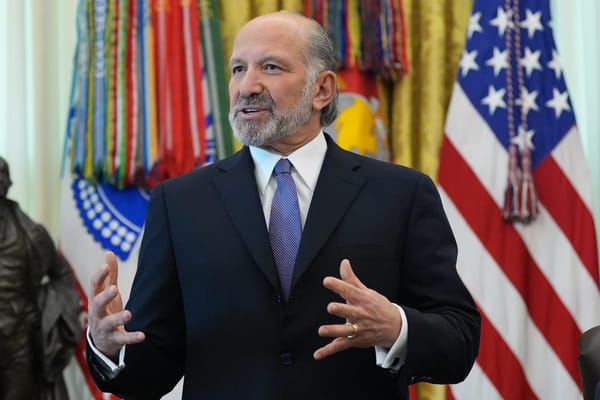
The report said federal policy treatment of LEO systems remains unsettled. The Broadband Equity, Access, and Deployment program initially prioritized fiber but adopted technology neutrality in June following a restructuring announced by Commerce Secretary Howard Lutnick.
The FCC denied Starlink support under the Rural Digital Opportunity Fund in 2023, saying the agency could not justify subsidizing a “still developing” technology.
CRS said LEO systems face certain physical and operational constraints. Satellites have five-year design lifespans compared with more than twenty years for fiber networks. CRS also cited concerns about orbital congestion and the threat of space debris as constellations grow.
The report also said capacity limits could worsen as subscriber numbers increase in specific regions. Each satellite serves a finite number of users, and CRS said network performance may decline in areas where demand exceeds available bandwidth, a constraint fiber networks do not face.
Lawmakers continue to push for LEO eligibility. The Bridging the Broadband Gap Act, H.R. 2750, introduced by Rep. David Taylor, R-Ohio, would authorize vouchers covering 50 percent of equipment costs and $30 per month toward service for the first year under BEAD - including satellite service.
CRS Telecommunications Policy Specialist Colby Leigh Pechtol, the report’s author, said LEO expansion could help address broadband and cellular coverage gaps but warned that limited satellite spectrum and the risk of interference with other spectrum users remain significant challenges.





Member discussion