
Rural Internet Access Critical for AI Competitiveness: Connected Nation
Rural America risks falling behind in the AI race without foundational infrastructure

WASHINGTON, Sept. 19, 2025 — Connected Nation is pushing to build internet exchange (IXPs) points in underserved markets as AI applications strain current infrastructure.
Can't see the full event video? Join the Breakfast Club to watch
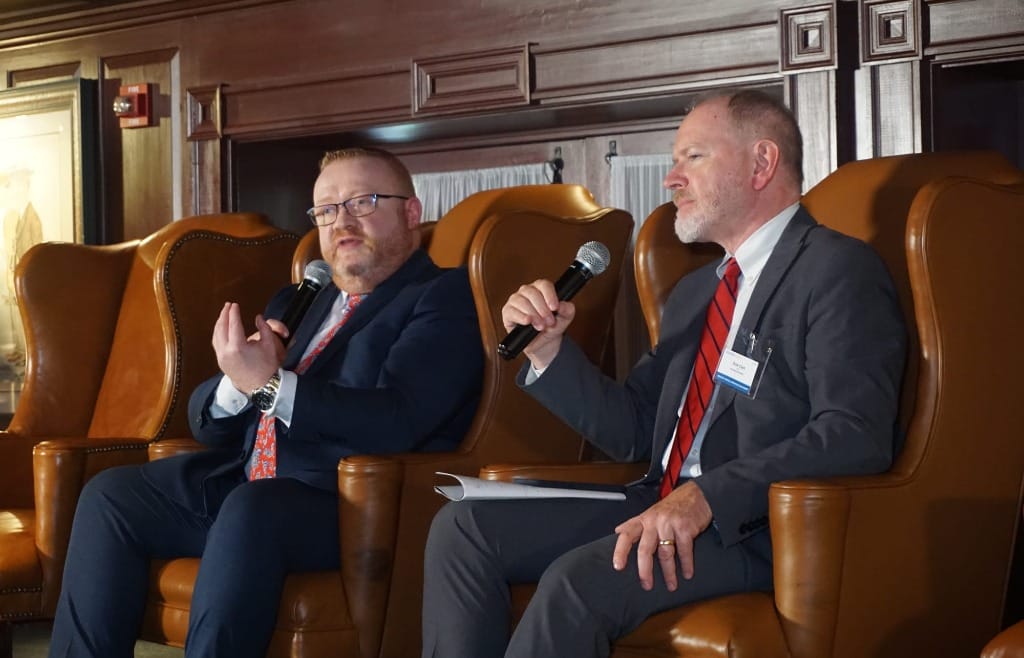
The idea for the national non-profit’s engagement with IXPs emerged after discovering Iowa schools were paying roughly 25 times the internet rates of major metropolitan areas, the organization’s Executive Vice President Brent Legg said in a fireside chat with Broadband Breakfast CEO Drew Clark on Thursday.
“We realized that one of the reasons why that region was having to pay so many middlemen to get to Chicago is that there was no neutral meet point for networks in eastern Iowa,” Legg said in the conversation at the Resilient Critical Infrastructure Summit in Washington.
Connected Nation partnered with Newby Ventures to reduce the Iowa City internet costs down from $3.85 per megabit to 35 cents through "aggregating where networks meet."
A template for bringing IXPs to Rural America
The Iowa success story became a template for Connected Nation’s broader mission: building carrier-neutral internet exchange points in Tier 3 markets, across the United States, such as Wichita, Kansas and Jackson, Mississippi.
The first major deployment is under construction at Wichita State University, targeting growing cities, home to universities, commercial airports, and populations exceeding 300,000 that remain dependent on distant metropolitan hubs.
Connected Nation hosted the AI Interconnection Summit in Wichita on this subject last week.
 Naomi Jindra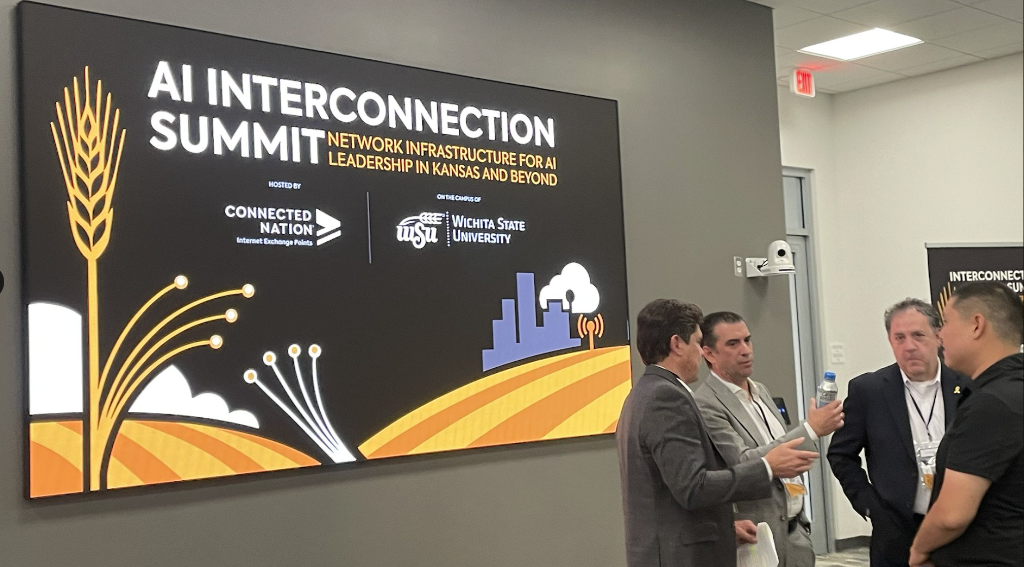
And yet 14 states currently lack any neutral IXP, creating latency challenges for AI inference applications, which require sub-10 millisecond response times for autonomous transportation systems, drones, and other emerging technologies.
Current routing patterns force data traffic from rural areas to travel hundreds of miles to exchange points in major metropolitans before returning to local destinations, a process that Legg referred to as “tromboning.”
Mississippi exemplifies the challenge Connected Nation aims to address. Despite Amazon Web Services investing more than $10 billion being built outside Jackson, local internet service providers cannot directly interconnect with the facility due to the lack of a neutral exchange point. Data traffic must still route through Atlanta or Dallas, negating the potential performance of infrastructure investments for Mississippi residents.
Not for AI inference-based applications
Connected Nation’s approach focuses exclusively on network interconnection rather than including high-powered computing infrastructure. Their facilities are designed for 350-500 kilowatts of initial power capacity with eight to 10-kilowatt racks, compared to AI data centers that power up to 100-200 kilowatts per rack.
"We're focused very much on the IXP part of the function," Legg emphasized.
"Our goal ultimately is to see as many new internet exchange points developed across the country as possible. The compute activity is necessary – that's just somebody else's lane to handle."
The infrastructure expansion becomes more urgent as states prepare to deploy remaining Broadband Equity, Access, and Deployment funds. Echoing other public estimates suggesting that between $20 and $22 billion in BEAD funding remains unallocated, Legg said the remaining funds presented a ”unique opportunity” to invest in critical infrastructure.
Economic development and national security
Connected Nation believes the current 125 internet exchange points spread across 57 metropolitan areas must at least double to serve the nation’s growing connectivity needs.
As federal policymakers advance the White House National AI Action Plan, Legg emphasized that network interconnection investments will be critical to ensuring rural Americans don’t fall further behind in the digital divide.
“We’ve got to use this opportunity to give us a huge boost toward winning the AI race with China,” Legg concluded, positioning internet exchange point deployment as both an economic development strategy and a national security imperative.





Member discussion