
Rural States Struggling with Affordable Broadband Access: BroadbandNow
The group found many rural households have access to broadband infrastructure, but not affordable plans.

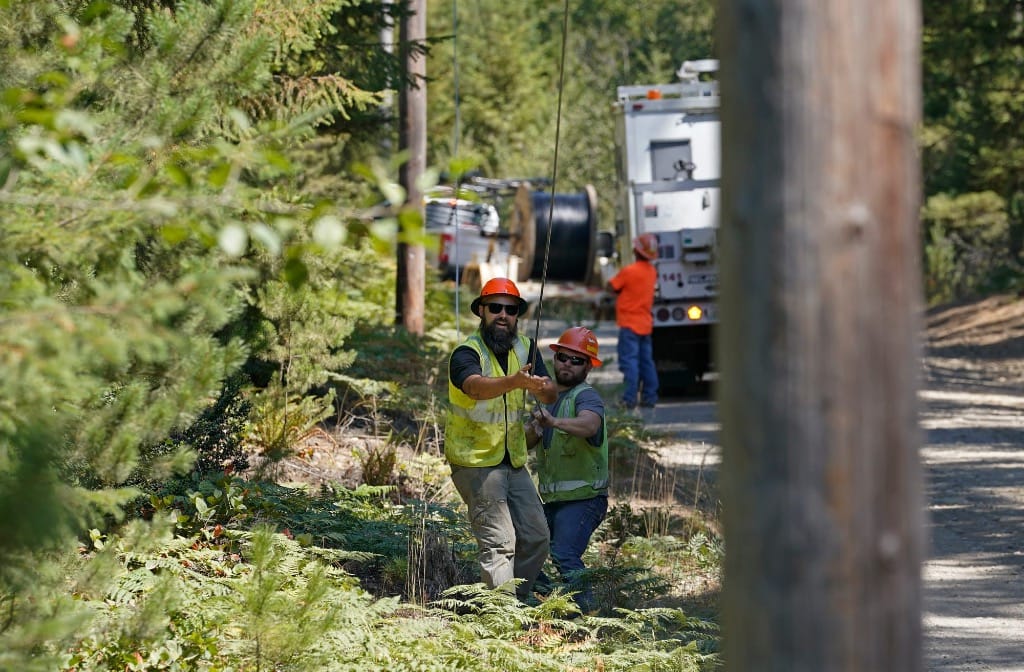
WASHINGTON, August 21, 2025 – Despite the prevalence of broadband infrastructure, many rural Americans still lack access to an affordable internet connection, according to new research from BroadbandNow.
“Our comprehensive analysis for 2025 reveals that while infrastructure deployment has improved nationwide, a devastating affordability gap threatens to leave millions of rural Americans disconnected despite available service,” Tyler Cooper, BroadbandNow’s editor in chief, wrote in a new report released Wednesday.
Cooper wrote that in five states, the difference between how many households had physical access to broadband infrastructure and those who could subscribe to “affordable broadband plans” exceeded 20 percent. Those were Alaska, North Dakota, South Dakota, Montana, and Wyoming.

That has to do with the difficult geographies of those states, according to Cooper. Western states have fewer people that often live quite far away from each other, a population density reality which makes deploying infrastructure more costly and makes it more difficult for meaningful competition to arise and drive down prices.
“In Alaska, three-quarters of residents technically have broadband available, but pricing makes it effectively nonexistent for all but the wealthiest households,” he wrote.
Rural areas also tend to have lower median incomes, which the group said compounded the issue.
In what Cooper described as a “counterintuitive” finding, BroadbandNow didn’t find that a strong fiber presence correlated to better general broadband outcomes. Several states with more than 60 percent fiber coverage were low in the group’s overall rankings, which took into account coverage, speed, and access to affordable plans.
Some states with lower fiber penetration, like California and Illinois, fared better thanks to “robust cable and fixed wireless networks,” he wrote.
The group also didn’t find a correlation between sheer number of ISPs in a state and overall broadband quality. In light of that, Cooper wrote regulators should attempt to assess the quality of competition and “focus on ensuring multiple high-quality options” rather than counting providers in a market.
The states that scored the best in BroadbandNow’s overall rankings were in the Northeast: New Jersey, Maryland, Delaware, Connecticut, and New Hampshire topped the list.
“The massive affordability gaps in rural states demand immediate policy intervention,” Cooper wrote.
“Potential solutions” he went on, “include:
- Expanding subsidy programs like the Affordable Connectivity Program;
- Implementing price caps in monopoly markets; and
- Requiring affordable tier offerings as a condition of infrastructure grants”
The ACP, which provided about 23 million low-income households with a $30 monthly internet discount, ran out of cash last year. The $42.45 billion Broadband Equity, Access, and Deployment program does require participants to offer a low-cost plan, but under new rules handed down by the Trump administration in June, providers are free to define what constitutes an affordable plan as they see fit.
States with laws capping prices for low-income consumers are also barred from enforcing those laws on BEAD participants. New York has the only such law in the country on the books, but other state legislatures are considering similar moves.
The BEAD rules caused California lawmakers to hold off on passing their own affordability bill. California Assembly Member Tasha Boerner (D-Encinitas), said in July she would stop moving her broadband affordability bill forward.
She said at the time the Commerce Department informed her that even applying for BEAD funding would have to exempt an ISP from the law to avoid jeopardizing California’s $1.8 billion in funding.
Cooper wrote that rural states would require different approaches for closing the digital divide than urban areas, with “affordability and basic access” being more important in rural states and “performance upgrades and competition” being chief concerns in urban centers.







Member discussion