
Rural Telcos Urge Focus on Operational Expenses for Universal Service
WISPA said the smallest ISPs shouldn't have to contribute.

WASHINGTON, Sept. 16, 2025 – The Universal Service Fund should emphasize ongoing operational support for rural ISPs rather than one-time construction funding, several rural broadband trade groups told lawmakers Monday.
“Unfortunately, at times in the past discussion surrounding the High-Cost Fund has focused so much upon construction – the question of initial network availability – that it has become confused with grants. Such a myopic focus on preliminary achievement of availability, however, neglects the more comprehensive and enduring question of sustainability,” the groups, led by NTCA, wrote.
Managed by the Federal Communications Commission, the roughly $9 billion-per-year broadband subsidy supports rural broadband networks, plus internet discounts for low-income households, schools and libraries and healthcare centers.
The USF’s High-Cost program provides ongoing support for operating rural networks, but also provided construction grants through two reverse auctions in recent years. Rural wireless carriers have also recently gone to the FCC to ask for more operational support, saying the less-robust legacy subsidies available to them weren’t enough to keep cell sites from losing money each month.
USF has been funded since the 1990s by fees on interstate and international voice revenue, with the accounting work delegated to the Universal Service Administrative Company, which the FCC oversees.
Expenditures for the program have remained flat in recent years but voice revenues are declining, a situation broadly considered unsustainable even if crafting a solution has proved a difficult task. The contribution factor, the portion of voice revenue that telecoms will pay into the fund, is expected to hit 36 percent in the third quarter of 2025.
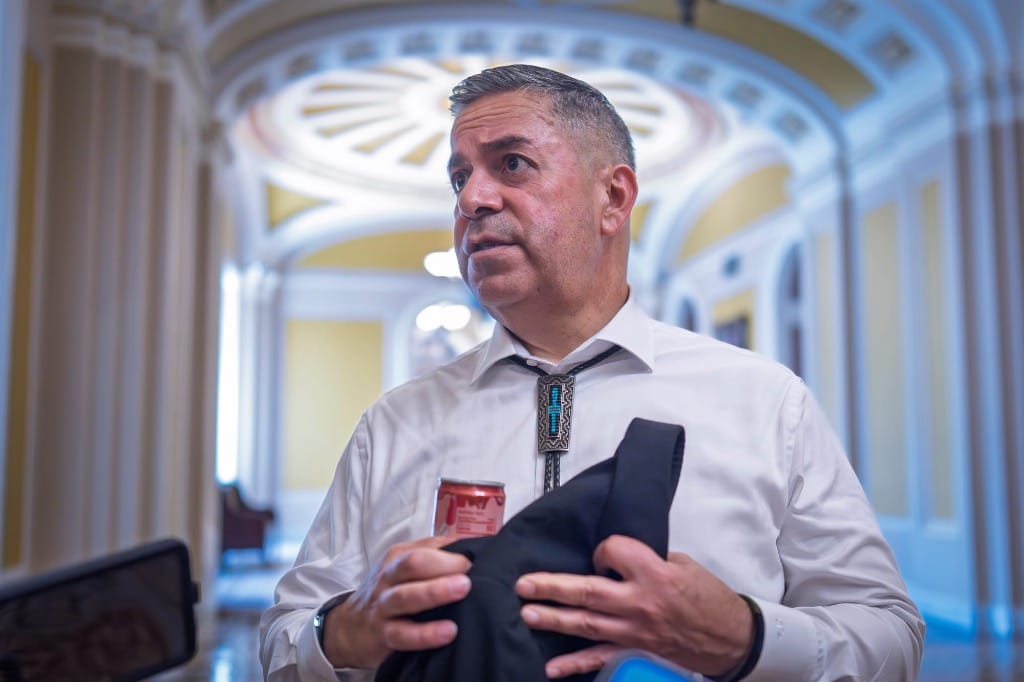
Led by Sen. Ben Ray Luján, D-N.M., a group of lawmakers from both parties and chambers of Congress solicited input on how best to reform the fund. Comments were due on Monday.
NTCA also said it was important for the FCC to improve its broadband coverage mapping. The agency’s continuously updated broadband map is an improvement over past efforts, but, the group argued, is still not an ideal starting point for determining which homes and businesses have internet access.
“As NTCA has noted in other contexts, this is due in large part to availability reporting standards that are tied to ISPs’ ‘advertised’ levels of performance instead of the ‘actual’ performance that can be achieved,” the group wrote.
WISPA, which represents small and wireless broadband providers, said the maps were a work in progress but were also “more granular, accurate, and reliable than previous efforts. Funding for the mapping process should continue on a going-forward basis.”
WISPA also said the FCC should not require USF participants to become eligible telecommunications carriers (ETCs) in the states where they operate. The process involves submitting five-year plans and other paperwork to state utility regulators.
Ditching it “would open the program to participation by more providers, ease the enrollment process, and fill in the gap left by the sunset of the [Affordable Connectivity Program],” a low-income broadband subsidy that did not require ETC status, the group wrote.
Nonprofit Next Century Cities also said the ETC standard should be abandoned, as it prevented small providers from participating in the USF’s Lifeline program, a broadband and phone discount for low-income households. Other commenters told the lawmakers Monday that Lifeline’s $9.25 monthly support should be increased to boost participation.
NTCA disagreed on ETC status, calling the requirement “critical to ensuring that consumers receive the service promised by the support recipient – in other words, to driving accountability.”
Shirley Bloomfield, NTCA’s CEO, also announced Tuesday she would be stepping down at the end of March 2026.
 Jake Neenan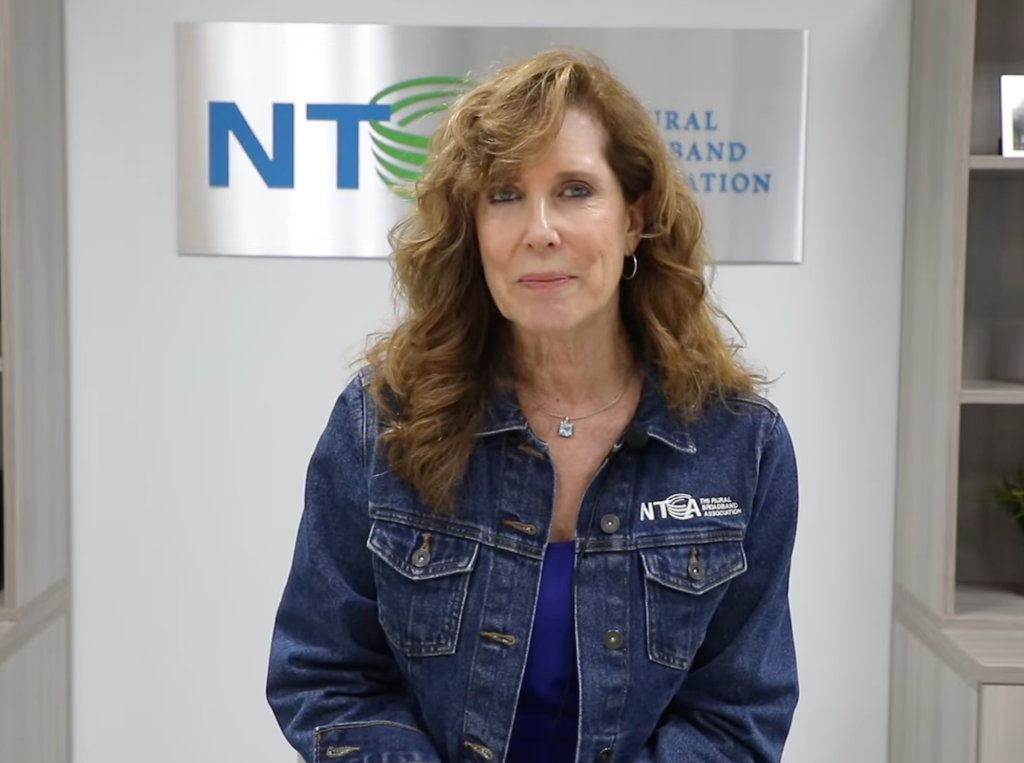
Contribution reform
After a lengthy legal battle, the Supreme Court ruled in June that the fund did not violate the U.S. Constitution – nonprofit Consumers’ Research had argued the funding mechanism amounted to an unchecked tax.
The telecom industry breathed a sigh of relief, but there’s near-unanimous agreement the fund won’t be sustainable if it continues to rely on a shrinking pool of cash.
The biggest question for lawmakers is where to look for a long-term funding source. The FCC has left it to Congress to provide a greenlight to start looking into and collecting fees from companies outside the telecom industry.
NTCA said “obvious and compelling” candidates included “revenues derived from: (1) telecommunications services and other telecommunications that constitute the current contribution base; (2) broadband internet access services; (3) digital advertising; (4) cloud computing; (5) streaming; and (6) platform agency.”
In other comments, trade groups USTelecom and CCA agreed that lawmakers should open the door to tapping revenue from large tech companies. The tech industry had argued to the previous USF working group in 2023 that broadband revenues would be sufficient to fund the program.
FCC Chairman Brendan Carr has favored looking at big tech companies. When the agency under then-Chairwoman Jessica Rosenworcel classified ISPs as telecom providers – a move that has since been struck down by the courts – the agency chose not to collect USF fees. Rosenworcel cited fears that rates could increase for consumers and floated the online advertiser idea to lawmakers.
WISPA emphasized that the current arrangement was unfair, calling it “a one-way street in which a smaller provider that chooses to offer voice may be contributing to a large carrier’s bottom line.”
Should the fund ultimately expand to assess fees on broadband revenue, WISPA said it should ensure small providers don’t have to contribute unless its revenues exceed a certain threshold.
TechFreedom, like other free market think tanks, said Congress should fund the program through the appropriations process.


Member discussion