
Second Circuit Affirms FCC's $47 Million Fine Against Verizon
There was already a circuit split on whether the FCC's forfeiture process is legal.


WASHINGTON, Sept. 10, 2025 – The U.S. Court of Appeals for the Second Circuit upheld a $47 million fine against Verizon on Wednesday, ruling the Federal Communications Commission’s forfeiture process does not violate the Seventh Amendment.
The FCC fined the three major carriers more than $200 million last year for not vetting third parties before selling them customer location data in 2018, and all three appealed. Verizon’s was the last case to be resolved.
The results set up a circuit split the experts said make an appeal to the Supreme Court likely. AT&T’s fine was thrown out by the Fifth Circuit, which said the FCC’s enforcement process was invalid under recent Supreme Court precedent, and T-Mobile’s was upheld by the D.C. Circuit.

The carriers had each argued, among other things, that the FCC’s forfeiture process violated their right to a jury trial in light of SEC v. Jarkesy, (2024) where the Supreme Court held that the Securities and Exchange Commission could not levy civil penalties without a jury trial.
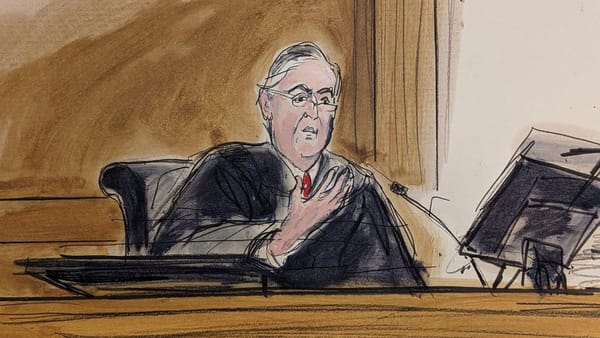
“Even assuming for the sake of argument that the Seventh Amendment applies in this context, we determine that Verizon waived its right to a jury trial,” Circuit Judge Alison Nathan wrote for the Second Circuit panel. There were no dissents.
Nathan was appointed by President Joe Biden. The other judges to hear the case, Gerard Lynch and Eunice Lee, were appointed by Presidents Barrack Obama and Joe Biden respectively.
The FCC’s process allows companies to get a jury trial, but only if they choose not to pay and wait for the Department of Justice to pursue a collection action. The companies instead opted to pay the fines, giving them the chance to appeal the penalties in court.
Verizon, like the other carriers, had also argued the Communications Act didn’t give the FCC power to regulate general device location data and limited the company to certain information, which could include location data, collected during phone calls. Nathan again disagreed.
FCC Chairman Brendan Carr, a commissioner at the time, dissented from the fines when they came down – before Jarkesy – and has said the agency should take a look at its enforcement process in the wake of the case. But under his leadership the agency has been defending its ability to issue fines.
In an unsuccessful bid to convince the Fifth Circuit to rehear its case, the agency argued that fines are one of its most important regulatory tools and are likely to be challenged across the board under the court’s ruling. Major trade groups have already argued the agency’s enforcement process is unconstitutional.
The Second Circuit decision “puts wind behind the sails of FCC regulatory enforcement, which is an incredibly important tool in this environment where customer data is often targeted by bad actors,” Peter Hyun, former chief of the FCC’s enforcement bureau, said in a LinkedIn message. “It also affirms that carriers have a legal obligation to safeguard consumer information, including location data.”
He said that an appeal to the Supreme Court was “very likely.”
Verizon did not immediately respond to a request for comment. Nor did the FCC.
Andrew Jay Schwartzman, senior counselor for the Benton Institute for Broadband & Society, said after T-Mobile’s fine was upheld in August that “so long as the Circuits remain split, one or both sides are quite likely to seek Supreme Court review.” He said they would probably wait for the decision to come down in Verizon’s case, which it now has.

.jpg)
Member discussion