
Senate Republicans to FCC: Protect 6 GHz, CBRS
The NTIA head also urged preserving the 6 GHz band for Wi-Fi on Wednesday.

WASHINGTON, Sept. 11, 2025 – Ten Senate Republicans are asking the Federal Communications Commission to preserve key shared spectrum as the agency sets about auctioning airwaves.
The Republicans’ budget legislation passed in July directed the agency to sell off 300 megahertz of non-federal spectrum, at least 100 megahertz of which are set to come from the upper C-band. A draft of the bill included provisions preventing auctions in the unlicensed 6 GHz band, used for Wi-Fi, and the shared Citizens Broadband Radio Service, used for wireless broadband and private networks, but the version that passed did not include them.
That made some proponents of the bands fearful the FCC would look at selling some of the shared airwaves to meet Congressional targets.

“If license holders or users of specific bands no longer have the certainty that comes with prior FCC decisions and spectrum auctions, investments, innovation, and consumers will ultimately suffer the consequences,” the lawmakers wrote in a Wednesday letter.
Specifically, they said “the FCC should ensure that existing operations in” the 6 GHz and CBRS bands “can continue operating without disruption.”
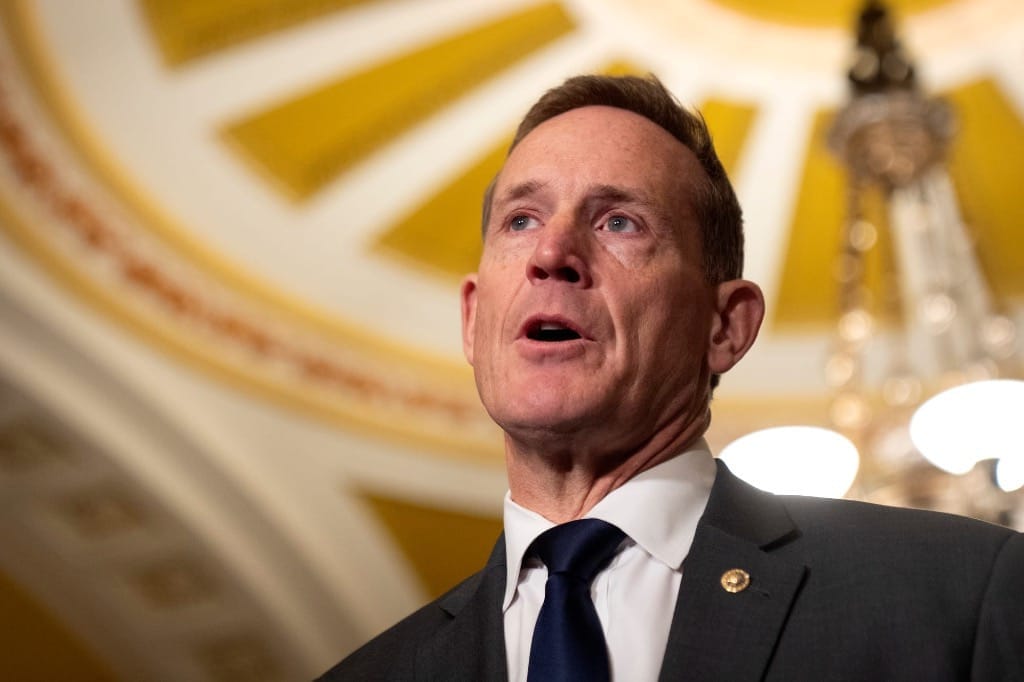
The letter was signed by five members of the Senate Commerce Committee, which oversees the FCC: Sens. Ted Budd, R-N.C., John Curtis, R-Utah, Cynthia Lummis, R-Wyo., Jerry Moran, R-Kan., and Bernie Moreno, R-Ohio.
The wireless carriers generally prefer the exclusive licenses their networks are built on, and the industry’s main trade group decried the FCC’s 2020 decision to make all 1,200 megahertz of the 6 GHz band unlicensed. AT&T and the Defense Department have proposed selling off part of CBRS and moving current users elsewhere.
Experts have noted it would be a complicated endeavor, as both bands are currently in use, and the FCC itself hasn’t indicated it has an appetite to upend either band. In his quest to open up more airwaves, FCC Chairman Brendan Carr pushed EchoStar to reach agreements to sell many of its licenses in recent weeks.
“CBRS decisions have proven transformative in generating competition and meeting the connectivity needs for rural America. We urge the FCC to preserve and build upon the current successes of CBRS,” the lawmakers wrote.
On 6 GHz, they added that “By making available spectrum for next-generation Wi-Fi the FCC cemented U.S. leadership in wireless innovation and created a much-needed pipeline of unlicensed spectrum to meet our nation’s ever-growing wireless demands.”
The Senators also urged the agency not to increase power levels in the CBRS band. The agency sought input on the idea last year, and users warned it could cause unworkable interference. Verizon supported higher power at the time, saying it would make the airwaves more useful for mobile coverage, and T-Mobile said the agency should collect more information before making any decisions.
The decision to open all of 6 GHz to Wi-Fi was made under the first Trump administration, as was the auction of CBRS priority access licenses. The band uses a tiered licensing system, with coastal Navy radars being protected from interference by companies that bought licenses, and those license holders being protected from entities using the band for free on a general access basis.
NTIA head agrees on Wi-Fi
The cable industry, fans of shared spectrum generally, was also happy to see Arielle Roth, the head of the National Telecommunications and Information Administration, call for Wi-Fi protections in a speech yesterday. The agency is the White House’s top telecom advisor and manages federal spectrum use.
“We commend Administrator Roth for recognizing Wi-Fi as a true American success story and an essential driver of our digital economy, extending the value of our gigabit investments and powering innovative wireless services,” NCTA - The Internet & Television Association, which represents the industry, said in a statement.
Most mobile traffic travels on Wi-Fi, but the cable giants offload even more and have CBRS licenses to support their mobile services, offered through deals with Verizon and T-Mobile. More licensed spectrum also gives more headroom for the carriers’ fixed wireless service, which competes fiercely with cable for broadband subscribers at home and in the office.
Chris Winfrey, CEO of cable giant Charter, met with two FCC commissioners last week to promote his company’s pending acquisition of Cox. He and other company representatives also took time to talk up 6 GHz and CBRS.
“As the fastest growing mobile provider, Charter is bringing lower prices and innovative services to consumers. Charter depends on unlicensed and shared spectrum to provide these benefits, and we specifically discussed Charter’s reliance on the full 6 GHz band (5.925 GHz to 7.125 GHz) and the CBRS band,” the company said in an ex parte filing.
“We explained how raising power levels in the CBRS band would undermine our investment in CBRS and urged the FCC not to raise power levels or make any other fundamental changes to this important spectrum band.”





Member discussion