Service Providers and California Officials Warn BEAD Builds Won’t Solve Affordability
Providers cited payment instability and post-construction costs, while officials urged an Affordability Connectivity Program replacement.

Akul Saxena
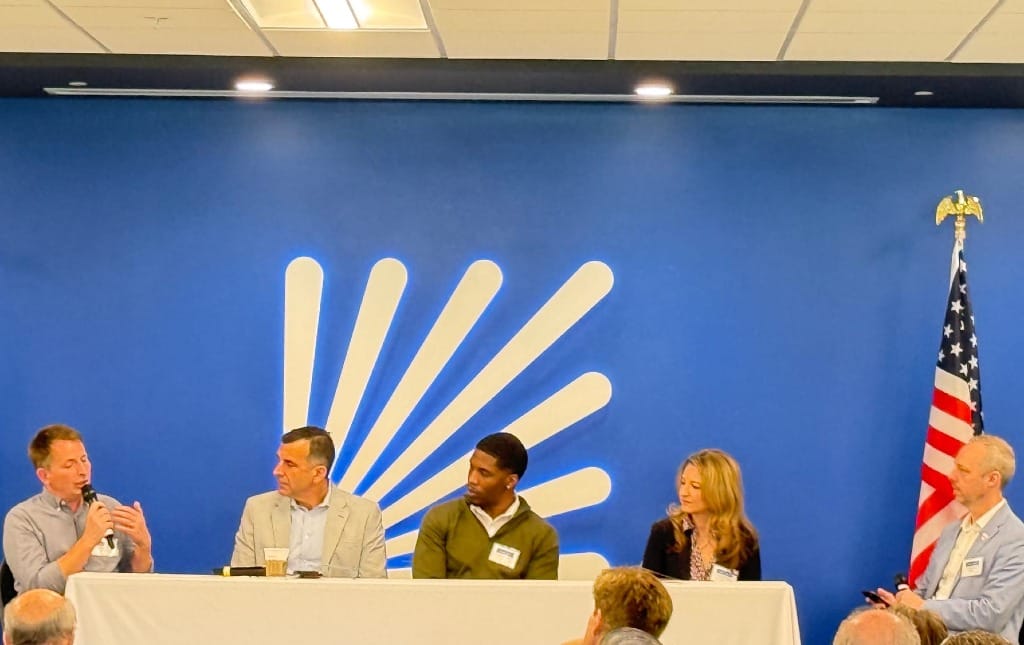
MILPITAS, Calif., Jan. 28, 2026 — State regulators, a California congressman, and broadband providers warned that federal infrastructure spending alone will not close the digital divide, citing unresolved gaps in affordability, oversight, and long-term network sustainability.
The warnings came during a panel on multi-state broadband grant programs held alongside the Connecting Communities Summit hosted by Tarana Wireless. Speakers argued that the federal Broadband Equity, Access, and Deployment program represents a major buildout effort, not a complete broadband policy.
Ana Maria Johnson, deputy executive director at the California Public Utilities Commission (CPUC), said California’s broadband strategy has evolved significantly since the launch of the California Advanced Services Fund in 2008.
Early state grant fund projects supported delivering as little as 3 Megabits per second (Mbps), she said. But the state has steadily raised standards as broadband has become essential infrastructure.
Expiration of ACP an adoption risk
Johnson said the expiration of the federal Affordable Connectivity Program created a major adoption risk. About 2.9 million Californians were enrolled in ACP before it ended in early 2024, representing roughly half of those eligible.
Since then, about 500,000 subscribers have joined California’s Lifeline program, originally designed for voice service.
To address that gap, Johnson said California launched a home broadband affordability pilot, requiring participating providers to offer plans delivering at least 100 Mbps downstream and 20 Mbps upstream.
The CPUC has received 11 pilot proposals, including from large providers, as the state tests whether it can replicate ACP-style affordability at the state level.
Stephen Schwerbel, director of state advocacy at the Wireless Internet Service Providers Association, who moderated the panel, cautioned that federal programs often outlast their original intent.
“There’s nothing quite so permanent as a temporary government program,” Schwerbel said, noting that terrestrial BEAD projects carry obligations extending to 2030.
A San Jose story
Rep. Sam Liccardo, D-Calif., whose 16th District includes much of Silicon Valley, said oversight concerns were already emerging around implementation of the BEAD program. He cited a Government Accountability Office report finding that the current administration’s approach to the rollout failed to comply with statutory requirements.
Liccardo said connectivity gaps persist even in technology hubs, noting that about 100,000 San Jose residents lack reliable home internet access.
The city previously invested in school district connectivity and deployed free public Wi-Fi to roughly 200,000 people in 2017, but Liccardo said sustaining adoption would require a replacement for the ACP.
On the provider side, Joshua Edmonds, co-founder of Ohio-based non-profit ISP DigitalC, said infrastructure alone does not guarantee viable service. DigitalC deployed a citywide wireless network in Cleveland in 17.5 months, using 53 tower sites and $53 million in funding from the 2021 American Rescue Plan Act.
Edmonds said the larger challenge comes after construction, as providers serving low-income communities must manage uneven customer payments while continuing to expand and maintain networks. “You build the middle mile to deliver the last mile, to go the extra mile,” he said.
James Hackett, chief executive of Cruzio Internet, an independent ISP operating in Santa Cruz County, Calif., since 1989, said affordability has become the central constraint for providers once networks are built.
Cruzio connected thousands of students during the pandemic using centrally located rooftops and philanthropic funding, he said, but that support largely disappeared after the ACP sunsetted.
“It comes down to average revenue per user,” Hackett said, arguing that technology-neutral grants allowing fiber, wireless, and next-generation fixed wireless deployments give smaller providers the flexibility needed to sustain service in high-cost or low-income markets.
Member discussion