SpaceX Keeping Options Open for Direct-to-Device Plans
The mobile carriers were dismissive of the company’s ambitions

WASHINGTON, Sept. 10, 2026 – SpaceX is keeping its options open for its mobile service ambitions, a senior company executive said Thursday.
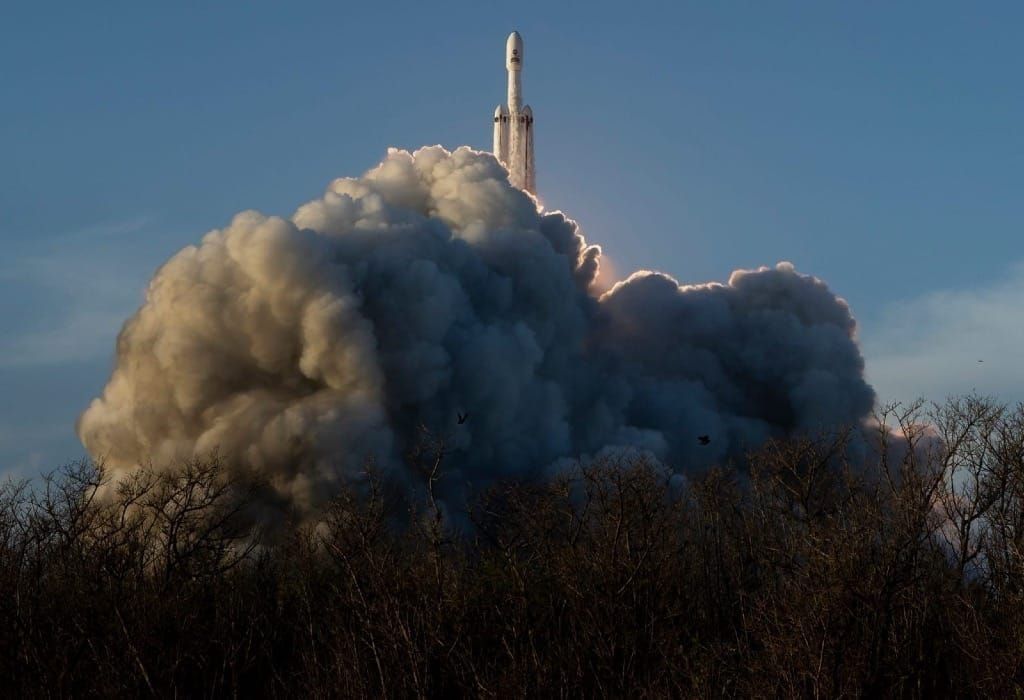
Chief Financial Officer Bret Johnsen said the company was planning to start launching its next-generation direct-to-device satellites next year and “have the capability to turn on service” by the first half of 2028.
“If we need to, we can stand up terrestrial solutions to put the terrestrial piece in place, or we could work with existing carriers,” he said. “We’re open to a lot of different ways to do it, but we’re marching down that path.”
He spoke at the Goldman Sachs Communicopia + Technology Conference in San Francisco.
On the satellite company’s earnings call last month, executives described competing with the terrestrial mobile carriers by placing tiny femtocells on mounts already used for SpaceX’s fixed broadband dishes.
That was widely panned by telecom analysts as unrealistic or insufficient to overcome the challenges of providing mobile service from space, but Johnsen said the company was serious about going to market with a “full 5G-quality service.”
Johnsen said it seemed like a “missed opportunity” not to offer mobile service when the company was capable of making and launching large numbers of connectivity satellites into low-Earth orbit.
He said a service with no dead zones and global roaming would be disruptive, especially if it cost “the same or slightly less” than existing plans.
“I think that’s why the big three operators were a little concerned about us and wanted to create a cartel, maybe. I don’t know what the term is,” he said. “But I’m not a lawyer, and I’ll let them figure that out.”
In May, the big three carriers did announce plans for a joint venture that would pool their spectrum assets for satellite companies looking to lease it for direct-to-device. It was seen as a means both of showing a united front against any SpaceX attempts at securing a better deal with one carrier, and at making it easier for SpaceX competitors to start offering service.
At the same conference Wednesday, AT&T CEO John Stankey described the planned joint venture as a means of addressing the most remote areas by adding a service that was cheap and easy to use.
“By buying in bulk from more than one constellation, we can drive pricing down for the customer,” he said.
Carriers dismissive
During the Goldman conference and the Citi Global TMT Conference in New York this week, the CEOs and executives of each of the three carriers took pains to throw cold water on the idea of SpaceX being a direct competitor.
They frequently cited the challenges in serving dense areas and maintaining signal strength that arise from satellites being so much farther away than cell towers.
“Whether it be broadband to the home or direct-to-device, satellite is a complementary service and, even over the medium to long term, not a direct competitor,” Verizon CEO Dan Schulman said Wednesday.
Outgoing T-Mobile CFO Peter Osvaldik said the femtocell strategy for direct-to-device was “not fathomable,” and was critical of the lack of clarity on how exactly SpaceX would pursue such a major endeavor.
“Imagine if we as a management team, over the course of two months, changed our strategy for how we’re going to roll out a wireless network like a dozen times,” he said. “You would laugh us out of the room.”
They also each reiterated they did not intend to offer SpaceX a mobile virtual network operator (MVNO) deal to offer service on their infrastructure.