SpaceX Planning 100K More Starlink Satellites
The company is planning ‘extremely low-latency and multi-gigabit symmetrical’ speeds for consumers and enterprises

WASHINGTON, July 8, 2026 – SpaceX is asking federal regulators for clearance to launch another 100,000 satellites to support its Starlink broadband service.
The rocket company told the Federal Communications Commission in a late Monday application that this new batch of satellites, called Gen3, would “deliver extremely low-latency and multi-gigabit symmetrical throughput for consumers, enterprises, and government users and billions of AI-powered devices around the world.”
The request is in addition to SpaceX’s plan to launch up to 1 million orbital data centers. That application drew some pushback at the FCC from competitors and astronomers.
SpaceX currently has more than 10,000 satellites in orbit, with about 3,300 Gen1 units and 7,500 Gen2 units. The FCC expanded SpaceX's Gen2 authorization to 15,000 satellites in January.
The Monday application “would allow the company to compete more aggressively both domestically and globally, facilitating deeper penetration into suburban markets and creating significant disruption for wireline broadband operators,” BNP Paribas senior analyst Sam McHugh wrote in an investor note Wednesday.
“We read this as a small negative to the broadband industry, as it underscores that Starlink is not constrained by capacity and has the potential to aggressively scale its subs base and expand into more suburban areas,” he continued, adding that cable ISPs might be the most vulnerable given their existing struggles with broadband subscribers.
Spacex envisioned two “very-low-Earth-orbit” shells at 323-327.5 km and 473-477.5 km to ensure multiple satellites, “dozens” in SpaceX’s estimation, were in view of any given terrestrial dish.
The system would use Ku-, Ka-, V-, and E-band spectrum. The FCC has already cleared that for use by SpaceX’s Gen2 constellation.
The new system would also make use of D- and W-band spectrum between 92 and 275 GigaHertz (GHz) for backhaul, the company said.
“Providing capacity for billions of people and AI-powered devices around the world will also require enormous expansion of backhaul capabilities,” Madeleine Chang, SpaceX’s satellite policy manager, wrote in the eight-page filing.
SpaceX also asked Monday to use extra Ku- and V-band spectrum with its existing Gen2 system.
When it approved the Gen2 expansion, the FCC gave a waiver for the constellation to exceed certain power and beam limits designed to protect incumbent geostationary satellites. The agency later adopted rules ditching those international equivalent power flux density (EPFD) limits within the U.S., but SpaceX’s application noted those had not gone into effect yet.
The company asked for a similar waiver to use the newly approved EPFD limits for its Gen3 constellation. LEO satellite operators have told the FCC the new rules would vastly improve their broadband services.
SpaceX said in a technical attachment that its Gen3 system would be disposed of by burning up in the atmosphere after their five-year lifespan.
Astronomers and other scientist groups have told the FCC they feared light reflection and radiofrequency emissions from low-Earth satellites would disrupt their work. SpaceX said in its application that it would “continue working closely” with astronomers and other scientists to preserve their research and use the newest gear to “minimize the impact of the Gen3 system on optical reflections and intentional and unintentional radio frequency emissions.”
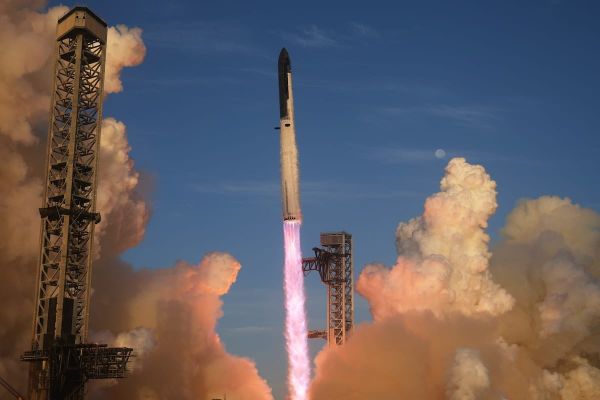
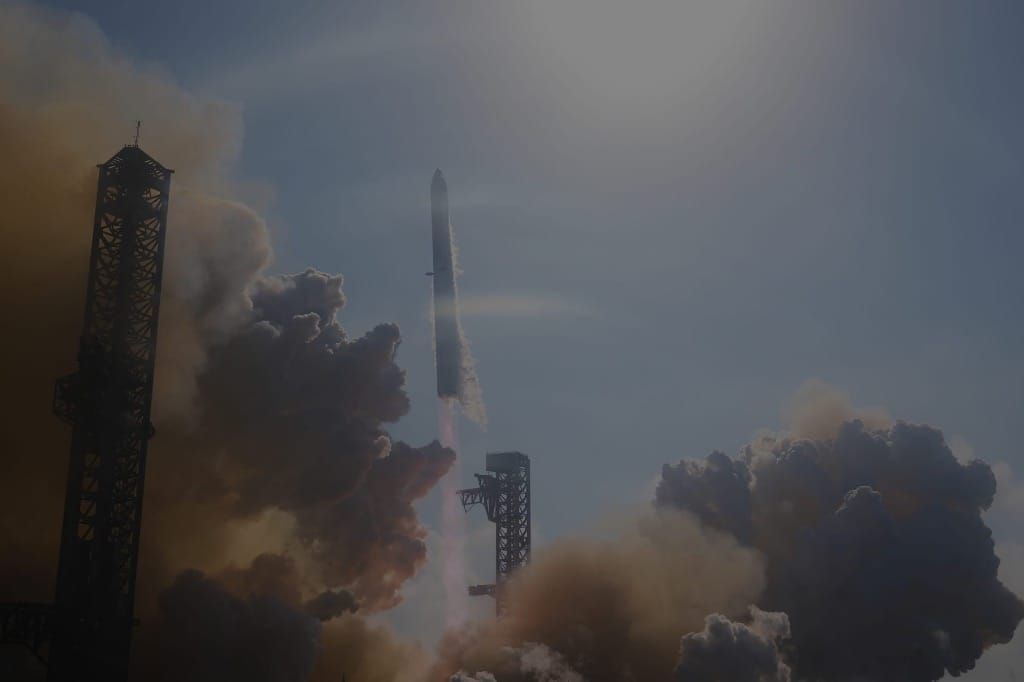
SpaceX’s new V3 satellites are aimed at supporting the high speeds the company is planning for the Gen3 constellation. But launching those will require the rocket company to get its fully reusable Starship rocket working, which can carry heavier payloads than its current Falcon 9.
SpaceX’s request was one of several filed Monday. Applications to use Ku-, Ka-, and V-band spectrum with low-Earth-orbit satellites were due as part of an FCC processing round.
Eutelsat asked for clearance for a 528-satellite constellation that it said would “evolve its existing services and expand the company’s ability to provide secure, resilient, high-speed, high-capacity communications services anywhere on the Earth.”
AST 800 MHz application
AST SpaceMobile told the FCC recently that it was planning to submit an application to test direct-to-device service on 800 MHz spectrum. It submitted that application July 2.
The FCC approved T-Mobile’s sale of the spectrum to investment firm Grain management last month. Grain is planning to lease it to a direct-to-device operator.
AST appears interested. It told the FCC it supported Grain’s plan and was well-suited to deploy the spectrum in the near future. The application to conduct testing is part of that plan.