SpectrumX Announces New Partnership for Speed Tests with Historically Black Colleges
Florida A&M University, the University of the Virgin Islands and Morgan State University will measure broadband speeds in underserved communities.

WASHINGTON, October 18, 2022 – The National Science foundation and SpectrumX announced earlier this month a new partnership with three universities to measure broadband speeds in underserved communities.

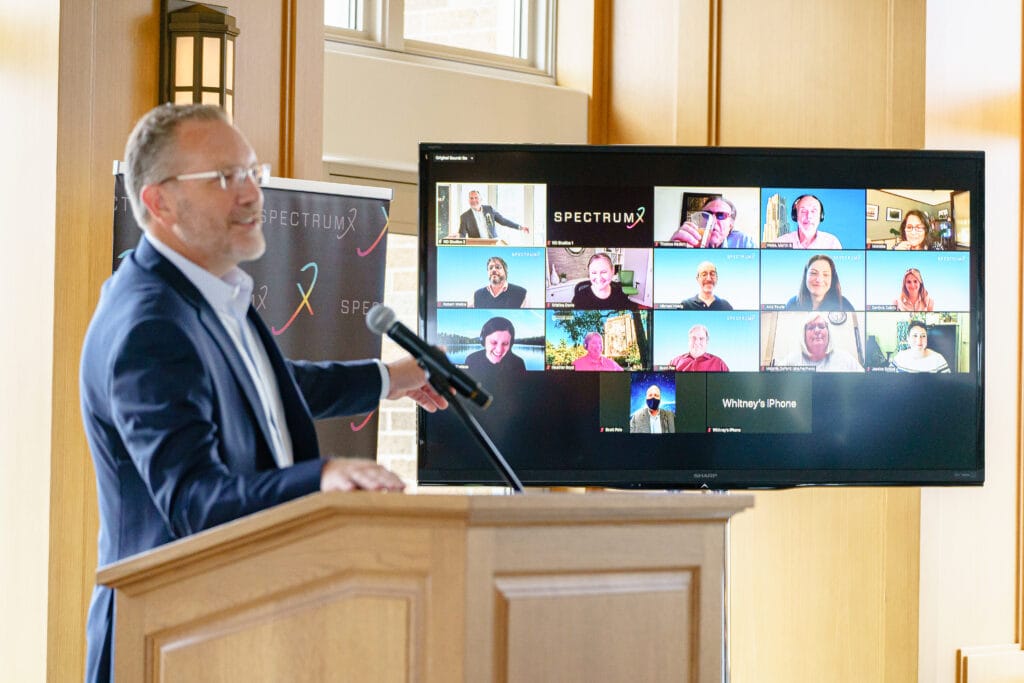
Florida A&M University, the University of the Virgin Islands, and Morgan State University in Baltimore will work with the NSF-funded SpectrumX to expand the “Broadband MAP US Project,” a program that measures speeds using smartphones, they announced at a SpectrumX event on October 3.
Historically, minority-serving institutions are located in underserved communities to provide affordable higher education. For example, the NTIA’s broadband need map lists Morgan State University as not up to speed or availability standards, as more than 25 percent of residents in this area report no internet access, access to devices, and speeds measured as less than 25 Megabits per second (Mbps) * 3 Mbps, the Federal Communication Commission’s current standard for “unserved” by broadband.
SpectrumX’s Broadband Mapping Using Smartphones project uses mobile applications like SigCap and the Federal Communications Commission’s speed test to map signal strength, identify underutilized spectrum, and verify coverage claims by carriers. Students participating in the project will walk around their designated area to collect cellular broadband speed data.
While Nick Laneman, the center director of SpectrumX’s wireless institute, told Broadband Breakfast the intended purpose of the project is to share the data with other academics to quantify the digital divide, he also said individuals can share the data with the FCC.
SpectrumX is a $25 million research, education and workforce development project funded by the National Science Foundation.
University of Notre Dame Launches SpectrumX to Expand Radio Spectrum Research
The FCC is considering similar preemption issues in multiple rulemakings.
The state’s new law, taking effect Oct. 1, will require a low-cost plan at $40 per month.
The BEAD broadband program now has roughly $20 billion in leftover funds, and policymakers are debating how best to spend it
Before the FCC reviews GCI’s requested ownership shift, the advocacy group says GCI’s DEI policies must end.
Member discussion