
State Broadband Bills of 2025: A Legislative Review
Across the U.S., lawmakers considered more than 600 broadband bills in 2025.

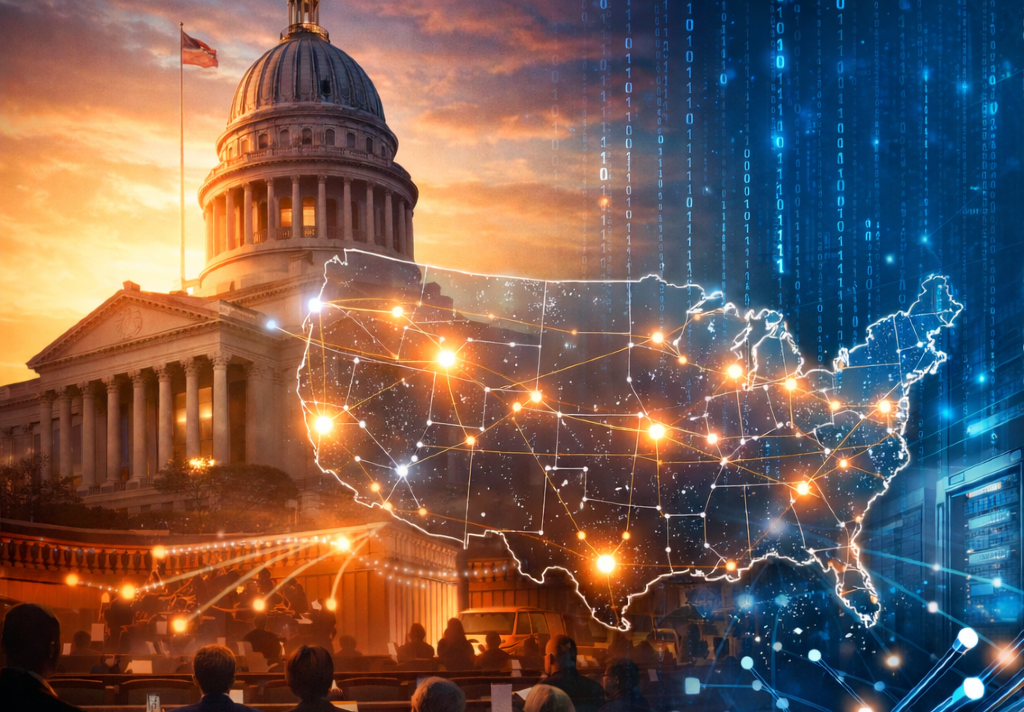
WASHINGTON, Jan. 2, 2026 – State legislatures across the country considered more than 600 broadband related bills in 2025, reflecting a growing recognition of high-speed internet as critical infrastructure.
Yet fewer than 140 of those proposals became law, with the most successful measures focused on speeding permitting, clarifying access to poles and rights-of-ways, and protecting networks from theft and vandalism.
From Hawaii to West Virginia, states experimented with innovative funding programs, incentives for data centers, and expansions of universal service to make broadband more accessible and affordable.
Infrastructure and permitting lead the way
Infrastructure regulation dominated state lawmaking in 2025, with lawmakers enacting bills to speed permitting, clarify access to poles, rights-of-way, and public land, and modernize carrier-of-last-resort obligations.
Colorado’s HB 1056 and West Virginia’s HB 3144 moved to accelerate the approval process for wireless facilities. The states' laws imposed firm deadlines on local governments to approve or deny applications for wireless towers and equipment, and expanded “deemed approval” rules when those timelines are missed.
Idaho’s HB 180 and Indiana’s SB 502 addressed pole attachment delays, including provisions for dispute resolution and mediation between utilities and broadband providers.
Idaho required cities, counties, and highway districts to approve broadband permits within 60 days, collocation requests for small wireless facilities within 60 to 90 days, and new large facilities within 150 days.
Indiana’s law, specifically concerning projects tied to federal Broadband, Equity, Access and Deployment funding, required process management agreements between attaching entities and pole owners.
Bills in Texas, Oregon, and Georgia sought to streamline access to state land. Oregon’s SB 793 established fees and compensation for easements on state land, Texas’s SB 1121 exempted certain communications facilities from notice requirements on state or local public land, and Georgia’s HR 98 allowed the state to grant non-exclusive easements for power lines, fiber, and related infrastructure.
States like Utah and Nebraska moved to roll back carrier-of-last-resort obligations, signaling a broader shift away from policies designed around maintaining legacy copper networks.
Utah’s SB 269 and Nebraska’s LB 311 relieved providers of COLR duties under certain circumstances, while ensuring continued service to existing customers until discontinuance is formally approved. Industry groups noted more than 20 states considered similar proposals in 2025, including Illinois, Colorado, Minnesota, and California.
Classifying telecommunications as critical infrastructure
Rising theft and vandalism of broadband networks prompted several states in 2025 to increase penalties for offenses targeting communications infrastructure. Louisiana’s SB 22, West Virginia’s HB 3504, Oklahoma's HB 2104, and Texas’ SB 1646 all elevated theft, vandalism, or sabotage to higher felony levels.
The toughest penalties emerged in Oklahoma and Louisiana. Oklahoma classified the willful damage, vandalism, or tampering with equipment at a critical infrastructure facility as a Class D3 felony, punishable by fines of up to $100,000 and prison sentences of up to 10 years. Louisiana authorized penalties of up to $50,000 and prison sentences as long as 20 years for theft involving critical infrastructure.
Other states took a more modest approach: West Virginia set fines for tampering with or damaging equipment at $10,000 and five years in prison. In Texas, theft of copper or brass from critical infrastructure was bumped up to a third-degree felony, carrying a punishment of 2 to 10 years in prison and potential fine up to $10,000.
Many states opted to strengthen existing criminal statutes by explicitly adding broadband and communications networks to their definitions of critical infrastructure. Measures along those lines included Alabama’s SB 54, Iowa’s HB 879, Kansas’ HB 2061, Kentucky’s SB 64, and Montana’s HB 257, as well as aforementioned laws in Louisiana and West Virginia.
A law enacted in California, AB 476, specifically targeted buyers or recipients of scrap metal, increasing penalties for knowingly purchasing illegally obtained metal to $5,000.
Broadband funding and expanding access
Several states established, expanded, or continued funding their own mechanisms to support the deployment of broadband infrastructure and expand access.
Hawaii appeared a stand-out case: it established a new state Broadband Office, a revolving fund to expand broadband infrastructure and affordability, and a statewide digital navigators program through H 934, enacted in June.
The new office is backed by $400 million in funding drawn from a mix of state appropriations, U.S. Treasury funds, and anticipated support from the federal Broadband, Equity, Access, and Deployment program. The legislation initially funded six digital navigator positions to help residents access and use the internet.
Colorado acted to expand broadband infrastructure through SB 81, establishing a state-level infrastructure financing authority dubbed the BUILD Authority. The 13-member board can issue bonds, enter contracts, invest, borrow, and provide loans to fund critical infrastructure projects, including broadband.
California’s SB 338 focused on expanding telehealth, creating a $2 million pilot program to expand access to health services for farmworkers in rural communities. Administered by the State Department of Public Health, the program provides grants to partnerships of community-based organizations to deploy “virtual health hubs,” which include computers, Wi-Fi, private cubicles for virtual visits, and telemedicine exam rooms.
Several states made adjustments to their Lifeline and Universal Service programs to improve affordability and expand access to the Internet.
New Mexico’s SB 126 increased the Rural Universal Service Fund appropriation from $30 million to $40 million. Oregon’s HB 3148 raised the Lifeline subsidy and added up to $100 in support for devices such as desktops and laptops. Wyoming’s SB 51 increased the state’s USF price benchmark from $30 to $35 and required periodic review by the Public Service Commission to ensure local service remains affordable.
Advancing digital infrastructure, data centers and energy
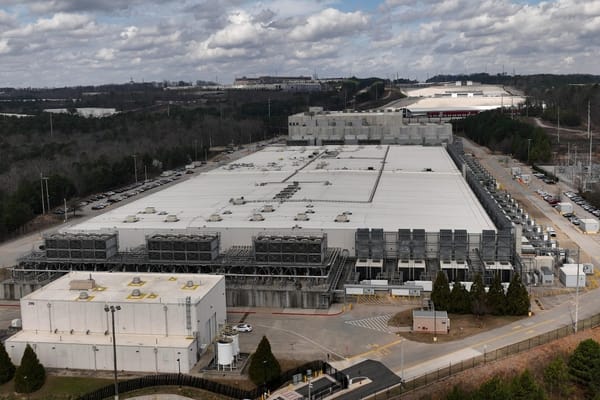
While at least 37 states passed laws to attract data centers in 2025, West Virginia took a particularly comprehensive approach, combining broadband incentives, localized energy support, and economic development measures to create a full-suite environment for the expansion of the large-scale industrial centers.
West Virginia’s SB 907 expanded the state’s Economic Development Project Fund to support broadband. The law allows up to $25 million annually to incentivize broadband providers to participate in federally funded programs, and up to $125 million annually for broadband loan insurance. Beyond broadband, the fund can finance a wide range of high-impact development projects.
The state also streamlined access to energy, land, and utility infrastructure critical for data centers supporting the development of artificial intelligence. West Virginia’s HB 2014, signed into law in April, established microgrid districts that exempt qualifying projects from state and local zoning and permitting requirements, offer special property tax treatment, and implement private microgrid systems for reliable, high-capacity power.
Broader trends among state data center regulations in 2025 included requirements in at least 17 states for data centers to create permanent jobs to qualify for tax incentives, and five states mandated that those jobs meet prevailing wage standards.
States also increasingly scrutinized energy use and environmental accountability.
Minnesota removed a sales tax exemption for large data centers and established an annual fee based on energy use, while New York proposed a grid modernization surcharge. Wisconsin, Illinois, and others began requiring sustainable design certification within a few years of construction.
In addition, several states, including Indiana, New York, and New Jersey, considered limits on nondisclosure agreements in economic development projects, including those involving data centers.
Relatedly, over 1,000 AI-focused bills were introduced in state legislatures in 2025, more than twice the number in 2024. At least 38 states adopted or enacted roughly 100 measures regulating AI in 2025.
Efforts states tried – and stalled
Not all 2025 broadband initiatives made it across the finish line.
Several states considered net neutrality legislation, including Hawaii’s SB 1036, New Jersey’s SB 113, New York’s SB 1342, and Pennsylvania’s HB 924, but only Maine’s HB 335 succeeded in becoming law.
Other proposals which sought to reduce broadband costs also fell short.
California’s AB 353, Connecticut’s SB 514, Maine’s H 79, New Jersey’s AB 4766, North Carolina’s SB 551, Rhode Island’s HB 5122, and Vermont’s HB 121 all sought to make broadband more affordable, but none were enacted. An effort to prohibit companies from placing limits on Internet data usage, Connecticut’s SB 92, ultimately failed.
Efforts to expand state funding for rural broadband in underserved farming communities, including Florida’s HB 1579 and Alabama’s HB 607, did not advance.
Some efforts to strengthen municipal broadband also stalled, including Massachusetts’ HB 95, which would have provided grants to municipal broadband agencies, and New Jersey’s AB 1497, which sought to lift restrictions on local broadband service models.
As states look ahead to the 2026 legislative session, the fate of broadband bills will vary.
Some state legislatures, like California, Colorado, Delaware, and Hawaii, allow bills from 2025 to carry over, giving stalled measures a head start. In contrast, states with no carryover, including Alabama, Connecticut, and Florida, require any bill that didn’t pass in 2025 to be reintroduced to be considered in 2026.
Note: This analysis is based on a review of state broadband legislation tracked in the National Conference of State Legislatures Technology and Communications Broadband Legislation Database for 2025.



Member discussion