Supreme Court to Review FCC’s Ability to Issue Fines
Mobile carriers want justices to find the agency’s process unconstitutional.

Jake Neenan
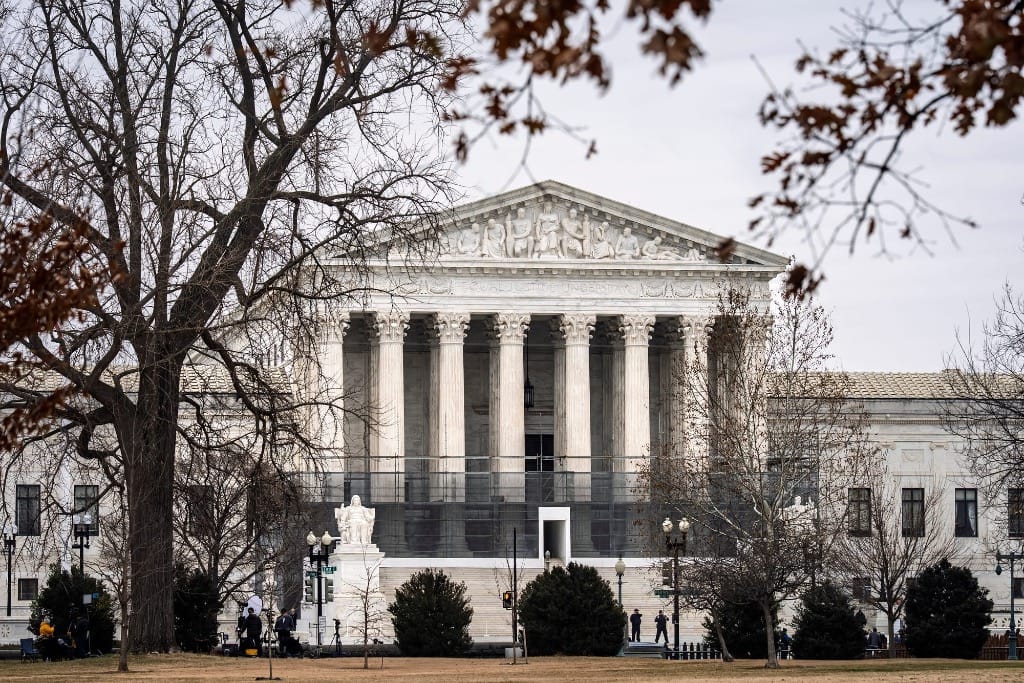
WASHINGTON, Jan. 9, 2026 – The Supreme Court decided Friday it will weigh in on whether the Federal Communications Commission’s process for issuing fines is unconstitutional.
Both the FCC and telecom carriers challenging their fines have asked the high court to resolve a circuit split on the issue. Those cases were consolidated.
After the three major mobile providers challenged fines last year, the D.C. Circuit and Second Circuit ruled in favor of the agency while the Fifth Circuit sided with AT&T and said the FCC’s forfeiture process was invalid.
The carriers argued that under the recent Supreme Court decision in SEC v. Jarkesy, they should be entitled to jury trials before having to pay any civil penalties to the FCC. The agency’s process does allow fined entities a jury trial, provided they refuse to pay and wait for the Justice Department to bring a collection action.
In the Fifth Circuit’s telling, that’s not enough, as fined companies have to flout an agency fine and suffer reputational harm while waiting for a DOJ suit that might never actually come. The two other courts reasoned the companies don’t have to pay anything before the DOJ forces them to, making the FCC’s process valid.
Fines one of FCC's main enforcement mechanism
The case is significant for the FCC, as fines are one of its main enforcement mechanisms. The agency told justices last year it can require the forfeiture of equipment or suspend licenses, but said it only uses those more “draconian” punishments in more severe cases.
“The FCC has described civil penalties as among the agency’s ‘most important regulatory remedies’; as ‘a top priority’; and as ‘an area of bipartisan agreement,’” the agency wrote. “The Commission relies on such penalties to enforce a variety of statutory and regulatory provisions, including provisions that protect consumer privacy, prohibit unlicensed broadcasting, and restrict robocalls.”
The agency fined T-Mobile, AT&T, and Verizon in 2024 for, in the agency’s view, not adequately vetting third parties before selling them subscriber location data.
FCC Chairman Brendan Carr, a commission at the time, dissented from the fines – before Jarkesy came down – and has said the agency should reform its enforcement process in light of the ruling, but has been defending the agency’s ability to levy fines.
Major industry groups asked justices to take the case last month and rule against the agency.
The two courts that upheld the FCC’s forfeiture process essentially held Congress could vest “jury-free, adjudicatory power with federal agencies as long as those agencies then hold targets in years-long purgatory with what ultimately has turned out to be an illusory opportunity for a jury trial at the end of the tunnel,” argued CTIA, the wireless industry trade group, in its brief. “That cannot be the law.”
Member discussion