Supreme Court Won’t Revive Fraud Suit Against Array
The whistleblowers still have a separate, similar suit ongoing against the UScellular successor.

Jake Neenan
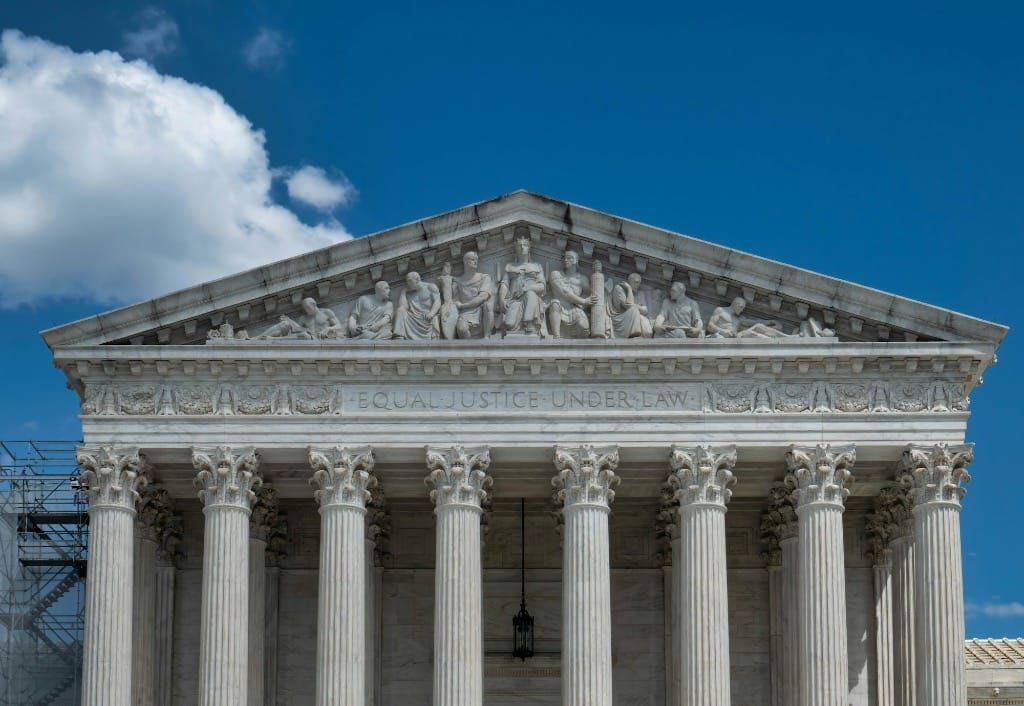
WASHINGTON, Jan. 12, 2025 – The Supreme Court will let stand a lower court decision ending a fraud lawsuit against Array Digital Infrastructure, formerly UScellular.
Justices denied Monday a petition from attorneys Mark O’Connor and Sara Leibman asking the high court to review a U.S. Court of Appeals for the D.C. Circuit decision dismissing their lawsuit against Array under the False Claims Act. They alleged Array used smaller subsidiaries to obtain spectrum auction bidding credits and buy spectrum for more than $100 million less than it could have on its own.
“We are disappointed the Supreme Court did not correct the DC Circuit’s errors but we knew the odds of a grant were very small,” Leibman, a former FCC attorney, said in an email. “We will now focus on our second fraud case against these defendants, which the DC Circuit properly remanded to the District Court judge.”
The two are making similar allegations in that second case, which the D.C. Circuit said in October could proceed in district court. The case is moving forward and Array has until Jan. 22 to file a motion to dismiss, with any reply due in March. The judge overseeing the case, District Judge Tanya Chutkin, said discovery would be stayed until she rules on the issue.
Chutkin had dismissed the case after finding the whistleblowers didn’t bring enough of their own original information to the case – the same reason the D.C. Circuit issued the dismissal SCOTUS declined to review. The False Claims Act allows whistleblowers to sue on behalf of the government and mandates higher penalties for fraudulently seeking government cash.
The D.C. Circuit found that in the second case at least, the attorneys had cleared that bar and “identified significant new evidence that Advantage,” one of the bidders, “never functioned as an independent business.”
Array, formerly the fifth largest wireless carrier in the country, changed its name after selling those operations and a chunk of spectrum to T-Mobile for $4.3 billion. It now operates its roughly 4,400 towers.
The company also received approval last month on a separate $1 billion spectrum sale to AT&T and has another deal with Verizon pending before the FCC.
About $400 million of the T-Mobile purchase price and $232 million of the AT&T sale are related to spectrum licenses won by the smaller companies, known as designated entities in FCC bidding rules, in which Array has an interest. The designated entity licenses in the AT&T transaction are all related to the case that the Supreme Court declined to take up.
Leibman and O’Connor had asked the FCC to overturn its decision allowing the T-Mobile acquisition and to pause the AT&T and Verizon transaction reviews while the cases play out. The agency was not persuaded by the attorneys’ allegations and did neither.
“Nothing in their petition warrants reevaluation of the qualifications of UScellular or its subsidiaries,” the agency wrote in its order approving the T-Mobile deal. “In sum, we do not find there is currently a material question of fact regarding UScellular’s basic qualifications to be a Commission licensee.”
Member discussion