
T-Mobile Leaning on Fixed Wireless for Broadband Ambitions
AT&T CEO John Stankey said the company was still all-in on fiber.

Jake Neenan

Dec. 9, 2025 – T-Mobile’s fixed broadband ambitions are relying largely on its fixed wireless offering, CEO Srini Gopalan said Tuesday.
The carriers and cable companies see convergence, offering fixed and mobile broadband to the same customer, as a way of keeping subscribers around longer and reducing churn. AT&T and Verizon are aiming to quickly expand their fiber footprints to accommodate that, viewing fiber as the superior fixed broadband technology because of its faster speeds.
“I’m not sure why fiber homes passed scale is relevant,” Gopalan said. “What matters is broadband scale, because you want to be able to market to a large number of customers. And that we have with FWA plus fiber.”
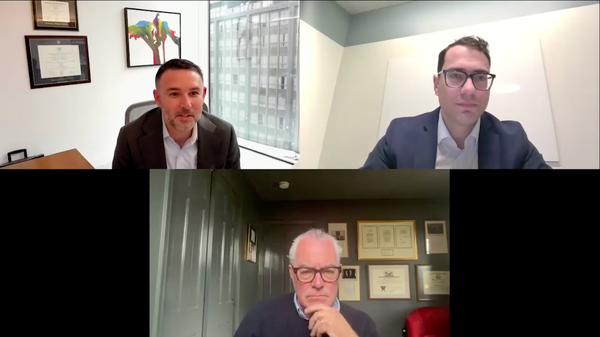
He spoke at the UBS Global Media and Communications Conference.
Gopalan said that in his experience not every customer is eager to pay for the fastest connection possible, and many will opt for a cheaper plan that meets their needs.
“It isn’t ‘fiber takes it all,’” he said. “That’s why we’re really bullish about FWA.”
He said if one converted the company’s fiber and fixed wireless goals – up to 15 million fiber passings in the long term and 12 million fixed wireless subscribers by 2028 – to “homes passed equivalents, then our plan is already like 45 million homes passed.”
That would be in line with Verizon and AT&T’s long-term fiber goals, at 40 million and at least 60 million passings respectively. T-Mobile has the most fixed wireless subscribers of the three major carriers at nearly 8 million.
“We don’t feel the need to rush into a game of more and more fiber homes passed purely because it leads to some mythical thing called convergence,” Gopalan said. “What we’re focused on is driving scale with FWA and driving scale from our JVs, especially from a homes connected and paying customers perspective.”
Through joint ventures with investment firms, T-Mobile acquired fiber providers Metronet and Lumos in 2025 and counts 934,000 total fiber customers, largely a result of those acquisitions. Gopalan didn’t say what T-Mobile’s current passing total was, but Metronet and Lumos had about 2.5 million passings between them before being purchased.
Asked by UBS analyst John Hodiluk whether T-Mobile would be interested in buying cable assets to expand its wireline footprint, Gopalan simply said “No.”
AT&T says it is all-in on fiber
AT&T CEO John Stankey, speaking in a separate session at the UBS conference, said the carrier was still all-in on fiber, both as a superior broadband technology and as a means of scooping up more mobile subscribers though bundles. He said holiday promotions were targeted at getting customers to sign up for both fixed and mobile broadband plans.
The carrier’s mobile market share is five percent higher in places where it has a fiber footprint, Stakney said. AT&T’s acquisition of Lumen’s 4 million-passing consumer fiber business is set to close in early 2026.
“I don’t think you’re going to see this ever-growing volume on fixed wireless from where we are today. You’re going to see us get better,” he said. “I’m not out here saying my goal is to double fixed wireless deployment in my footprint. That’s not my goal. My goal is to be really good with fiber.”
He said the carrier would still use fixed wireless to keep customers around in place where AT&T plans to build fiber in the future, and for business customers that use less bandwidth.
But outside the company’s fiber footprint, he said fixed wireless could still “converge the right consumer customers… in places where I don’t have fiber.”
AT&T’s fixed wireless service posted its most net additions ever in the third quarter, bringing the company to about 1.3 million subscribers. T-Mobile and Verizon have been pushing the service for longer and have nearly 8 million and 5.3 million subscribers respectively.
AT&T recently got a fixed wireless boost from leasing EchoStar's 3.45 GigaHerz (GHz) spectrum, which the carrier is in the process of buying outright. That, along with some radio upgrades, allowed the company to sell the service to more customers, Stankey said.
The company claims the extra airwaves are leading to a 55 percent speed increase for its fixed wireless subscribers, and even higher for mobile customers. In pitching the spectrum sale to regulators, AT&T also said it would help expand its fixed wireless service.
T-Mobile and AT&T are also currently in a legal fight over T-Mobile's easy switching service. AT&T filed a lawsuit alleging the tool was illegally scraping valuable customer data.
Copper retirement
Stankey said AT&T had fully closed down its first copper wire center, but didn’t say where. The carrier is planning to retire much of that infrastructure by the end of 2029.
He said the company had begun the process of shutting down about a third of its roughly 4,600 wire centers. That requires Federal Communications Commission approval, and FCC Chairman Brendan Carr is eager to help carriers turn down their legacy infrastructure. The agency instituted some new rules this year that make the process easier.
“We have a plan, a very deliberate plan, for when the next third and the next third will come,” Stankey said.
AT&T has said in the past it spends about $6 billion annually maintaining the infrastructure, which no longer provides competitive broadband speeds. Stankey said Tuesday the company could turn around and sell its copper as it retires wire centers.


Member discussion