
Tariffs Will Fall More on Fixed Wireless Than on Fiber: Industry Experts
Fiber impact not as great as expected, said fiber exec. Fixed wireless more vulnerable, said wireless exec.

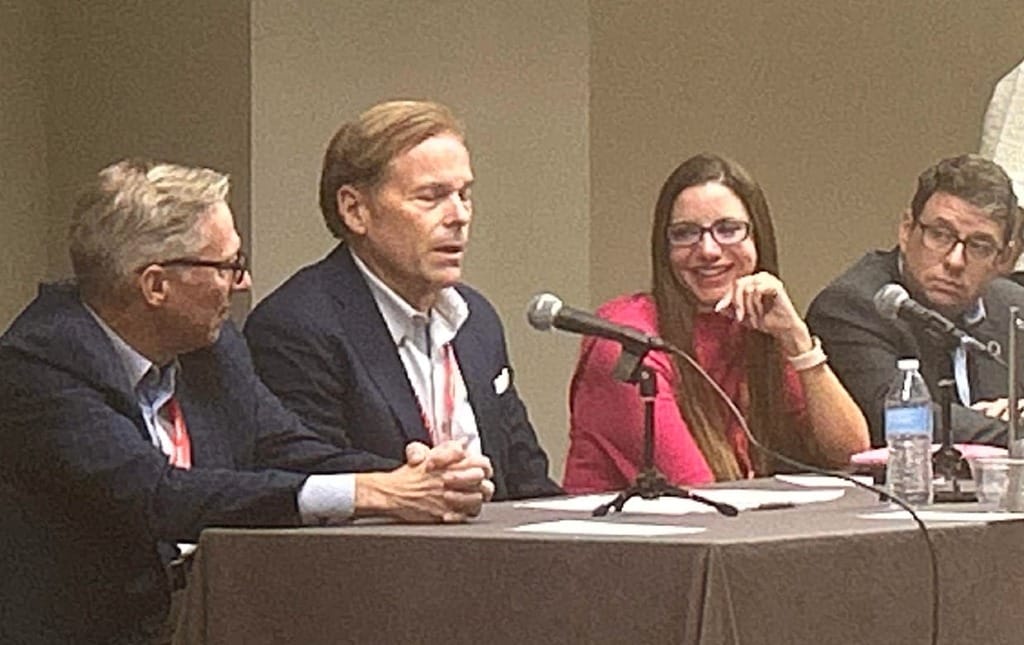
DENVER, August 5, 2025 – John Chamberlain, vice president of technology at Commscope, said Tuesday that tariffs would only raise the price consumers are paying for fiber by 2.5 percent.
“We’ve resourced plastic materials from Korea or Vietnam to here in the United States,” Chamberlain explained. “And that’s, frankly, it’s interesting, has had less impact than we thought it would be.”
Though Chamberlain was optimistic about tariff’s potential impact on fiber prices, Jeff Kohler, co-founder and chief development officer at Rise Broadband, was far more concerned about the fixed wireless industry.

“In the fiber world, it doesn’t seem like maybe it’s not going to affect pricing so much,” Kohler said. “But in the fixed wireless world, a lot of the wireless products are made in Southeast Asia. And of course, our suppliers have been very clear saying, yes, every penny will get passed on to you.”
The two executives were part of a panel entitled “Year 1 of the New Administration: How the Industry is Advancing Our Interests.” Panelists discussed the impact that the Trump administration has had on the industry, and ways to either capitalize on or mitigate against changes.
Jade Piros de Carvalho, fiber expansion lead at Socket Fiber, pointed out the effect that the National Telecommunications and Information Administration’s policy restructuring notice has had on the Broadband Equity, Access, and Deployment program.
“I think the data are very clear from these first rounds of the ‘Benefit of the Bargain’ that the policy restructuring notice has definitely had a chilling effect on participation,” Carvalho explained. “And so we’ve seen this from, well right here in Colorado, like a 30 to 40 percent reduction in participation. Kansas had a 20 percent reduction.”
Carvalho also noted that the decrease in broadband serviceable locations in the BEAD program had raised costs for some providers to serve remaining locations.
“Because of the decrease in BSLs in my area, [one provider has] gone from like $10,900 a premise to like $18,000 a premise,” Carvalho said.
Patrick Macken, executive vice president and chief legal officer at Ribbon, a secure cloud communications and IP optical networking company, noted the development of artificial intelligence during the Trump Administration, and urged providers to build infrastructure resilient to cyber attacks.
“At this point, if you’re not doing segmented architecture in your network you’re already behind,” Macken said. “It’s not a matter of it is going to happen but when.”
Member discussion