
Texas BEAD Plan $2 billion Under Budget
The state would get fiber to about 51 percent of its BEAD locations, with 22 percent in line for satellite.


Oct. 14, 2025 – Texas’s draft spending plan under the Broadband Equity, Access, and Deployment program came in more than $2 billion under budget, the state announced Monday.
Allocated more than $3.31 billion in 2023 to connect its remaining unserved and underserved homes and businesses, the state is planning to spend $1.27 billion on broadband deployment under the program.
That can in part be attributed to a nationwide reduction in eligible locations since initial allocations were made under the $42.45 billion program. Broadband maps improved and ISPs continued to build out through private investments and other state and federal grant programs.
Texas’s total fell from nearly 780,000 in 2023 to about 240,000 before grant applications were solicited this summer.
In March, Texas Broadband Development Office Director Glenn Hegar said he expected to come in as much as $1 billion under budget, ultimately an underestimation. The location count had already fallen dramatically at that point, but in June the Trump administration updated BEAD rules to eliminate an explicit fiber preference and further emphasize cost savings.
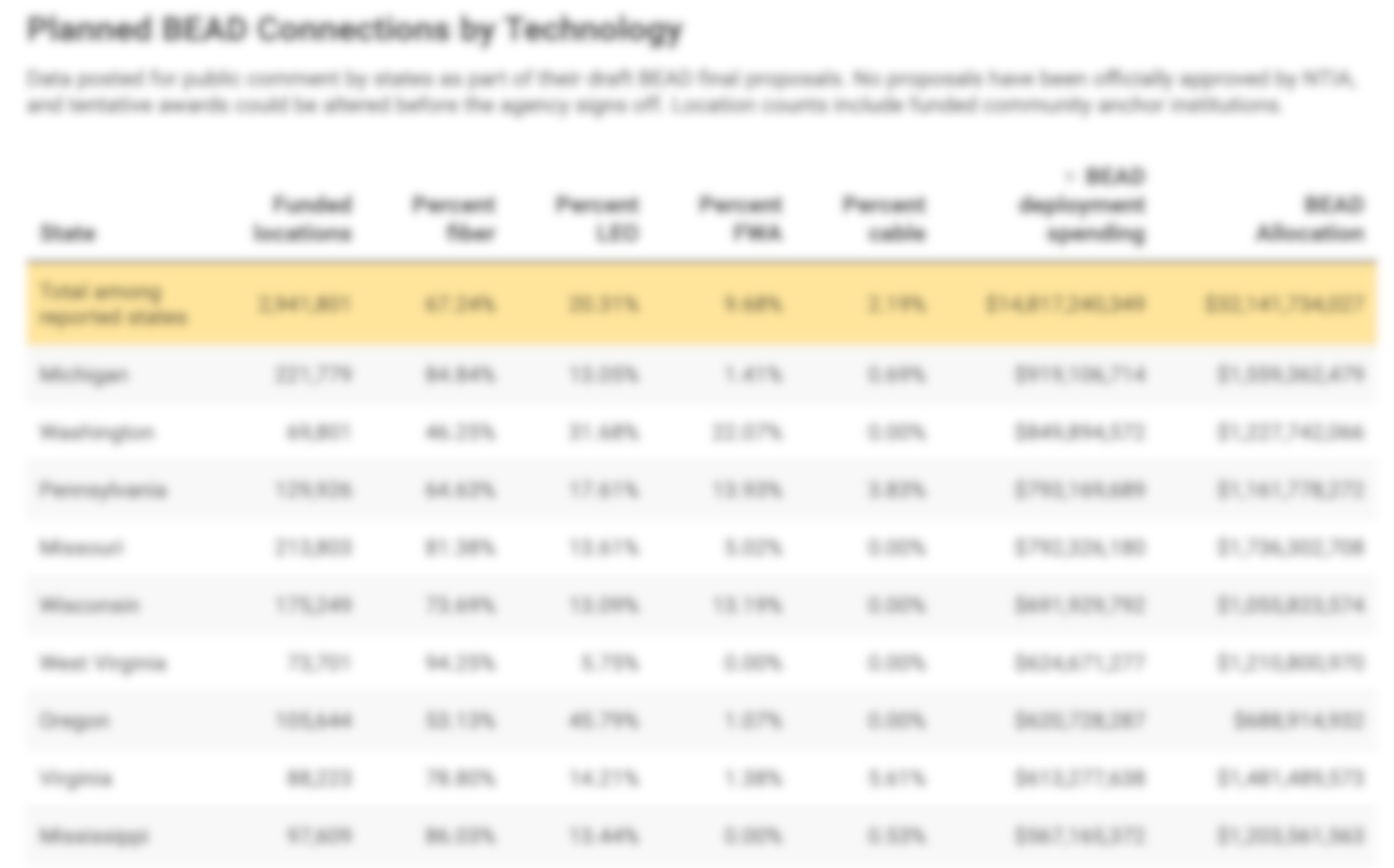
States have so far delivered, even as they continue to lean on fiber. Among states that have reported their draft results, including Texas, more than $20 billion in allocated BEAD funding will be leftover after funding deployment projects.
It’s not clear what will happen to that cash. States were planning under the Biden administration to spend it on “non-deployment” activities aimed at improving broadband adoption or increasing their workforces amid a labor shortage in the industry.
The Trump administration rescinded approval for any such activities, including some already underway, with its policy update in June and said more guidance was forthcoming.
States are generally interested in keeping the money even if Commerce doesn’t appear keen on the idea. Hegar said in his March letter he wanted to support “common-sense, non-deployment initiatives such as workforce development, small business growth, education, and healthcare improvements that will enhance quality of life and drive economic growth.”
Some GOP lawmakers on Capitol Hill and Republican Louisiana Governor Jeff Landry have also pushed Commerce Secretary Howard Lutnick not to claw back the leftover funding.
Texas will take comment on the draft plan for one week before submitting it to the Commerce Department for final approval. Most states have already submitted the documents after posting drafts on or shortly after Sept. 4, but Texas and California received deadline extensions because of their sprawling size and state-specific legal requirements.
California, the last remaining state to report its tentative results, has to submit those to Commerce by Nov. 21, implying it will post its draft results by Nov. 14.
Technology splits
The state did not release location-level data – it said that would be published Wednesday – but included a breakdown in its draft final proposal.
Of the roughly 243,000 locations getting service, about 51 percent would get fiber, 27 percent would get satellite, and 22 percent would get fixed wireless. That includes both eligible homes and businesses and community anchor institutions, which under BEAD rules are in line for higher speeds once the eligible locations are accounted for.
The state said Elon Musk’s SpaceX and Amazon’s nascent Project Kuiper were both awarded funding, but the money each winner would receive was also set to be posted Wednesday. Among larger ISPs, AT&T, Brightspeed, Charter, and Frontier were selected as winners, in addition to other regional and local companies.
Nationally, roughly 66 percent of BEAD locations are now in line for fiber and about 21 percent are slated to receive satellite service. About 11 percent would get fixed wireless.
Those results are not set in stone, as Commerce’s National Telecommunications and Information Administration has yet to approve any draft plans.
The agency is asking states to further trim their spending before approval, either by negotiating awards down or potentially awarding some areas to another provider. Revisions could be more significant in some states and less significant in others, as they’re based on state-specific cost caps used by NTIA.
An analysis from New Street Research estimated that the cost caps might affect just 130,000 of the more than 3 million BEAD locations.




Member discussion