
Trump’s AI Executive Order Triggers Concern
Lawmakers object to plan that could let White House sue states over AI laws

Jericho Casper
WASHINGTON, Dec. 10, 2025 – President Donald Trump said he will issue an executive order “this week” on artificial intelligence which could impact state laws already in place.
In a post to Truth Social on Monday, the president said “there must be only one rulebook” when it comes to regulating AI and not a patchwork of laws from the states. He vowed to roll out an executive order on the topic later this week, sparking bipartisan pushback.
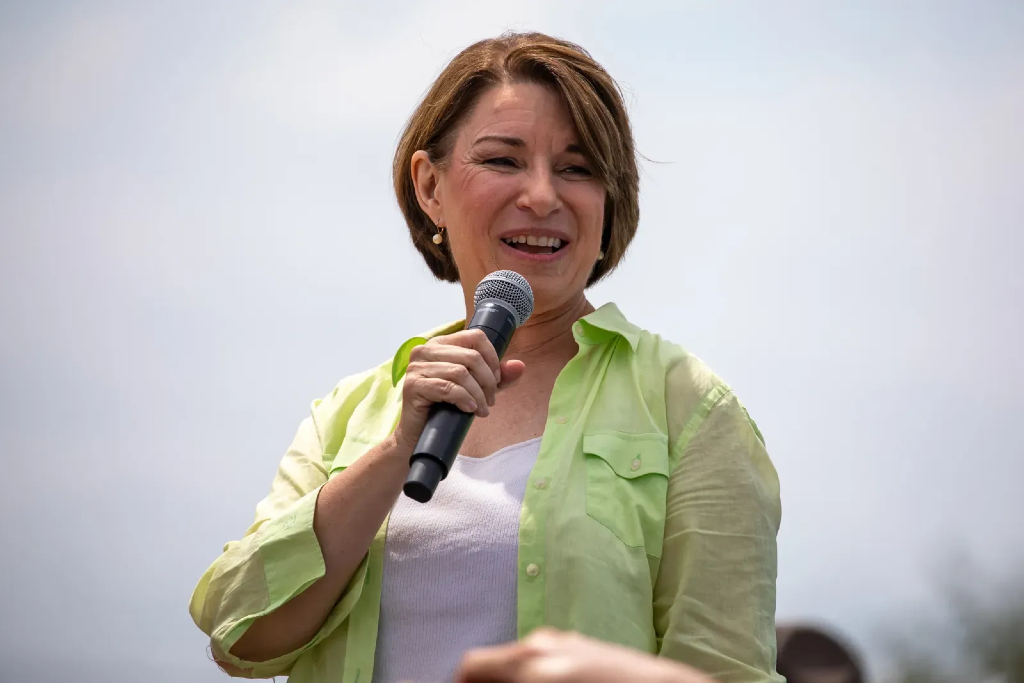
In an op-ed Tuesday, Sen. Amy Klobuchar, D-Minn., said she was concerned that upending existing state laws would “only multiply” the harms of AI, especially as Congress has not enacted federal standards on its own. Among Republican lawmakers pushing back this week were Rep. Marjorie Taylor Greene, R-Ga., Arkansas Gov. Sarah Huckabee Sanders, and Florida Gov. Ron DeSantis.
“We’ve all heard about the revolutionary breakthroughs that could result from the deployment of artificial intelligence,” Klobuchar wrote. “Unfortunately for many Americans, these advantages remain distant. And because of the lack of sensible rules governing A.I. technology, we are more familiar with its darker side.”
“The theft of people’s voices and visual likenesses; scams directed at seniors; political attack videos in which you can’t tell if what you’re seeing or hearing is actually the candidate you love (or hate); and worst of all, children committing suicide after turning to A.I. chatbots for help,” she detailed.
“Now we risk going backward,” Klobuchar said, “with President Trump saying on Monday that he will sign an executive order that will replace state laws with ‘One Rulebook’ that the public has never seen.”
“That executive order should concern every American,” she wrote. “Tech companies should not be allowed to use their lobbying power to undo the few protections Americans have.”
Draft version of executive order circulated on Nov. 19
Though the details of any White House directive aren’t clear, a draft version of the order was previously circulated on Nov. 19, which included provisions directing the U.S. attorney general to sue states with their own laws and also for agencies to withhold broadband grants to those states.
Congress has already signaled significant resistance to a federal preemption effort. A proposed moratorium on state AI laws has been repeatedly floated as an amendment to major bills, only to be stripped out. It was abandoned earlier this year during negotiations over a reconciliation package after figures including Rep. Marjorie Taylor Greene raised concerns.
More recently, lawmakers declined to include the moratorium in the 2026 defense spending bill, the National Defense Authorization Act, set for a House vote on Wednesday. House Majority Leader Steve Scalise, R-La., confirmed last week that GOP leaders had “abandoned” attempts to insert the provision
The U.S. is "beating all countries" when it comes to developing AI, Trump wrote, "but that won't last long if we are going to have 50 States, many of them bad actors, involved in rules and approval process."
Separately, a panel hosted Wednesday, Dec. 10, by the Stimson Center, debated the impacts of unchecked AI on democracy.
Global examples highlighted how rapidly the technology is reshaping political systems: in Pakistan, a jailed former prime minister used AI voice cloning to deliver a campaign speech that reached six million viewers; in Indonesia, deepfake “resurrections” of a past political dictator have circulated widely; and Albania recently became the first country to appoint an AI “minister,” a role with no human behind it.
Panelists cautioned that governments across the globe are struggling to define what “responsible AI” looks like as the technology accelerates.

Member discussion