Trusty: U.S. Must Keep Up With International Telecom Trends
Nations like Brazil and India were moving quickly to modernize telecom rules, Trusty said

Jericho Casper
WASHINGTON, Dec. 10, 2025 – Federal Communications Commissioner Olivia Trusty warned Tuesday that the United States needs to match the pace of other nations moving quickly to modernize communications regulatory frameworks.
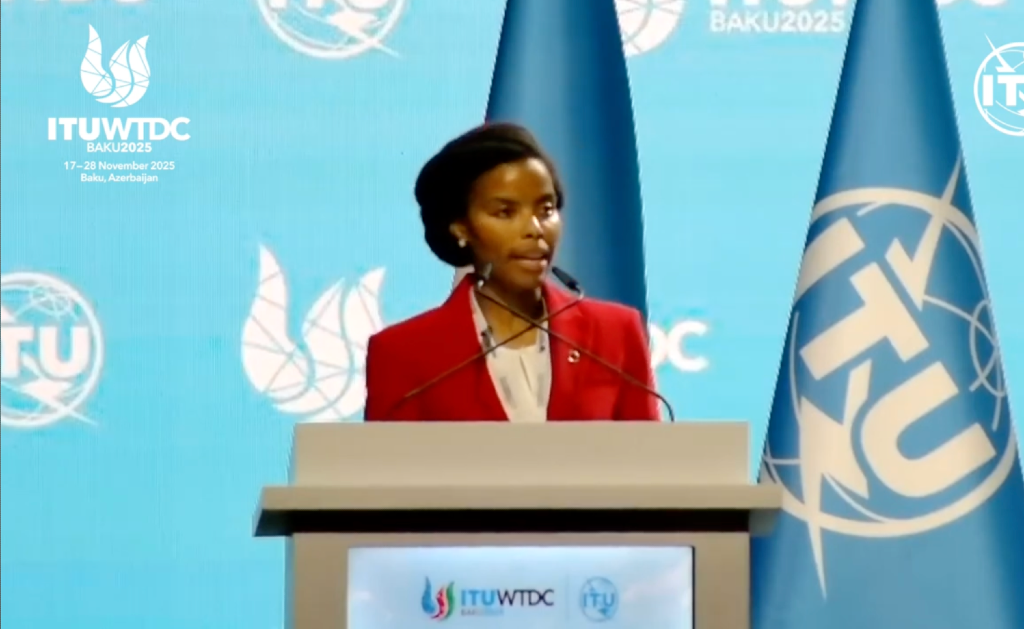
Speaking after returning from the International Telecommunication Union’s World Telecommunication Development Conference in Azerbaijan, Trusty said the FCC’s traditionally domestic agenda was now inseparable from global trends in spectrum, satellites, cybersecurity, infrastructure investment, and artificial intelligence regulation.
“None of our challenges are purely domestic anymore,” she said, emphasizing that countries were watching U.S. decisions in real time and adjusting their own strategies accordingly.
Trusty pointed to a widening gap between the pace of global regulatory reform and the United States. Nations such as India, Bangladesh, and Brazil were streamlining satellite and telecom approvals through unified licensing models and regulatory sandboxes.
“These global lessons are a wake-up call: U.S. leadership in communications policy is not guaranteed,” she said.
Much of the speech focused on the infrastructure demands created by AI and advanced communications technologies.
Trusty said “money alone does not build networks,” arguing that permitting reforms, trusted supply chains, engineering rigor, and a skilled workforce are just as essential as federal subsidy programs.
She also highlighted growing convergence between communications and national security, saying supply chain decisions, outage reporting, and emergency communications policies increasingly carry “geopolitical consequences.”
Trusty reiterated her support for restoring the FCC’s lapsed spectrum auction authority and advancing a clear spectrum pipeline under the so-called “One Big Beautiful Bill,” calling it essential for both domestic investment and global harmonization.
She also stressed the need for transparency in the use of artificial intelligence, cautioning that “AI cannot become a black box in critical infrastructure.”
“If the United States can demonstrate a stable, predictable, innovation-friendly regulatory environment, that strengthens not only our domestic economy but also our global leadership,” she said.
Member discussion