
Trusty Urges Cooperation Between Lawmakers, Private Industry, and the Public
Trusty warned that rising attacks on communications infrastructure slow broadband expansion

Naomi Jindra
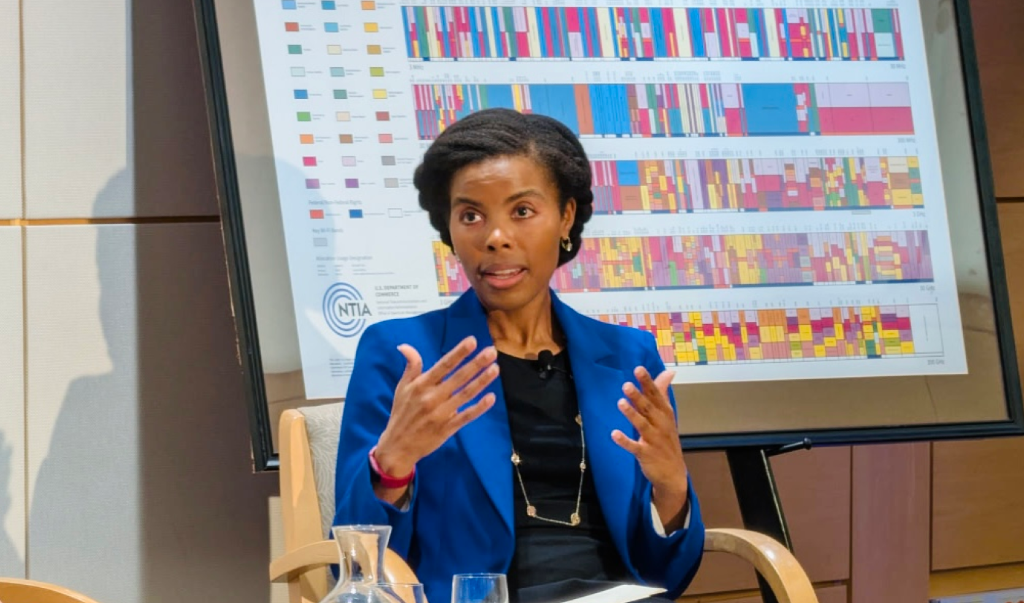
WASHINGTON, Oct. 7, 2025 — A top federal regulator called for stronger collaboration among lawmakers, private industry, and consumers to address what the official described as a growing epidemic of communications infrastructure vandalism.
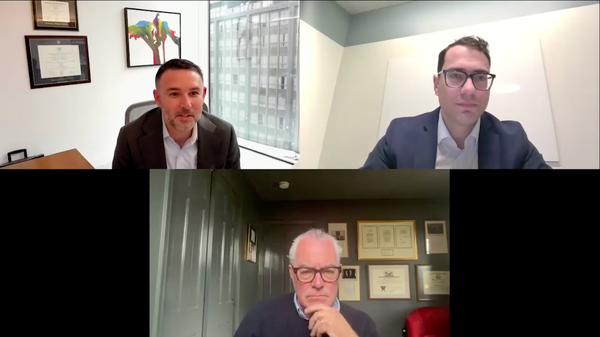
Federal Communications Commission Commissioner Olivia Trusty, a Republican, spoke at the Telecom Industry Summit: Protecting Critical Communications Infrastructure in El Segundo, California today. She echoed her recent op-ed remarks, warning that physical attacks on broadband and telecommunications systems posed a major threat to public safety and national security.
“When I think about threats to our communications networks, my mind jumps to sophisticated cyberattacks or foreign adversaries, but increasingly, the danger is something far less high tech and far more blunt: vandalism,” she said in a live feed from an off-site location. “These are deliberate acts of destruction that cut off communities, put lives at risk, and cost millions of dollars to repair.”
The commissioner said that between May and December 2024, there were at least 5,770 incidents of vandalism and theft that disrupted services for 1.5 million Americans and caused millions of dollars in damage.
She cited multiple incidents across the country — including cases that left 911 callers without service for hours, firefighters in Colorado struggling after a sabotaged radio repeater tower, and a California incident that kept 50,000 residential customers and 500 businesses offline for 30 hours. Trusty quoted Charter Spectrum’s description of the California attack as “nothing less than domestic terrorism.”
Trusty said such vandalism hampered the FCC’s “Build America” agenda. “Every time a fiber line is stolen or sabotaged, crews are pulled away from critical broadband expansion to make repairs. Every time copper thieves take down a tower, money earmarked for connecting unserved communities is instead spent patching holes,” she said.
She also said that the FCC Chairman Brendan Carr's “Build America” agenda is more than building fiber lines. “It is about ensuring that every American can trust in networks that carry their voices, their data and their livelihoods.”
“This is why I say vandalism is not just a property crime — it is an attack on the very effort to connect every American and close the digital divide,” she added.
Trusty urged Congress to update federal law so that willful attacks on private communications networks are explicitly criminalized, emphasizing that private ownership does not make such networks less essential to the public good.
In a recently published op-ed, Trusty said the FCC does not have jurisdiction over criminal law in this area. “That responsibility lies with Congress, state legislatures and law enforcement agencies. But we have a responsibility to speak out when actions threaten the success of our national communications agenda”
She also said industry must harden its defenses, investing in asset security, sharing intelligence among providers, and working closely with law enforcement. Law enforcement agencies, she added, must treat these cases as critical infrastructure crimes.
Trusty said the public also has a role to play by understanding the stakes and transitioning to modern service options that do not rely on copper.
“The bottom line is simple: if we are serious about connecting America, we must be serious about protecting America’s networks,” Trusty said. “Together with government, industry, law enforcement, and the public, we can make sure that America’s communication systems are not only the fastest and most widely available in the world, but also the most secure.”


Member discussion