U.S. Must Improve Response to Subsea Cable Sabotage, Lawmakers Warn
Officials call for stronger sanctions and improved monitoring for undersea infrastructure.

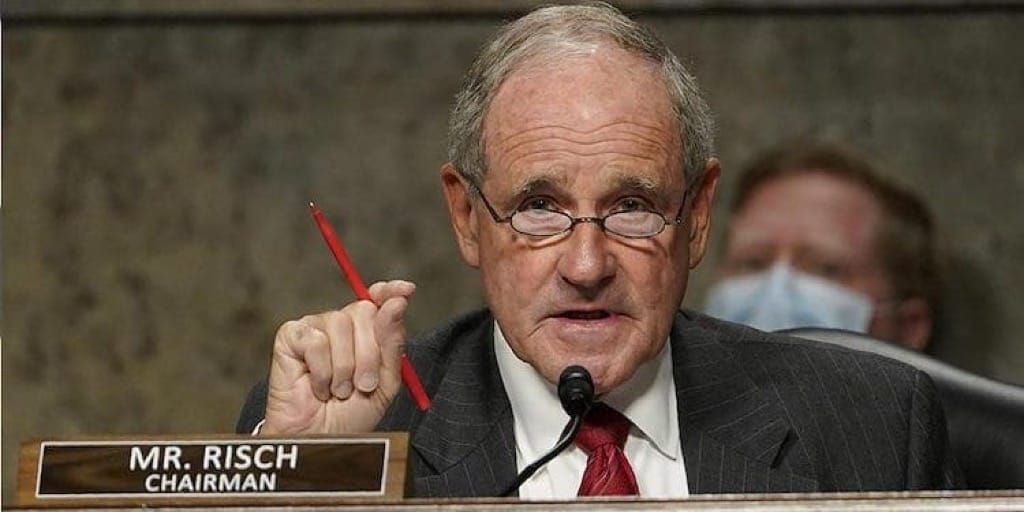
WASHINGTON, May 4, 2026 – Senators warned Thursday of growing national security risks tied to undersea cables.
Subsea cables carry more than 95 percent of global telecommunications traffic and transmit more than $10 trillion in financial transactions daily, Sen. Jim Risch, R-Idaho, chair of the Senate Foreign Relations Committee, said in opening remarks at a committee hearing centered on sabotage in the Baltic Sea.
“Since 2022, there have been at least eight undersea sabotage incidents in the Baltic Sea,” Risch said, adding they are likely the responsibility of Russia.

Risch said Russia has developed both advanced and low-tech methods to target infrastructure, including tactics that mimic anchors dragging across the seafloor to disguise sabotage.
“It maintains a specialized fleet of so-called ‘research vessels’ run by a Russian military unit,” Risch said. “To end undersea sabotage, we need to call it out when it happens and say publicly who did it, if possible.”
He called for a coordinated international effort to improve resilience and mitigate the impact of attacks on subsea infrastructure.
Lawmakers also raised concerns about China’s role, citing research into cable-cutting technologies and incidents near Taiwan.
Dr. Benjamin Schmitt, a senior fellow at the University of Pennsylvania, described the incidents as part of a broader “shadow war” targeting critical infrastructure.
“Another war is being waged globally: a shadow war against the energy and critical infrastructure,” Schmitt said.
He said the Baltic Sea has become a focal point because it is shallow and contains dense infrastructure critical to both NATO and Russia.
Schmitt also pointed to repeated cable disruptions near Taiwan, suggesting involvement by Chinese vessels.
He urged Congress to strengthen sanctions and improve monitoring capabilities, including expanding access to commercial satellite data to speed attribution.
“Repair capabilities are very limited,” Schmitt said, adding that increasing redundancy and repair capacity could help deter future attacks.
James O’Brien, a former senior State Department official, warned that failure to respond decisively could embolden adversaries.
“We can deter now or pay later,” O’Brien said.
He said Russian and Chinese vessels have been involved in multiple incidents and are testing how the United States and its allies will respond.
O’Brien also warned that easing pressure on Russia’s “shadow fleet” of oil tankers could provide billions in revenue that supports its war in Ukraine.
Sen. Jeanne Shaheen, D-N.H., said the U.S. response to recent incidents has been inconsistent and called for stronger enforcement measures.
She raised concerns that policy decisions allowing increased Russian oil exports could undermine sanctions efforts.
Schmitt said consistent sanctions and increased redundancy in cable infrastructure are critical to deterring future attacks.
“More redundancy… will make bad actors think to not bother,” he said.
Lawmakers also discussed legal challenges in prosecuting sabotage, including jurisdictional limits in international waters.
Schmitt pointed to Taiwan’s legal framework as a model, which allows prosecution of sabotage affecting its infrastructure regardless of where incidents occur.
O’Brien said expanding U.S. sanctions authority could help close gaps and support criminal investigations tied to sabotage incidents.