U.S. Should Prioritize Satellite Spectrum Sharing at WRC, Groups Say
With its own LEO constellations in the works, host country China may be on board

WASHINGTON, July 1, 2026 – The United States should make a push to modernize satellite spectrum sharing rules at the World Radiocommunication Conference in China next year, two think tanks argued Tuesday.
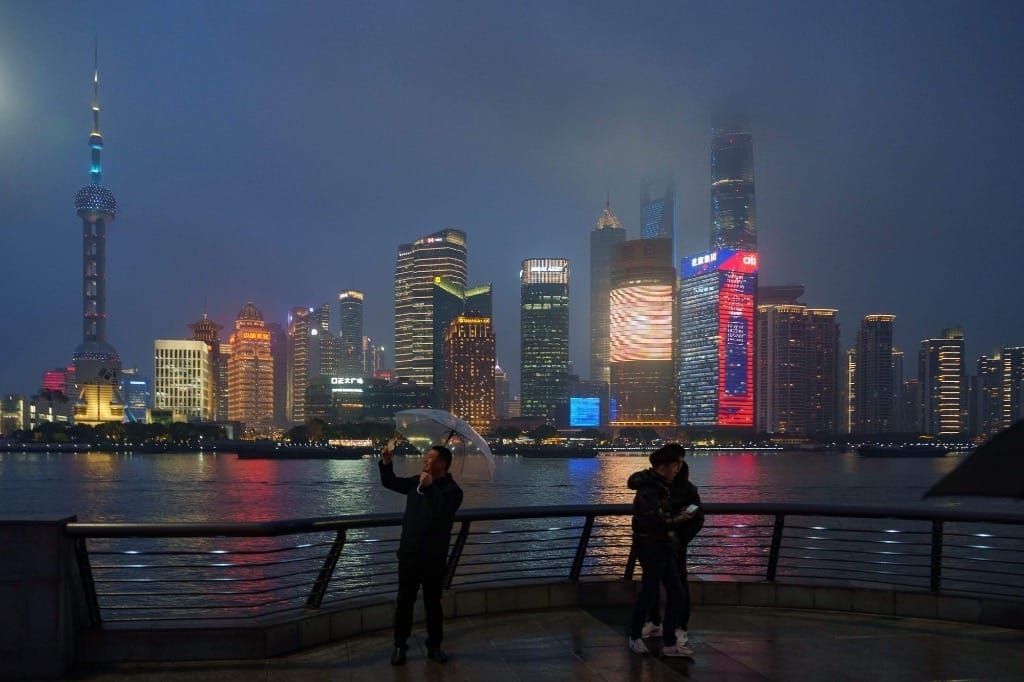
There’s no set agenda item for making the update at the conference, which will be held in Shanghai, China. That would make the effort an uphill battle, experts said, as International Telecommunication Union processes can be rigid.
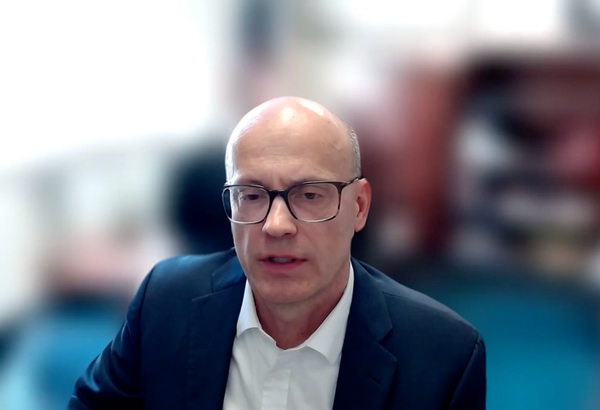
“Is there established, long-running precedent of adopting reforms without a formal agenda item within the ITU’s process? Frankly, no,” said Gerald Adams, a fellow at the University of Pennsylvania law school. “But nevertheless, I would say the evidence that is before the administrations is to some degree unprecedented.”
He spoke on a webinar hosted by the International Center for Law and Economics, where Adams is a nonresident scholar, and New America. The groups put out a report last week arguing that the U.S. should prioritize the issue at WRC-27 in Shanghai in October 2027.
The Federal Communications Commission adopted rules in April that made within the U.S. the changes the groups want to see expanded internationally.
In bands shared by low-Earth orbit (LEO) and geostationary orbit (GSO) satellites, international rules that have been in place since the nineties are overly restrictive on LEO operators, the agency found. LEO broadband providers say their capacity can be improved significantly by relaxing power limits and other restrictions in the bands.
WRC delegates will have technical studies from LEOs and ideally a year of real-world deployments by SpaceX and Amazon showing a lack of interference incidents in the U.S., Adams said.
“I do think that this is an issue that is worth fighting for at the ITU,” said Arpan Sura, the top space and wireless advisor to FCC Chairman Brendan Carr. “The technical case is so cut and dry, both in terms of the economic gains and the lack of justification for the old regime.”
Michael Calabrese, director of New America’s Wireless Future Program, said in an interview last week that there was a standing WRC agenda item that allows the raising of new proposals if there’s sufficient technical evidence they would work.
The FCC’s new rules allow LEOs to use higher power and more beams per satellite, he noted, which Amazon Leo has told the agency would improve its capacity by 700 percent.
China on board?
Getting a proposal through at WRC will likely require garnering support for the plan with other countries in the Americas, Calabrese said on the webinar Tuesday.
There’s a meeting of the Inter-American Telecommunication Commission (CITEL) later this year where the U.S could make its case.
Adams said Columbia was likely to support the U.S. plan on the issue, since it has helped SpaceX with some of its field tests.
Brazil was likely to be in opposition, he said, because it has “deeply invested” in a nationalized GSO system
Ruth Pritchard Kelly, a professor of telecom law at the Universities of Nebraska and Mississippi and former legal advisor at SES and Eutelsat, said China might also be on board, even though the change would benefit American companies.
China is launching its own large LEO constellations, she noted, which would also stand to see improved capacity if the rules were adopted internationally.
“With the WRC taking place in China next year, what coalition might be built there?” she said. “Unexpected, but not out of the realm of possibility.”
Other priorities
New America and ICLE also want the U.S. to support three WRC-27 agenda items that would open up millimeter-wave spectrum for satellite earth stations.
Those are “the equivalent of middle-mile fiber for LEO networks,” Calabrese said Wednesday.
The FCC has an open rulemaking on the issue. Sura said he was “hopeful that we’ll be rounding the corner on that proceeding as well.”
Also on the WRC agenda are two items that contemplate more spectrum for direct-to-device satellite service, either through partnerships using carriers’ terrestrial mobile spectrum or dedicated mobile-satellite service spectrum that could be used regardless of a user’s mobile carrier.
New America and ICLE support both, with the caveat that the item on terrestrial mobile spectrum would include interference protections near international borders that the groups think would make it less useful in regions with many closely packed countries like Central America and West Africa.