FCC’s Gomez Warns Satellite Deployment Is No Substitute for Universal Service
Gomez’s comments came just after Disney filed a lawsuit against the commission Tuesday morning.

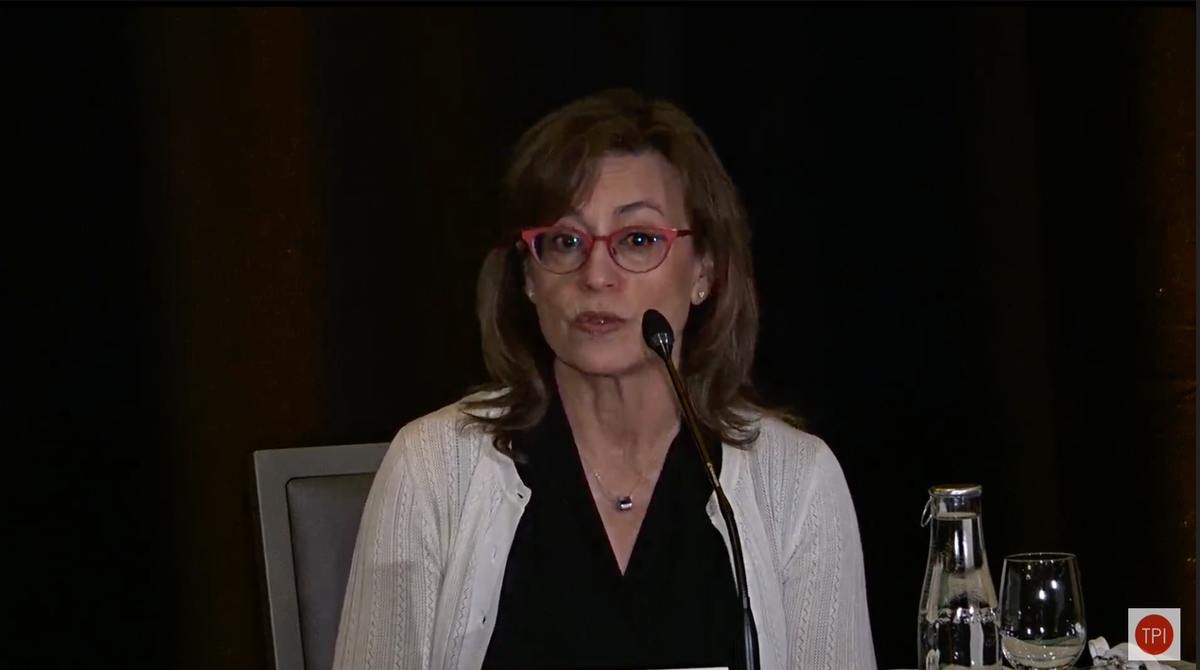
August 18, 2026 – The proliferation of low Earth orbit satellites should not signal an end to universal service, Federal Communications Commissioner Anna Gomez, warned Tuesday.
Gomez, the sole Democratic at the FCC, said the agency should be cautious about arguments that the growing availability of LEO satellite service may render universal service programs less necessary.
She also called for Congress to exercise greater oversight of the FCC, particularly if Democrats regain control of one or both congressional chambers following the November elections. She made here comments came just after Disney filed a lawsuit against the commission Tuesday morning.
Her comments come as policymakers weigh the future of the FCC’s Universal Service Fund, as well as satellites’ role within its high-cost programs.
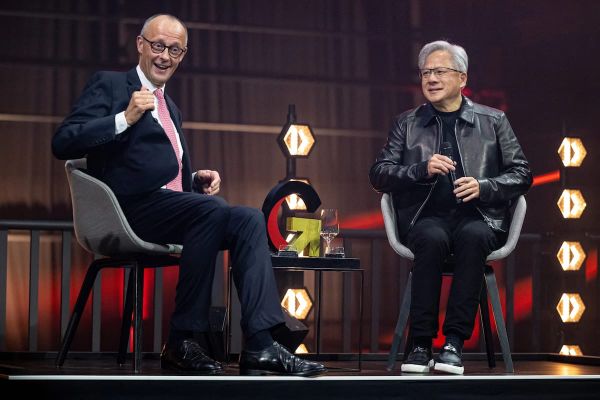
“I worry a little bit about this advocacy of, well, we don’t need [universal service programs] anymore because we’ve had all this deployment, including by the LEOs,” Gomez said during a fireside chat at the Technology Policy Institute’s Aspen Forum in Colorado.
“Universal service is not just a picture in time, and it’s not just about deployment. It's also about maintaining the services,” she said.
The commissioner, who has worked on universal service policy for decades, said LEO satellites could be an important part of the nation’s broadband mix, particularly in areas where terrestrial networks are difficult or uneconomic to build. But she cautioned against assuming that satellite capacity is sufficient to meet the demands of the increasingly data-intensive U.S. economy.
“Until it is proven to me that they have the capacity and the latency able to serve in our artificial intelligence economy, then I'm not convinced that that is in fact the answer,” Gomez said.
Gomez emphasized that she was not rejecting satellite as a broadband technology. She argued that the long-term question is whether those connections can remain affordable and sustainable, noting that the areas that are most difficult to serve economically are often also the places where consumers face the greatest difficulty affording service.
Universal service is about rates, too
Gomez also pushed back on defining universal service primarily as a deployment program.
The FCC’s high-cost programs, she said, serve a second purpose that can get lost in discussions about new technologies: helping maintain comparable broadband rates between urban and rural areas.
“What universal service gives us is the comparable rates between urban and rural,” Gomez said. “And if we lose that, I worry about what's going to happen to a lot of communities that may be subject to price hikes that make it impossible for them to afford the service.”
She pointed to a bipartisan, bicameral congressional working group on universal service as a potential vehicle for addressing the fund’s sustainability while incorporating affordability into the system.
“I'm really hopeful that they move forward with those discussions so that we can get some action soon,” she said.
Concern over FCC’s national security policies
Gomez also criticized what she described as a lack of transparency in the FCC's recent expansion of its authority over communications and connected equipment, including routers, drones and robotic devices.
She said she supports efforts to protect U.S. communications infrastructure from foreign adversaries, but said companies need clearer rules.
“What I'm hearing from American companies and industry leaders is they’re concerned about the haphazard and chaotic way that we’ve seen the rollout of these ... profound changes to the covered list,” Gomez said.
She added that she was concerned some of the FCC’s actions may be motivated by industrial policy rather than national security.
“I'm also concerned that not everything that we’re doing is really about national security,” she said. “A lot of it is industrial policy.”
Gomez argued that greater transparency would help prevent the appearance that the agency is using its authority to favor particular domestic producers.
“If we want to avoid the appearance that we are favoring certain actors, we need transparency, and we need people to know what the rules of the road are,” she said.
Gomez calls for congressional oversight of FCC
On the First Amendment, Gomez said congressional committees of jurisdiction should examine what she considers to be instances in which the FCC has exceeded its authority.
“There’s many ways in which we’ve seen this commission overreach its authority, particularly on the First Amendment side,” Gomez said.
Regarding Disney's lawsuit, Gomez said she was pleased to see Disney challenge what she characterized as unconstitutional FCC actions involving broadcasters’ editorial decisions.
She framed the issue as part of a broader concern about the independence of an agency that Congress designed as a multi-member, bipartisan commission.
Gomez noted that she has supported roughly 90 percent of the proposals put forward by FCC Chairman Brendan Carr, saying that working with the chairman’s office and agency bureaus has allowed her to secure changes that are both consumer- and competition-oriented.