
Uncertainty Grows as Government Shutdown Begins
What began as temporary furloughs could become lasting cuts that deepen the FCC’s workforce losses

Naomi Jindra
WASHINGTON, Oct. 2, 2025 — The federal government shutdown is now in effect, cutting off communications from many agencies and leaving key questions unanswered.
Emails and calls to the Federal Communications Commission are bouncing back, as most of the agency has gone dark. The lapse leaves broadband policy, licensing decisions and consumer complaints in limbo, just one symptom of the broader shutdown.
The FCC said about 88 percent of its staff will be furloughed, leaving only 171 employees. Those remaining will handle spectrum auctions, the Office of Inspector General, disaster response and interference detection. A handful of staff will also oversee the Universal Service Fund and preparations for the 2027 World Radiocommunication Conference.
The FCC’s website cited a “partial lapse in federal government funding” for its suspended operations, while several other federal agencies such as the Department of Housing and Urban Development, publicly said “The Radical Left in Congress shut down the government.”
Meanwhile, some furloughed employees blamed Senate Democrats in their out-of-office email replies, statements that could raise Hatch Act concerns, which restricts federal employees from engaging in political activity in their official capacity, including their emails.
Future staffing levels remain unclear. President Donald Trump said the shutdown gave him the opportunity to “slash” federal agencies, according to a CNBC report. “I can’t believe the Radical Left Democrats gave me this unprecedented opportunity,” he wrote on Truth Social.
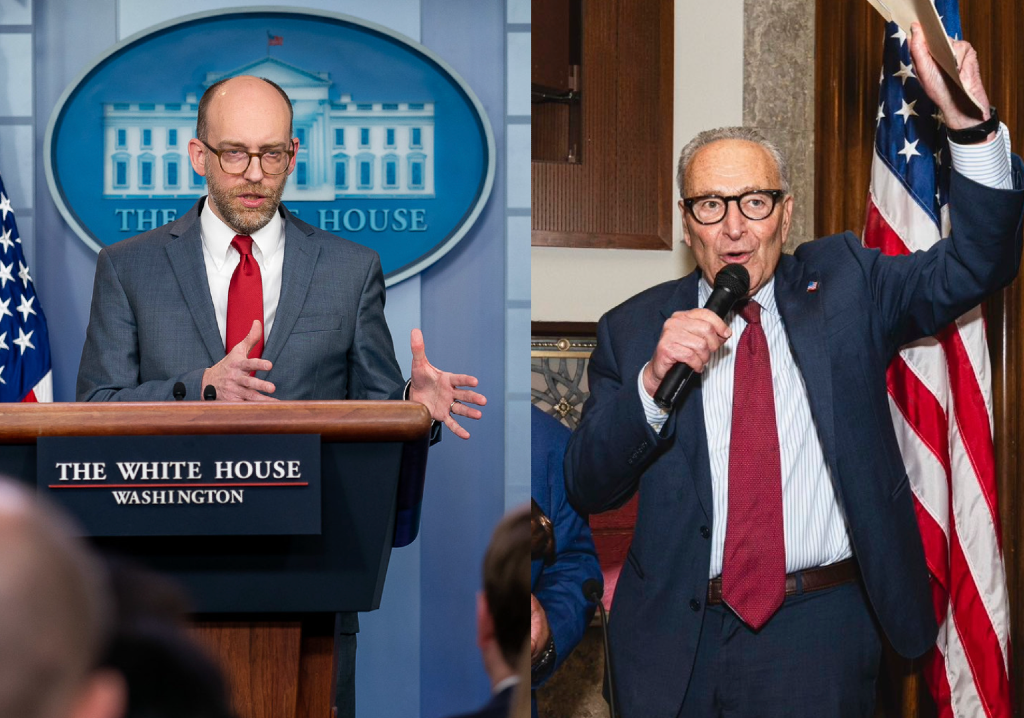
According to reports, Office of Management and Budget Director Russ Vought said in a memo Wednesday night that agencies should consider reductions in force for programs whose funding lapses and are “not consistent with the president’s priorities.”
That would go further than previous shutdowns, when furloughed employees returned to their jobs once Congress approved spending.
A reduction in force would permanently eliminate positions and lay off workers, adding to a federal workforce already hit by cuts this year under the Department of Government Efficiency and other Trump administration initiatives. When the shutdown ends, agencies would be asked to revise their reduction in force plans “as needed to retain the minimal number of employees necessary to carry out statutory functions,” as reported by AP.
As the BBC explained, the shutdown stems from a partisan impasse over funding. Republicans control both chambers of Congress but lack the 60 Senate votes needed to pass a spending bill, giving Democrats leverage. Democrats are seeking to extend health insurance tax credits, reverse cuts to Medicaid and block reductions to federal health agencies. A stopgap bill passed the House but failed in the Senate, triggering the shutdown.
Both parties are pointing fingers over the shutdown. In a video posted by WAAY 31 News, Senate Minority Leader Chuck Schumer, D-N.Y., said: “Republicans are plunging America into a shutdown, rejecting bipartisan talks, pushing a partisan bill, and risking America’s health care, worst of all.”
“This is basically Chuck Schumer,” Vice President J.D. Vance said Wednesday in a Fox News interview. He argued the shutdown was driven by Schumer’s concern over a potential primary challenge from Rep. Alexandria Ocasio-Cortez, D-N.Y., saying the senator “shut down the people’s government to give in to the left-wing coalition.”





Member discussion