
Verizon to Supreme Court: FCC Forfeiture Process Invalid
Verizon is asking Supreme Court to resolve a split, with the D.C. and the Second Circuits on one hand and the Fifth Circuit on the other.

Jake Neenan
WASHINGTON, Nov. 14, 2025 – Verizon is asking the Supreme Court to resolve a split between circuit courts of appeal and find that the Federal Communications Commission’s process for issuing fines is unconstitutional.
The carrier argued in a petition posted Wednesday that under SEC v. Jarkesy, it should be entitled to a jury trial before having to pay any civil penalties to the FCC. The agency’s process does allow fined entities a jury trial, provided they refuse to pay and wait for the Justice Department to bring a collection action.
“This penalty-now-trial-later system imposes far too heavy burdens on the exercise of a carrier’s Seventh Amendment rights,” the company wrote, seeking to appeal a decision by the Second Circuit Court of Appeal. “To maintain even the chance at an eventual jury, a carrier must forgo its right to appeal and incur the practical, financial, and reputational costs of flouting a final agency order requiring prompt payment of a potentially massive penalty.”
The FCC has also appealed the question to the high court, and has asked justices to preserve its ability to fine telecom providers. The agency fined the three major mobile carriers last year for, in the agency’s view, not adequately vetting third partied before selling them consumer location data.
Each company appealed, arguing that Jarkesy, in which the Supreme Court found the Securities and Exchange Commission had to provide companies a jury trial before issuing fines, also meant the FCC’s chief means of enforcing its rules was invalid.
Split between circuit courts of appeal
Judges on the Second Circuit sided against Verizon, and the D.C. Circuit ruled against T-Mobile. The conservative Fifth Circuit agreed with AT&T that carriers didn’t have a meaningful guarantee of a jury trial before paying FCC fines.
Verizon asked justices to also grant the FCC’s request for an appeal and combine the two cases.
The case is significant for the FCC, as fines are one of its main enforcement mechanisms.
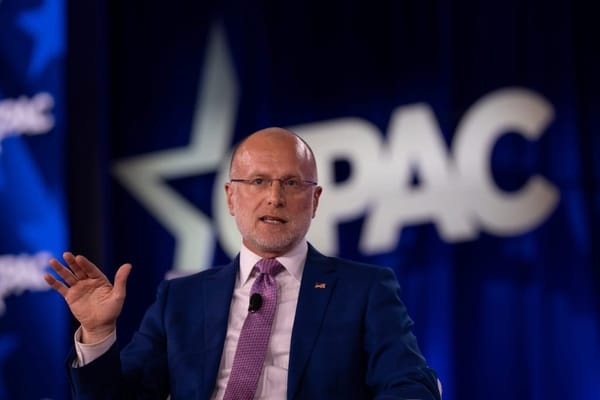
FCC Chairman Brendan Carr, a commissioner at the time, dissented from the fines and has said the agency should reform its enforcement process in light of Jarkesy, but has been defending the agency’s ability to levy fines.
The agency told the Supreme Court last month that if the Fifth Circuit’s precedent stands it would have “no alternative avenue for seeking monetary penalties, seriously impairing the agency’s ability to enforce” its rules.
In that petition, the FCC disputed the idea that there were any real consequences if providers refuse to pay and wait for a collections action, even if the Justice Department never brings one in the five-year window it has to do so. The agency argued companies don’t pay anything in that case, and insisted that the nonpayment wasn’t held against them in subsequent agency proceedings.
Verizon, for its part, insisted there were consequences for nonpayment, and thus a barrier to the company exercising its Seventh Amendment right to a jury trial.
“Carriers are repeat players that must constantly appear before the Commission to procure or transfer required licenses, obtain the necessary approval for mergers, and so on,” the company wrote. “Carriers know that the Commission will take into account their refusal to pay a forfeiture in these proceedings.”



Member discussion