
West Virginia's Capito Wants BEAD Non-Deployment Funds
Louisiana Gov. Jeff Landry, also a Republican, has also asked Commerce not to claw the funding back.

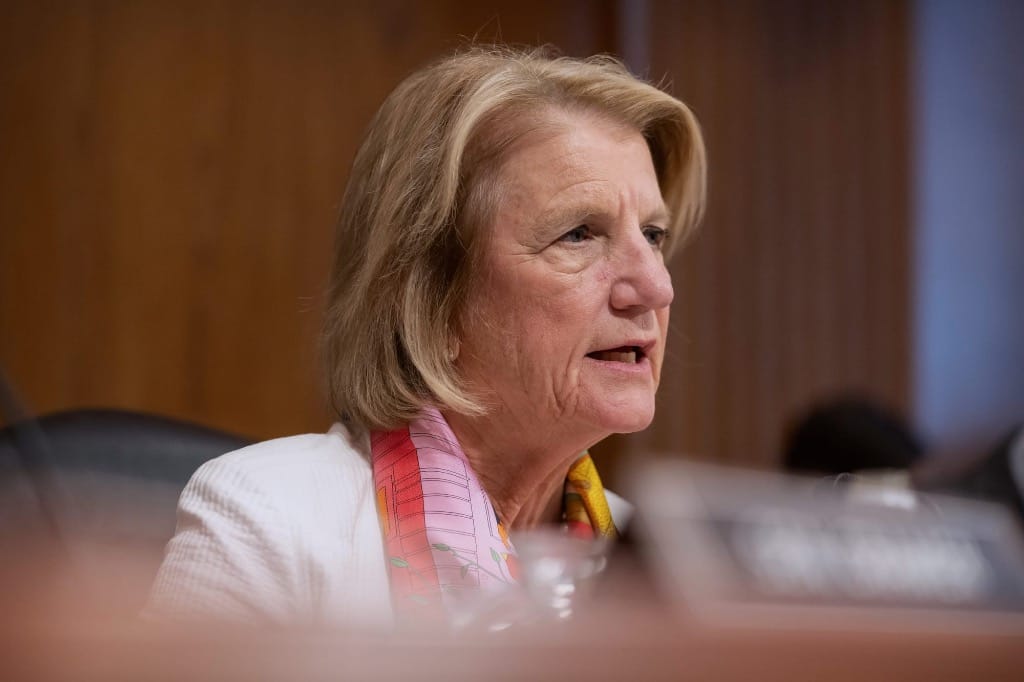
WASHINGTON, Sept. 16, 2025 – Another Republican politician is pushing the Trump administration not to claw back billions in broadband funding under the Broadband Equity, Access, and Deployment program.
Sen. Shelley Moore Capito, R-W.V., said on a local radio show last week that she would press the administration to preserve her state’s $1.2 billion allocation under the program. West Virginia would spend about $625 million of that on broadband deployment under the tentative BEAD plan it submitted to the Commerce Department earlier this month.
“I hope we get our $1.2 billion. I’m going to hold the Trump administration’s feet to the fire,” she said. “This is what we were promised, this is what we should get.”

Capito spoke on WCHS Radio’s The Dave Allen Show on Sept. 10.
She didn’t mention a proposal put forward one day earlier by Republican Louisiana Gov. Jeff Landry, which would see states keep their “non-deployment” funding provided they used it to boost AI or for certain “America First” policies.
Landry said programs in line with the White House’s AI action plan should be allowed. Those include funding and fast-tracking infrastructure projects like data centers and upgrading power grids, among other things. He defined America First policies as “investing in education, training the workforce and growing our industries,” which has some overlap with non-deployment projects states had been planning under the Biden administration.
Under its revised BEAD plan, also submitted to the Commerce Department, Louisiana would spend about $500 million of its $1.35 billion allocation on broadband deployment.
States seek to spend supporting funds for broadband
States were planning under the Biden administration on being able to spend any money left over after securing connectivity for each of their eligible homes and businesses. The law standing up the program outlined some acceptable non-deployment uses and said the head of Commerce’s National Telecommunications and Information Administration could approve additional initiatives, which the Biden NTIA did.
Commerce Secretary Howard Lutnick and NTIA Administrator Arielle Roth are not eager to see much non-deployment spending. In June NTIA rescinded approval for any non-deployment efforts, including some already underway, and said more guidance was forthcoming.
NTIA’s chief of staff said at the Mountain Connect conference in August that BEAD was “a deployment program. Not a non-deployment program.”
There’s a growing pot of cash at issue. Lower deployment spending is also a chief goal of the Trump NTIA, and states have been coming in far under budget. Among the 41 states that have published draft spending plans, there would be more than $15 billion left over.
State broadband offices and governors generally want to hang onto that funding for a range of things, like the workforce development that Landry emphasized or efforts to increase the take rate on BEAD-funded infrastructure through digital skills trainings and device subsidies.
Maine’s broadband office said in a recent email to stakeholders that “In order to achieve the TRUE benefit of the bargain we need to ensure the long-term sustainability of infrastructure deployment through critical enabling investments identified in the legislation that created the BEAD Program.”
West Virginia’s broadband office said in its final proposal that it “looks forward to the future opportunity to respond” to NTIA non-deployment guidance “with support for initiatives that will deepen the impact of these broadband infrastructure investments for West Virginia.”
In his letter, Landry had asked for guidance from NTIA by Oct. 1 and suggested a Dec. 1 deadline for states to submit new plans for non-deployment spending.
It’s not yet clear whether other states will rally behind Landry’s plan
“We expect most, if not all, of the governors to support Landry’s position; they might not agree with the limits he proposes but they would all prefer to spend the money in their state rather than return the funds to the Treasury,” New Street Research Policy Advisor Blair Levin wrote in a research note last week. “If enough Republican Governors and members of Congress weigh in supporting the Landry plan, we think the odds favor Lutnick agreeing to its terms.”



Member discussion