
Western Massachusetts Towns Become National Model for Community Broadband
New report chronicles how 19 rural communities built America’s densest collection of locally owned fiber networks

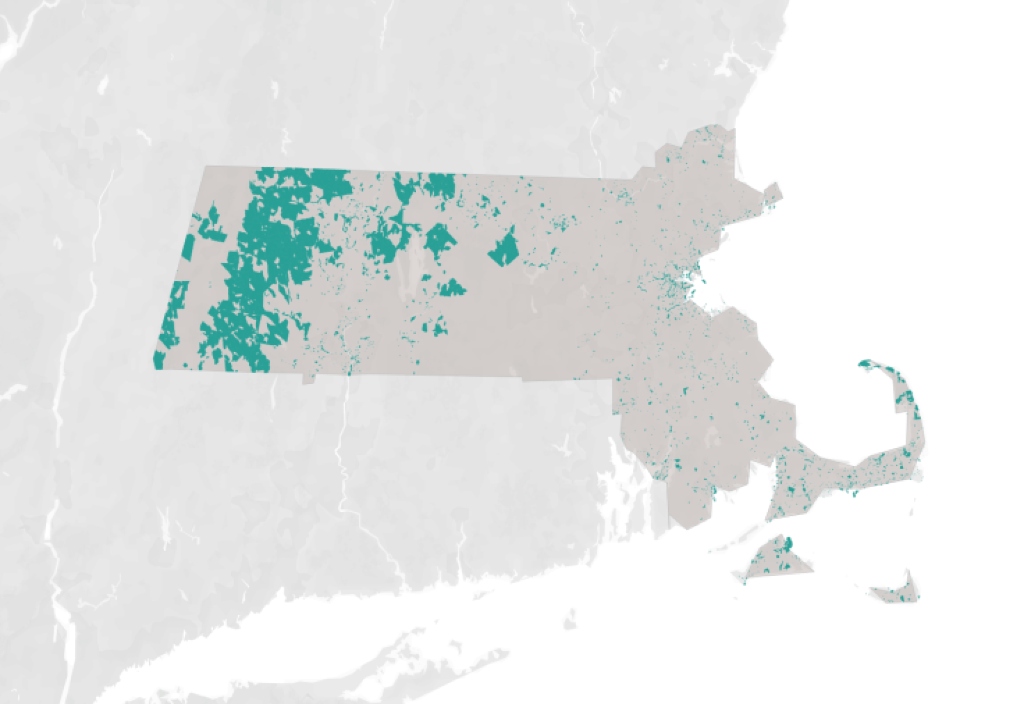
MINNEAPOLIS, Minn. Nov. 18, 2025 – A new report released today chronicles the inspiring journey of a group of small, rural towns in western Massachusetts that joined together to build their own bridge across the digital divide — creating the most geographically dense cluster of municipal fiber networks in the United States.
 Ry Marcattilio
In just four years, from 2018 to 2021, 19 towns across the foothills of western Massachusetts designed, financed, and built their own fiber-to-the-home networks. What began as a volunteer-led effort ultimately transformed the region’s digital landscape from an underserved desert, where residents relied on outdated DSL or costly cable services, into an oasis of world-class connectivity.
Today, nearly every resident in most of these towns subscribes to publicly owned, locally controlled Internet service, where costs are affordable and customer satisfaction is sky-high.
“This is what happens when local broadband champions take their digital destiny into their own hands,” said the report’s author Jessica Auer, senior researcher for the Community Broadband Networks Initiative at the Institute for Local Self-Reliance. “At a time when states are being forced by new federal spending rules to subsidize less reliable and expensive satellite Internet service in rural areas, this report provides an in-depth examination of an alternative way to bring the gold standard of Internet connectivity to rural communities.”
The report demonstrates not only how these towns were able to solve local connectivity challenges in areas left behind by the big telecom and cable monopolies, but also highlights how a community-driven approach led to lower monthly subscription prices while generating revenue to reinvest in local communities.
“These communities didn’t wait for big telecom or federal programs to save them. They organized, built partnerships, and ultimately demonstrated that small towns can achieve world-class connectivity on their own terms,” Auer added.
The report traces the effort back to 2010 with what began as a handful of determined volunteers and local leaders that soon grew into a regional movement spanning nearly 50 towns.
Working collaboratively, they navigated regulatory hurdles, established broadband utilities, and forged public-public partnerships that allowed them to pool local expertise and resources. By 2021, 19 towns had built and lit their networks — a collective achievement that has proven to be transformative.
The report also makes plain four benefits of the collective effort:
- Economic Growth: Local businesses can now process credit cards and compete online, while new residents — including remote-work professionals from New York and Boston — are moving in.
- Affordability: Broadband prices are lower for these residents than for the majority of their fellow Americans, and the revenues generated by the networks stay within the community.
- Reliability: Outages are now resolved in hours.
- Community Resilience: With local ownership, these towns control their telecommunications infrastructure for generations to come.
This local success comes at a pivotal moment. With the Trump Administration’s recent rollback of the federal BEAD program — initially intended to expand rural broadband nationwide — many unserved communities across America face renewed uncertainty. The Massachusetts model offers a clear alternative.
“These towns showed that size isn’t the determining factor for an Internet-connected community. Vision, determination, and collaboration are what really matter,” director of ILSR’s Community Broadband Networks Initiative, Christopher Mitchell, said. “What these communities have done is prove that if you build it yourself, you not only get better Internet service — you get stronger communities.”
The full report, Seeking the Commonwealth of Connection: How Small-Town Volunteers and Public Partnerships Transformed Internet Access in Western Massachusetts, chronicles a decade of local organizing, political perseverance, and strategic thinking that reshaped the digital landscape in some of the most rural parts of Massachusetts. It serves as both a history and a roadmap for other small communities seeking to bridge the digital divide through local ownership and cooperation.
This press release comes from the Community Broadband Networks Initiative of the Institute for Local Self Reliance, and was published on CommunityNets.org on November 18, 2025, and is reprinted with permission.





Member discussion