Wireless Carriers Opposed to FCC Plan for Direct-to-Device in 5G Bands
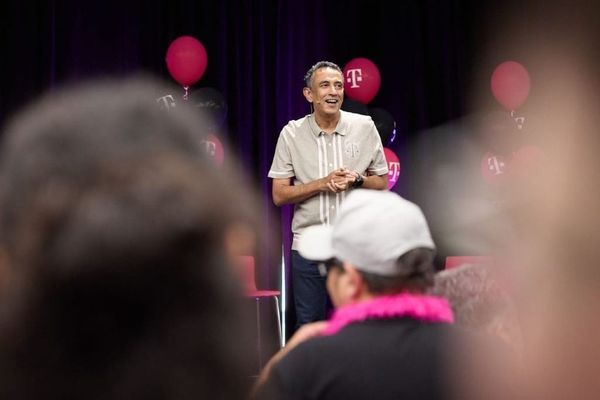
T-Mobile CEO Srini Gopalan met with FCC Chairman Brendan Carr last week to argue against satellite use in two prime bands

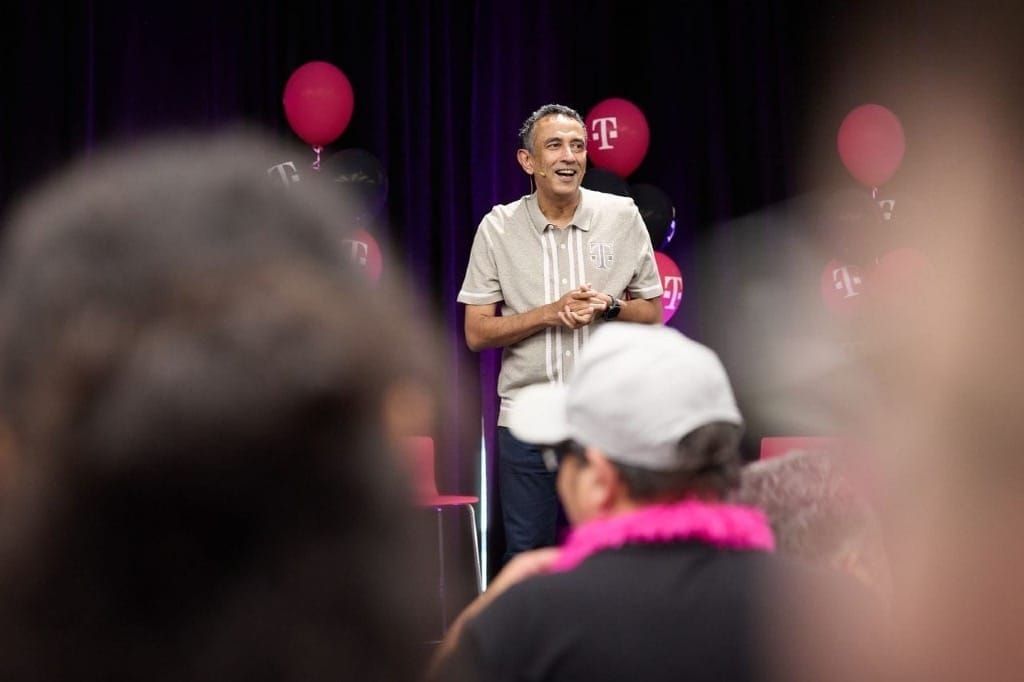
WASHINGTON, Oct. 26, 2026 – T-Mobile and the wireless industry don’t want satellite companies using prime 5G spectrum they depend on.
T-Mobile CEO Srini Gopalan met with Federal Communications Commission Chairman Brendan Carr on Thursday to argue against satellite use in the 2.5 GigaHertz (GHz) band, according to a filing posted Monday.
Gopalan discussed an FCC draft proposal to open up swathes of spectrum for direct-to-device satellite use, including 2.5 GHz, the filing said. The agency is going to vote this week on whether to seek comment on the proposal.
T-Mobile’s filing said Gopalan reiterated T-Mobile’s previous advocacy on the issue, which urged the agency to remove 2.5 GHz from the slate of bands to be considered for direct-to-device.
The FCC has been moving to make more airwaves available for the service as satellite companies like SpaceX and Amazon dump billions into direct-to-device spectrum. SpaceX in particular has been vocal about trying to compete with the carriers, and additional spectrum that could be bought or leased for its service would aid that effort.
On Oct. 19, T-Mobile representatives met with top advisors to each of the three FCC commissioners to oppose satellite use in 2.5 GHz.
The next day, representatives from AT&T, Verizon, T-Mobile, and CTIA, the wireless industry group, met with the same advisors to reiterate the point.
And the day after that, CTIA CEO Ajit Pai met with Carr and the other two commissioners to make the same argument. Pai led the FCC during the first Trump administration, when Carr was a commissioner.
“This is all noteworthy in light of Starlink’s reported plan to build a hybrid terrestrial/satellite network using its 15,000 planned D2D satellites and 80,000 cell towers,” Mike Dano, Ookla’s lead industry analyst, said on LinkedIn.
The wireless industry said 2.5 GHz, as well as the 3.45 GHz band primarily used by AT&T, shouldn’t be considered for direct-to-device because it would be almost impossible to prevent interference.
Those two bands use time division duplexing (TDD), in which towers and handsets use a single band for both sending and receiving data. Towers can listen to each other and keep the same rhythm easily, T-Mobile engineering and tech policy head Thomas Dombrowsky explained in a filing last week.
But satellites are flying miles above the Earth, “resulting in an inherent delay which renders synchronization with terrestrial signals extremely complex,” he wrote.
Even if satellites were restricted from operating within T-Mobile’s 2.5 GHz markets, it would still likely create interference, the company argued. It said a satellite signal would bleed up to 35 miles from its intended target and impact T-Mobile’s network.
He and the other industry filings said the FCC should keep its supplemental coverage from space (SCS) framework limited to bands that use separate channels for uplink and downlink, which they said would avoid timing issues.
Build out milestones
CTIA and the carriers also said in their filing that the FCC should tweak another draft direct-to-device item.
The FCC will vote on a proposal to auction the 1675-1695 MHz band, which could be used for terrestrial or satellite service. The wireless industry said the FCC shouldn’t allow satellite companies to satisfy build out requirements without deploying terrestrial gear.
“The Commission should revise the Draft 1675 MHz FNPRM to clarify that the performance metrics deemed appropriate for terrestrial providers should apply to satellite operators as well. At minimum, the Commission should seek comment on this question,” CTIA and the carriers wrote.
The items will be up for a vote at the FCC’s meeting on Thursday, Oct. 29.
“The FCC will ultimately decide exactly how spectrum should be used for phone-to-satellite D2D services, whether that’s in a Starlink D2D network or a D2D network from AST SpaceMobile, Amazon Leo or another company. Now, it looks like the cellular industry (through the CTIA) wants to have a voice in how that all goes down,” Dano said on LinkedIn.