
Wireless Industry Wants FCC to Cap Local Permitting Fees, Impose Shot Clocks
State and local governments are concerned about losing authority.

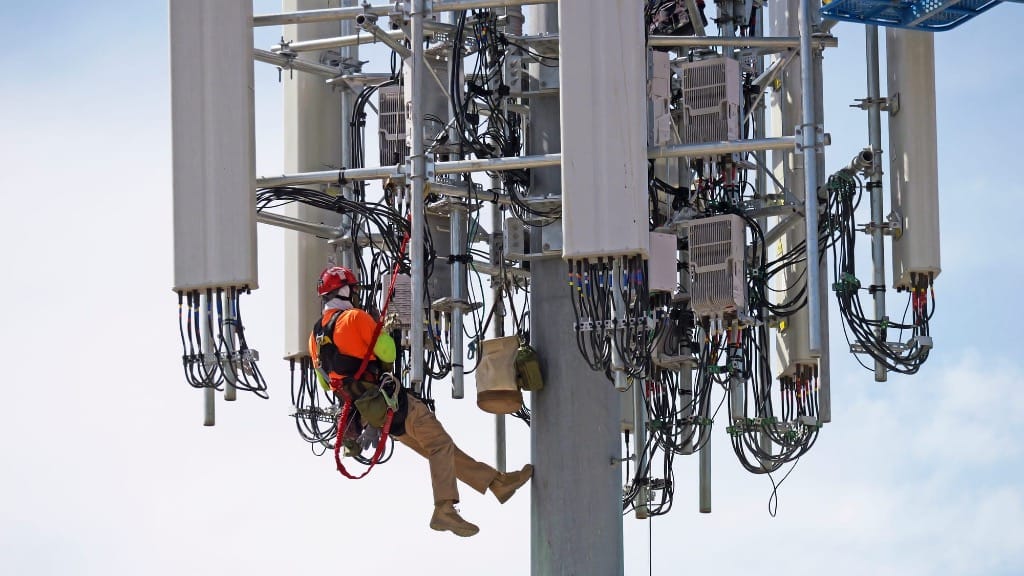
WASHINGTON, Dec. 31, 2025 – The wireless industry is excited about the Federal Communications Commission is considering preempting more permitting rules for cell sites.
Like they did in a similar docket related to wireline permitting, state and local governments disputed the idea that their rules hold up network deployments and said they should maintain their authority.
In 2018, the FCC adopted an order limiting fees and instituting permit processing shot clocks for small cell wireless deployments. The agency voted in September to take comment on expanding those rules to larger wireless facilities like towers using its authority under the Communications Act to block local rules that prevent telecom deployment.
Applying the rules “to all wireless facilities will help promote wireless facility deployment by minimizing disputes over what legal standard to apply,” CTIA, the major wireless industry group, wrote in comments posted Wednesday. “Providers, localities, and courts will instead have a single standard. Conversely, there is no statutory basis for the standard to turn on the size of a wireless facility.”
CTIA eager to expand small cell rules
CTIA was eager for the agency to expand its small cell rules stating that permitting or right-of-way access fees could not exceed an approximation of the locality’s cost to maintain the right-of-way or process the permit. That would mean revenue-based fees wouldn’t be allowed.
The group also asked for a host of other additional rules, including deeming siting applications granted when localities fail to meet shot clock deadlines and a faster dispute resolution process similar to the FCC’s team that handles pole attachment issues.
“By adopting a parallel deemed granted remedy here, including that the deemed granted remedy is a legally valid permit, the Commission will provide a ‘reasonable backstop’ against permitting delays, and give wireless providers a more effective remedy,” CTIA wrote.
AT&T, for its part, agreed the FCC should cap fees at “fair and reasonable amounts” and said fees that seem small by themselves can be prohibitive in the aggregate.
“Service providers will direct their facility siting resources toward jurisdictions where there is more certainty, where application fees, timelines, and other requirements are reasonable,” the company wrote. “Otherwise, they risk lost or delayed investments, which harm consumers and materially inhibit or limit a service provider’s ability to provide wireless services.”
The FCC is undertaking a similar inquiry into local rules around wireline broadband deployment that it should consider preempting. There too, trade groups advocated for shot clocks and fee limits and local governments opposed federal preemption of their authority.
State, city governments
California’s telecom regulator, the California Public Utilities Commission, said in a filing that the FCC “should not use federal preemption as a one-size-fits-all deployment tool.”
“Deployment of towers and other wireless infrastructure implicates public safety issues, many of which require case-by-case analyses,” the CPUC wrote. “In disaster-prone states like California, state police powers are indispensable to ensuring that wireless networks function during emergencies – precisely when communications are most critical.”
The CPUC argued many state rules and policies didn’t rise to the level of prohibiting deployment and that the Communications Act did not provide “a general license to displace legitimate and explicitly preserved state authority.”
The City of Scottsdale, Arizona, like other cities in Texas, Washington, and elsewhere, said it was concerned preemption of its fee authority would undermine its ability to manage rights-of-way safely and recover ongoing administrative costs.
Scottsdale was mentioned by name in the FCC’s September notice of proposed rulemaking as an example of a city with unreasonable annual rights-of-way fees, up to $30,000 for new builds with large amounts of ground equipment.
The city said in a filing that it wasn’t looking to maximize revenue with its right-of-way fees. Scottsdale brought in about $941,000 from wireless carriers in fiscal year 2025, City Manager Greg Caton wrote, compared to its nearly $1.2 billion in total revenue from taxes and fees.
“Scottsdale maintains more than 2,600 lane-miles of roadways, continually navigates development pressures, and must ensure that utility installations are safe, compatible with City infrastructure, and do not increase risks to pedestrians, motorists, cyclists, or underground assets,” he wrote. “Annual fees support these obligations and reflect reasonable compensation for the private commercial use of finite public assets.”




Member discussion