
22 States Sue Trump Administration Over ‘Unlawful’ Federal Grant Cancellations
Lawsuit challenges rule used to cancel Digital Equity Act and other federally funded programs.

WASHINGTON, June 30, 2025 – A coalition of 21 states and the District of Columbia filed suit last week against the Trump Administration, challenging a federal rule that has been repeatedly used to abruptly terminate billions of dollars in federal grants.
Filed Tuesday, June 24 in the U.S. District Court for Massachusetts, the lawsuit targets a provision in federal grant regulations promoted by the Office of Management and Budget, that states that a Federal award may be terminated by an agency “if an award no longer effectuates the program goals or agency priorities.”
The states’ suit asserts that the Trump Administration has been interpreting this Clause to provide federal agencies with “virtually unfettered authority to withhold federal funding any time they no longer wish to support the programs for which Congress has appropriated funding.”

FROM SPEEDING BEAD SUMMIT
Panel 1: How Are States Thinking About Reasonable Costs Now?
Panel 2: Finding the State Versus Federal Balance in BEAD
Panel 3: Reacting to the New BEAD NOFO Guidance
Panel 4: Building, Maintaining and Adopting Digital Workforce Skills
According to the litigants, this interpretation of the clause “is a dramatic departure from past practice and OMB’s own interpretation of the Clause.”
The states’ suit, filed last Tuesday, described recent Trump administration cuts as "unprecedented and unlawful” and asked the District Court of Massachusetts to rule that Federal agencies do not have the authority to eliminate grant funding “based on a failure to effective agency priorities identified after the grant was awarded.”
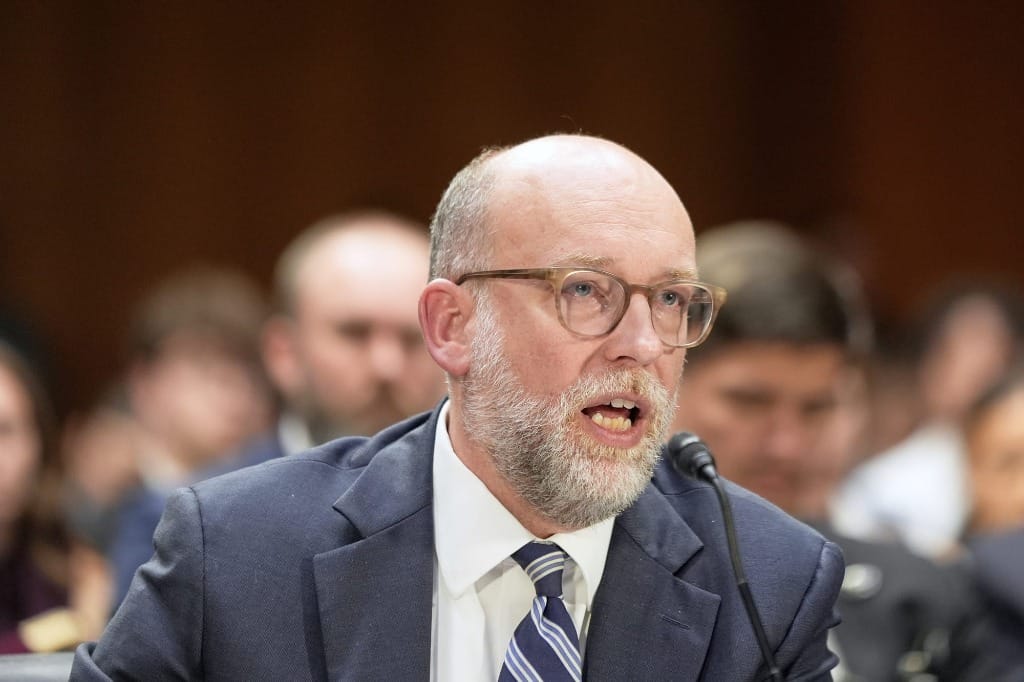
The suit listed a litany of Federal agencies and agency heads as defendants, including the Departments of Commerce, Agriculture, and Defense, as well as Commerce Secretary Howard Lutnick and OMB Director Russell Vought.
The outcome of the lawsuit could have important implications for broadband access, as the Trump administration’s rationale for cutting $2.75 billion from Digital Equity Act programs relied on the same regulation at issue in the suit. Additionally, some lawmakers have called the sudden termination of the DEA illegal, under grounds similar to those mentioned in the lawsuit.
If the suit were to be decided in favor of the plaintiffs, the DEA would not necessarily be restored. The plaintiffs have only asked the court to rule on the legality of the Trump administration’s rationale for cutting funding, but have not asked the court to restore that funding.
The DEA, passed in 2021 as part of the Infrastructure Investment and Jobs Act, sought to close the digital divide by, among other things, funding classes teaching digital literacy skills and distributing laptops to those who could not afford them. The $2.75 billion program “passed with overwhelming bipartisan support,” according to Sen. Patty Murray, D-Wash. It was sponsored by Murray, and cosponsored by Sens. Rob Portman, R-Ohio, and Angus King, I-Maine.
The Trump administration ended the DEA program in May, calling it “racist” and “unconstitutional.” Supporters of the program, including Sen. Susan Collins, R-Maine, have pushed back against those assertions, and argued that the program is necessary to close the digital divide.
The lawsuit also cites other major broadband programs that could be vulnerable under the same legal theory. For example, Wisconsin highlights its ongoing $1 billion award from the Broadband, Equity, Access, and Deployment program, warning that the Commerce Department’s interpretation of the grant termination rule could put even Congressionally approved broadband funding at risk.
Of the 22 states that brought the suit, 20 of them are represented by their attorney generals, all Democrats. Pennsylvania, which has a Republican attorney general, is represented in the case by its Governor Josh Shapiro, a Democrat.





Member discussion