5G Fixed Wireless Gains Blueprint for Multi-Tenant Broadband

The industry group said the new design helps providers extend reliable internet to multi-dwelling units.

5G Fixed Wireless Gains Blueprint for Multi-Tenant Broadband
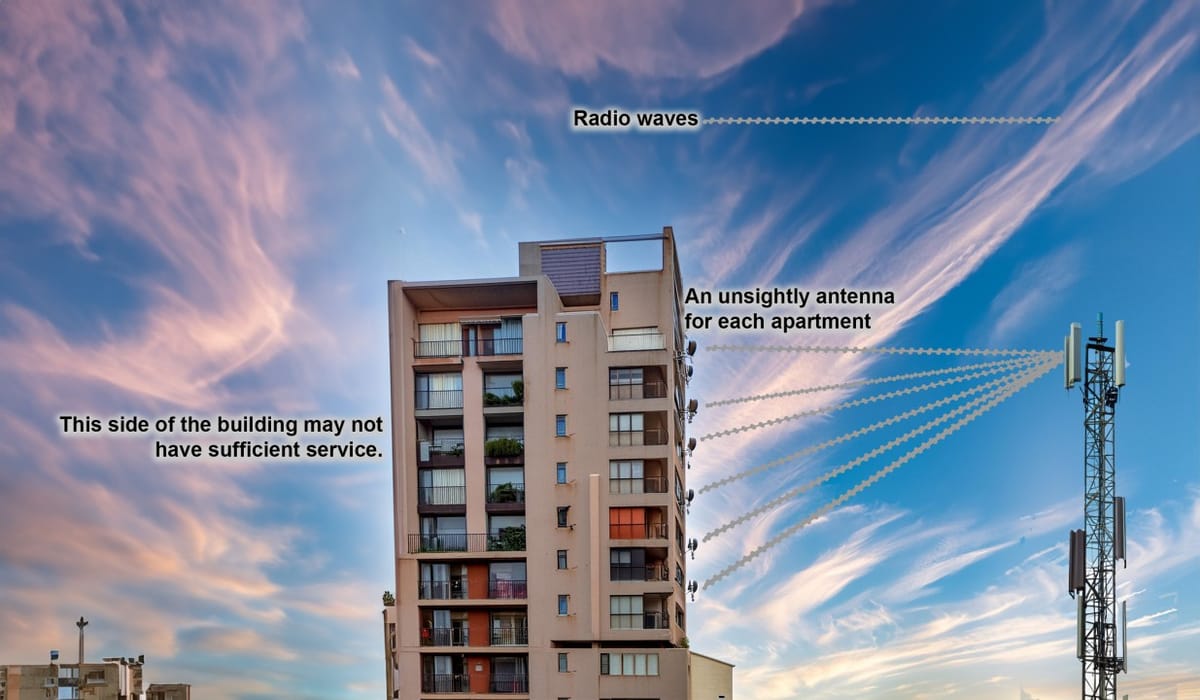
Illustration of the problem, from the Broadband Forum

Nov. 5, 2025 — The Broadband Forum, a global broadband standards group, approved a new technical framework to bring 5G broadband into apartment buildings and multi-unit housing.

The standard is designed to deliver high-speed internet in locations that are difficult or costly to serve with fiber.

A 32-page report explains how a single rooftop 5G receiver can bring broadband to every unit in a building by using its existing wiring, such as coaxial or telephone cables.

The system, called Multi-Tenant 5G Fixed Wireless Access, allows one shared 5G connection to reach multiple apartments through the building’s internal network, giving each household a separate, secure connection that can be managed by the service provider.

The report outlines two ways providers can deliver service. One connects the building’s network directly to the main 5G system that manages data traffic, while the other uses standard broadband equipment already common in wired networks. Both are designed to keep each household’s connection secure and private.

The project was led by Helge Tiainen of InCoax Networks and Michael Timmers of Nokia, with additional contributions from engineers representing Vodafone and Wistron NeWeb Corp., a Taiwan-based manufacturer of wireless communication products. 

The framework builds on earlier Broadband Forum work, including its 5G Wireless Wireline Convergence Architecture and Access Gateway Function Requirements, which aim to make wireless and wireline broadband systems interoperable. 

The Forum said the new framework will help operators extend broadband to multi-dwelling properties where fiber installation is costly or disruptive. “Fixed Wireless Access becomes a de facto alternative to wireline internet services in areas where the financial or regulatory cost of installing fiber-optic or coaxial cable is prohibitive,” the report said, citing rural communities as a primary example.

The report said that fixed wireless gives service providers a new way to provide “last-mile” connectivity where  fiber expansion has stalled. By standardizing how 5G and existing wiring work together, the Forum said, operators can deliver service at speeds comparable to wireline service. 

Broadband Forum’s members include major operators and equipment makers such as Comcast, Charter, and China Telcom.

Member discussion

Popular Tags