
AI Infrastructure Boom Drives Need for Jump in U.S. Energy Production, Experts Say
AI's energy demands will require a 25% boost in U.S. electricity production over five years, experts warned.

WASHINGTON, Sept. 14, 2025 – The artificial intelligence revolution will require the United States to increase electricity production by 25% over the next five years, fundamentally disrupting energy markets that have remained stable for decades, industry leaders said during a Broadband Breakfast Live Online event Wednesday.
 Broadband Breakfast
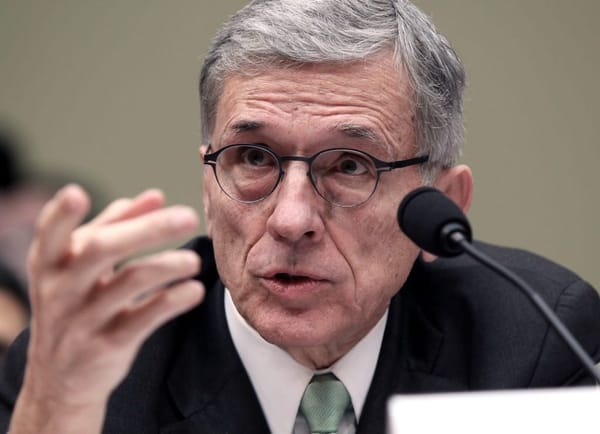
"We've never had so many things converge into one technology-driven revolution," said Chip Pickering, CEO of INCOMPAS, an association representing internet and competitive networks. "It's gonna take all energy sources to meet this type of demand."
The discussion focused on energy infrastructure resiliency and how data centers powering AI applications are creating unprecedented energy demands across the country.
 Broadband Breakfast
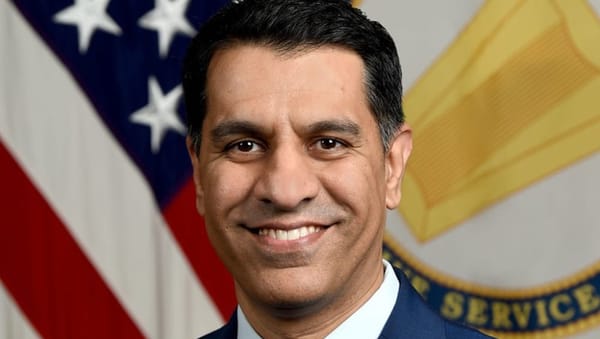
Andy Berke, former Administrator of the United States Department of Agriculture’s Rural Utility Service, provided stark statistics about the challenge ahead. "By 2030, data centers are expected to be 460 terawatt hours of demand," Berke said. "It's gonna grow from 3.5 percent of the total grid use to 8.6 percent by 2035."
The surge represents a dramatic shift for an industry accustomed to flat or declining demand. "Over the last 40 years, you had basically no increased demand, and how you have to build transmission and grid systems to meet that demand," Pickering said.

Amazon Web Services alone "expects to go from 3 gigawatts to 12. So 4 times where they are today," Berke noted.
'All of the above' energy strategy needed
Both experts emphasized that meeting this demand will require an "all of the above" energy strategy, combining renewable sources, natural gas, and nuclear power. However, they warned that political uncertainty around energy preferences creates challenges for long-term infrastructure planning.
"It is very hard, I think, for people to make large, you know, 9-figure investments in worlds in which there's uncertainty about what they can build," Berke said.
The speakers highlighted permitting reform as crucial for meeting the timeline. "Even though we have partisan preferences on energy sources, there seems to be a bipartisan agreement on the broadband and on the permitting reforms," Pickering said.
Data centers increasingly located in rural areas
Data centers are increasingly locating in rural areas near energy sources, creating new economic opportunities. "Energy states are gonna be at the forefront," Pickering said, citing Texas, Louisiana, Mississippi and Tennessee as examples.
Berke emphasized the broader economic implications, noting that AI infrastructure contributed 1.3 percentage points to recent GDP growth. "So 40 percent of the rise in our GDP was for this," he said.
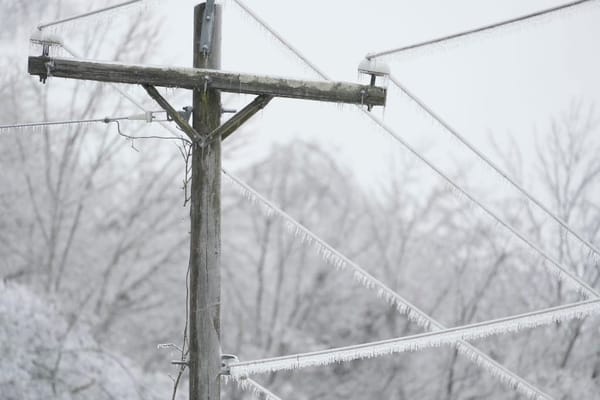
The discussion also addressed resilience concerns for existing users. "This is both a resiliency question for the critical infrastructure, but also yet to build resilient infrastructure for Americans who are living in their houses," Berke said.
Both speakers stressed the urgency of action, comparing the current moment to previous national infrastructure buildouts. "The difference in the AI race, it is probably 90 percent privately funded," Pickering said, contrasting it with past government-led initiatives like the space race.
The Broadband Breakfast event served as a preview for the Resilient Critical Infrastructure Summit in Washington on Sept. 18, which aims to bring together leaders from government, energy and telecommunications sectors.

Resilient Critical Infrastructure Summit
A one-day conference on securing America's vulnerable digital infrastructure
Learn about Resilient Critical Infrastructure




Member discussion