Amazon Delays Kuiper Satellite Launch Due to Weather
The rocket, carrying 27 Kuiper satellites, was grounded due to weather conditions

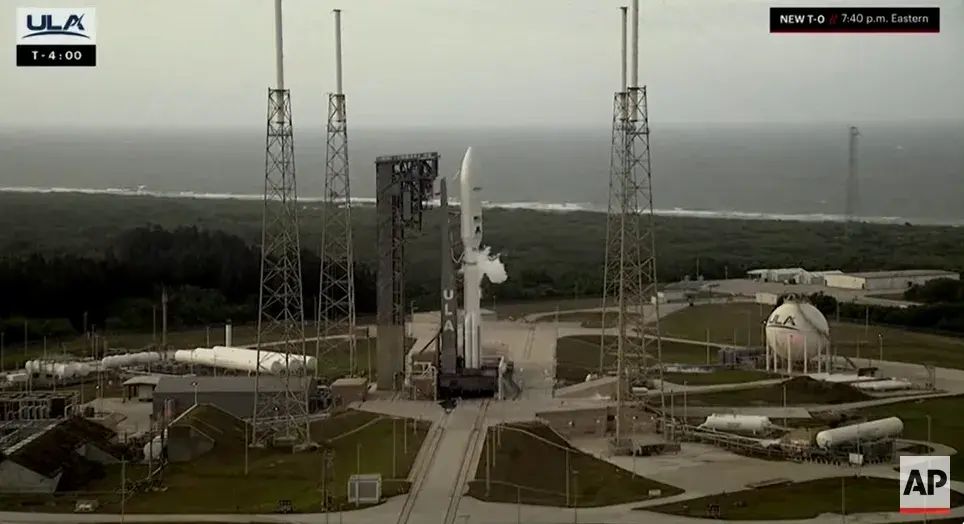
WASHINGTON, April 10, 2025 - Amazon postponed the first major launch of its Project Kuiper internet satellites Wednesday night after poor weather conditions at Cape Canaveral in Florida forced a delay.
The United Launch Alliance Atlas V rocket, carrying 27 Kuiper satellites, was grounded due to heavy winds and persistent cloud cover. ULA said the weather was “no go” for liftoff within the 7 p.m. to 9 p.m. EDT launch window. A new launch date will be announced later.
Project Kuiper is Amazon’s effort to build a satellite-based broadband network to compete with SpaceX’s Starlink. The company plans to offer high-speed, low-latency internet to consumers, businesses, and government users through square-shaped terminals. Commercial service is expected to begin later this year.
The delay puts added pressure on Amazon to meet a Federal Communications Commission's deadline requiring 1,618 satellites—half its planned 3,236-satellite constellation—to be in orbit by July 2026.
Starlink remains the dominant player in the satellite internet market, with more than 7,000 operational satellites deployed in Low Earth orbit, about 340 miles above the planet.
Amazon has begun preparing satellites for its next launch, which will also ride on a ULA Atlas V rocket. The company says it will ramp up production and deployment following the first successful mission.
Among the 10 companies blacklisted by China are AVEOX in Simi Valley, California; Red Cat Holdings and Teal Drones, both in South Salt Lake, Utah; and IMSAR in Springville, Utah.
Society has no choice but to change in the advent of AI, although Huang has been optimistic about the technology’s potential.
The Federal Energy Regulatory Commission has ordered regional grid operators to help large energy users connect more quickly to the grid.
French President Macron criticized the U.S. for restricting foreign access to advanced AI models, a sentiment echoed by OpenAI CEO Sam Altman